Showing posts with label Contemporary English Literature. Show all posts

Tuesday, September 27, 2011

"The Finkler Question" by Howard Jacobson


Three men, Libor Sevcik, Sam Finkler and Julian Treslove, are the main characters in this novel, and all of them are widowers. Well, apart from Treslove, who never had a wife but grieves the lack of one altogether. Libor, a ninety-year-old Czech-born retired professor with Hollywood connections, is mourning his beloved wife Malkie, while Julian Treslove is envious of his long-time friend Sam Finkler for several reasons, one of them being that he is Jewish (and therefore, according to him, he is more intelligent, has the best women and tells the best jokes).

"The Finkler Question" is a brilliant book, very humorous and entertaining, but also thought-provoking and ultimately sad. As a matter of fact, Ron Charles of “The Washington Post” used adjectives like 'ruminative' and 'broody' to describe it. How can a book be both funny and gloomy? Well, I think this is one of the wonders of Jacobson's writing. “The Finkler Question” tackles topics like mourning one's family and, of course, identity. The whole book can be read as a compendium (albeit a crooked one) on Jewishness in England. I remember that a few months ago I read an article complaining about this. Incidentally, I think the author of the article has not grasped the real meaning of the book, to the point of wondering if he has finished the novel. “The Finkler Question” - which in fact reads as “The Jewish Question” (Finklers is in fact the way Julian Treslove calls Jewish people in general) – reflects on how Jewish people are perceived by non-Jewish people. It elaborates on stereotypes and anti-Semitism in a way that is never obvious. Until here, we all agree. What the author of that article failed to see, in my opinion, is that it is slowly revealed by the end of the book that it is Treslove's excessive love and respect for 'Finklers' that hides something disturbing and disquieting. I think that this can be read as a lesson, not only for those who hide their prejudice behind excessive admiration, but for everyone. In other words, Jacobson's book is a lecture on what it means to be human: to grieve, to love and to hate. We perceive Jewishness through the lenses of Julian Treslove, who for as much as he would hate to hear it, has a lot of preconceptions.  

The book vaguely reminds me of Zadie Smith's “The Autograph Man”, but it's not only because of the Jewish connection. They're both humorous books and they are both sprinkled with references to movie stars such as Greta Garbo and Marlene Dietrich. “The Finkler Question” is nonetheless 'obsessed' with Jewishness as much as its protagonist is. Towards the end of the book it was annoying to read the word 'Jew' in every page, as it must have been annoying for Finkler's friends to hear Treslove babbling about Jewishness all the time.

Howard Jacobson got hold of the Booker Prize with this book. His style is precise and his novel is pleasant to read, while his puns and remarks are often witty and never weak ('D'Jew know Jewno' already feels like a classic). In spite of this, there was something missing: maybe more narrative complexity, if that is something desirable in a book. Too often the plot was put aside for endless disquisitions on Zionism that end up being tedious and abstruse, unless you are an expert on the subject. I appreciated the language in which the novel was written, though: the impeccable choice of words and the genius behind some of the musings and reflections. There is a passage about philosophy that I must report here because it feels so true for me (but if you don't care for such curiosities consider the review finished without this): 
Every few years Treslove decided it was time he tried philosophy again. Rather than start at the beginning with Socrates or jump straight into epistemology, he would go out and buy what promised to be a clear introduction to the subject - by someone like Roger Scruton or Bryan Magee, though not, for obvious reasons, by Sam Finkler. These attempts at self-education always worked well at first. The subject wasn't after all difficult. He could follow it easily. But then, at more or less the same moment, he would encounter a concept or a line of reasoning he couldn't follow no matter how many hours he spent trying to decipher it. A phrase such as 'the idea derived from evolution that ontogenesis recapitulates phylogenesis' for example, not impossibly intricate in itself but somehow resistant to effort, as though it triggered something obdurate and even delinquent in his mind. Or hte promise to look at an argument from three points of view, each of which had five salient features, the first of which had four distinguishable aspects. It was like discovering that a supposedly sane person with whom one had been enjoying a pefeclty normal conversation was in fact quite mad. Or, if not mad, sadistic. (p. 32-33)

Sunday, July 31, 2011

London Fields...


... where the homonymous Martin Amis's novel is NOT set.


Greetings from London! I'll be also covering the literary London...

Saturday, April 23, 2011

"Possession" by A.S. Byatt

Year of first publication: 1990
Genre: novel, historical novel, detective novel
Country: UK

There are some books whose success is perfectly understandable: a compelling but altogether simple plot, a love story perhaps and likeable characters. The success of A.S. Byatt’s “Possession”, nonetheless, is unusual: set in the world of academia, with two scholars of 19th-century English poetry as its main protagonists, “Possession” is packed with academic discussions, several-pages-long Victorian poems, not to mention 19th-century letters and journal, so that the present-time narrative space is sensibly restricted. How could the general public, with no interest in literary history, enjoy this? The love story disentangles only at the end of the book and some of the characters are not exactly likable.
I thoroughly enjoyed this book, of course, as I dabble in literature myself. “Possession” shows how the scholarship of two famous Victorian poets can considerably change with the discovery of a bundle of love letters. Roland Michell, a diligent if not dull researcher in one of the most revered Victorian poets, Randolph Henry Ash, finds in an old book an unfinished letter to an unknown woman. After researching in journals and asking several other academics, he discovers that Ash held a correspondence with Christabel LaMotte, a poet worshipped by feminists for her lesbian relationship with a painter, Blance Glover. The scholar starts a compelling quest for more information on this secret love story, in the course of which he meets Professor Maud Bailey, one the main experts on LaMotte’s poetry. The two academics visit her grave and find out they have an affinity that goes beyond their love for literature or Victorian poetry. Yet, they are determined not to fall in love. The author has recently reported that her American editor insisted on saying that it was impossible for two people not to have intercourse for such a long time, seen that they were so clearly attracted one to the other. I found it intriguing and realistic, instead. Roland and Maud’s insecure love story reflects Ash and LaMotte’s relationship and the genius in Byatt’s book is that at a certain point they realize it. They are academics, after all, and their work very often consists in finding connections.  
Christina Rossetti
Balancing many genres – the historical novel, the detective story and the novel of manners – A.S. Byatt’s book is reminiscent of Umberto Eco’s “The Name of the Rose”, but it is also a reflection on scholarship, poetry and literary history. The book shows, among other things, how the role of women in academia has changed through centuries. Christabel LaMotte, for instance, is a fictitious nineteenth-century poet who was considered inferior to male authors just because of her sex and is still revered as a great poet only by feminists, like Maud. Her friend and companion Blanche committed suicide in a way reminiscent of Mary Wollstonecraft’s attempt: throwing herself from Putney Bridge, that is. Another great character is Beatrice Nest, a contemporary scholar whose passion for Randolph Henry Ash only resulted in a 25-year-long study of his wife’s dull journals, because it was the only subject she was “allowed” to study at a time, the 1960s, when academia was a world dominated only by men. Women’s studies came after that, but the two worlds remained separated. Maud Bailey, an expert on LaMotte’s poetry, dismisses Ash, one of the most renowned poets of his time, for the male imaginary of his poetry and so does Roland Michell with regards to Christabel LaMotte who wrote about fairies and monsters. It is only by coincidence that they start to talk with each other, finding connections and similarities between their way of thinking.
"Proserpine" by Dante Gabriel Rossetti
The spirit of women like Dorothy Wordsworth, Mary Wollstonecraft or Judith Shakespeare permeates the novel. They are all women who had brothers or husbands whose work is among the greatest achievements in the literary world, but who could have because authors just as well, or who struggled to become authors but never had the success of their male counterparts. There are in fact many allusions to the great literature that has been written under Queen Victoria’s reign. Personally, I indulged on a kind of game while I was reading the book: is there a model A.S. Byatt followed to create the two poets? I don’t have an answer but Christabel LaMotte I imagine like a pencil sketch of Christina Rossetti or like the women in her brother Dante Gabriel Rossetti’s paintings. As for Ash I don’t have a model in mind, but I think Tennyson and Browning are the poets everyone would think about (incidentally, Tennyson wrote a poem called ‘Maud’ and ‘Christabel’ is  a long poem by Coleridge). 
Possession is naturally - leaving aside the sexual meaning, which also has its importance - what drives Roland and Maud in their quest: they want to possess the authors they study, not their letters and relics, but also their thoughts, their lives, their words. But is it really possible? I’ll add something unpopular to finish: I didn’t particularly like the poems. I found myself skipping them all the time, as the clues were discernible anyway in Roland and Maud’s disquisitions. That's the problem of such a gripping story! Yet, the poems are what makes this novel peculiar: they are an integral part of the work and not a later addition. They are not memorable, in my opinion, but they help building a 19th-century athmosphere around the two characters.


About the author: A.S. Byatt is considered one of the most important living authors in Britain. She was born in  Sheffield, England, in 1936. Her mother was a scholar of Browning and her sister is also a novelist. She wrote, among other things, a quartet of novels inspired by D.H. Lawrence, which inclues "The Virgin in the Garden" (1978) and "Still Life "1985). She is also the author of several collections of short stories, for instance "The Matisse Stories", where each story is inspired by a painting by Matisse. "Possession", her most famous novel, won the Booker Prize and was made into a movie with Gwyneth Paltrow. Her last novel is "The Children's Book" (2009). 

Tuesday, March 29, 2011

Jackie Kay, 'Things Fall Apart'

Não tenho ambiçôes nem desejos 
Ser poeta não é uma ambição minha 
É a minha maneira de estar sozinho.
Fernando Pessoa ('O guardador de Rebanhos' in "Poemas Completos de Alberto Caeiro")

I don't have ambitions or desires
Being a poet isn't my ambition,
It's my way of being alone.
Fernando Pessoa ('The Keeper of Flock' in "Alberto Caeiro: The Complete Poems")

I never speak about poetry in my blog and I don't know why. I don't know if poetry works on the internet, where people come into a blog like this and read quickly a post in multitasking mode, hardly reaching the end of it. I'll try anyway.

I'll start with a poet some of you may not know. My intention is not to post Wordworth's "Daffodils"; for that you can go everywhere on the net. I want to post something that I find interesting, slightly different from the poems we are used to read in literature classes, and then write something about it.

The first poet I’d like to talk about is Jackie Kay. She was born in 1961 in Scotland, from a Nigerian father and a Scottish mother. She was adopted by a white couple and raised in Glasgow. She has written poetry ("The Adoption Papers", “Off Colour”, “Life Mask”), novels for both adults (“Trumpet”) and children (“Strawgirl”) and, more recently, a memoir (“Red Dust Road”). Some years ago she went to Nigeria to meet her biological father and had written a piece for the Guardian whose copyright is now expired. To know that story I guess you’ll have to read her memoir (I’m eager to, by the way, as I’ve read her novel “Trumpet” some years ago and loved it). Alternatively, you can read this poem:


Things Fall Apart


My birth father lifted his hands above his head
and put the white mask of God on his handsome face.

A born-again man now, gone were the old tribal ways,
the ancestral village - African chief's nonsense, he says.

I could see his eyes behind the hard alabaster.
A father, no more real, still less real - not Wole Soyinka.

Less flesh than dark earth; less blood than red dust.
Less bone than Kano camels; less like me than Chinua Achebe.

Christianity had scrubbed his black face with a hard brush.
'You are my past sin, let us deliberate on new birth.'

The sun slips and slides and finally drops
into the swimming pool, in Nico hotel, Abuja; lonely pinks.

I knock back my dry spritzer, take in the songs
of African birds. I think he had my hands, my father.


                                                                                (From "Life Mask", 2005)


I have chosen this poem, over several others by Jackie Kay, because it is highly resonant with names and tropes of postcolonial literatures: two great Nigerian writers are named, not to mention that the title immediately takes us back to the atmospheres of Achebe’s most important novel, “Things Fall Apart”. The discordance between expectations and real events is the main focus of this short poem. The old tribal ways swept away by the religion and the customs of the colonizers, as it happens in Achebe’s novel, are paired to her disappointment at a father she has long imagined and now that he is in front of her, in flesh and blood, looks like dark earth and red dust to her. Unable to reconcile her father with the figure of the Nigerian intellectuals she knows, she is finally left alone in the hotel and thinks of his father’s hands, so similar and dissimilar from hers, those same hands that were lifted above his head to take God's white mask and to put it on his handsome face (Frantz Fanon’s “Black Skin, White Masks” is the obvious reference here).

I like this poem for its simplicity, its refusal of the idea that poems use difficult words and complex figures of speech. It blends the narrative intent and the lyric moment, lending words in a most crystalline way to an emotion that we have all felt: disappointment and disenchantment.


Monday, January 24, 2011

"London Fields" by Martin Amis


Year of first publication: 1989
Genre: novel
Country: UK

Sometimes you say of a writer that he is “self-restrained”, meaning that he is able to control his characters, gently allowing emotions to pass only to the right extent. Martin Amis is the exact opposite: he lets his characters wander through his novel, ramble on and screw up everything they do (or maybe it’s just our existence that is just so screwed up!). Yet Amis manages to keep the book structure in its place.
“London Fields” is the story of a murder where we already know who’s the murderer and who’s the murderee (the reference to D.H. Lawrence’s “Women in Love” is deliberate). We just have to find out how (and why, possibly) it will happen. The “actors” are three Londoners – Keith, Nicola and Guy – plus the narrator, an American writer who swapped his New York apartment with an English playwright and is now trying to write a novel based on the aforementioned threesome.
Keith and Guy couldn’t be more different and yet they go to the same pub in Portobello Road: the Black Cross. They belong to different social classes, but don’t think for a moment that the portrayal of the working class and the chattering classes is balanced in Amis’s writing. His characters are grotesque caricatures of Londoners at the end of the 20th century: he’s cruel with his characters, in a Nabokovian way that is not hard to spot (Amis is in fact a fan).
Keith Talent is a working class man who pays his bills by “cheating”, that is to say by petty crimes. Only, he really doesn’t pay his bills because all the money goes to the bets. He is ambitious nonetheless: he thinks he can become a professional dart player. He spends his days reading tabloids, drinking pints and pints of beer and fucking every girl in sight. Guy Clinch is ‘the fool, the foal, the foil’. He is from the opposite side of the social ladder (he’s upper middle-class) and has earned his money with dirty tricks, yet he is ingenuous regarding women. He gets duped by Nicola, a femme fatale and a former stripper who is disillusioned by life and knows she will get killed by the end of the book. Nicola Six (savour the details, Nabokov would say) is a male fantasy figure and the author admits this in a exquisite post-modern way, by making his character discuss it in a conversation with Guy. The title evokes a pastoral landscape, when in fact London Fields is just a city park in East London. The reference is not randomly put there: Keith, Guy and Nicola live in a claustrophobic city, almost on the verge of collapsing into what looks like climate change (except the book was written in 1989). I perceive this novel as quintessentially English, a symposium on Londonness, so to say. London (maybe England altogether) has no soul anymore, it is incapable of love. Ultimately the whole novel is about the process of writing (or not writing) in a labyrinth of intertextualities. “London Fields” has no moral, only an aesthetic intent. Very Nabokovian, again.
Martin Amis has a unique style: ‘the Amis-ness of Amis will be recognisable in any piece before he reaches his first full stop’, they say of him. The rhythm of his prose, his witty remarks, his hyperbolic characters have made him one of the greatest living authors in Britain. Like many other star writers, he is also highly controversial. For instance, this book was omitted from the Booker Prize shortlist because of its alleged misogyny. Nicola, in fact, is basically a nymphomaniac, who plays the virgin with Guy and the whore with Keith, turning men around her fingers as she pleases. Amis writes a lot about sex, merely from a male perspective. Personally I find his characters just too sardonic, too exaggerated and ridiculous to be realistic, that’s why the misogyny thesis doesn’t hold for me. Nicola is mainly thought as a metaphor for this utterly materialistic, self-destructive age we live in, where love just has no place.
The idiosyncrasies of the author - the global Crisis, for once (which is mysteriously linked to the First Lady’s ill-health), but also nuclear bombs and terrible toddlers - enhance the feeling that Martin Amis wanted to give us an example of fiction (and life) at the end of the 20th century: inexplicably complex and doomed to self-destruction.

Sunday, November 14, 2010

“Changing My Mind. Occasional Essays” by Zadie Smith


Year of first publication: 2009
Genre: non-fiction, essays
Country: UK

It is unusual for a collection of essays to be so personal, but it’s undeniable that you will find out more about Zadie Smith’s private life by reading this than you did in the three novels she has written so far (and if you haven't read them just run to the nearest bookstore!). You discover many things about her family and her background, her “too old” white father and her younger brother for example, but you also learn about her passions (old cinema, stand-up comedy, Vladimir Nabokov and much more).
This collection is divided in four parts: Reading, Being, Seeing and Remembering. The best essay – and in a sense the most challenging – is the one about Nabokov, one of her favourite writers and it is of course in the first section, Reading. Smith argues that Roland Barthes’s “The Death of the Author” and Nabokov’s masterpieces (she admits of being a “Pnin” nerd herself!) don’t quite agree with each other. She used to get excited at Barthes, we all do. We tend to get excited at his accessibility and at his infinite possibilities. Zadie herself has indulged in writing essays like “Please Sir, Can I Have Some More: Bulimic Rejections of Self in Oliver Twist”. Nabokov, with his aim at directing the reader exactly where he wants without him realizing anything, sort of denies Barthes’s assumption that the author has lost its importance and the reader has the complete power. She has found this after reading tons of Nabokov of course, not just “Lolita”, like most of us have done*. That’s how she changed her mind about the death of the author, thanks to Vladimir Vladimorovic.
But Zadie Smith has changed her mind about other things too. One of these things is her father, whom she portrayed in her first novel in a comic and slightly vulgar way (her words). Now that he has passed away, she writes about him in two or three essays, relating about him storming the beach at Normandy during World War II (“Accidental Hero”) and about his passion for stand-up comedy, which he passed on to his immediate family (“Dead Man Laughing”).
Zadie Smith also writes, amongst other things, of E.M. Forster and his status of “middle manager”, because he was a sort of bridge between classes, sometimes writing for an ideal audience of people who might have stumbled on one of his novels by chance. Zadie’s passion for Forster stems out of the book, and so does her love for Katherine Hepburn (“Hepburn and Garbo”), Anna Magnani (“Note on Visconti’s Bellissima”) and David Foster Wallace (“Brief Interviews with Hideous Men: The Difficult Gifts of David Foster Wallace”), the latter also recently passed away.
Another outstanding and engaging essay in the collection and one I have to name in this post is “Speaking in Tongues”, based on a lecture she gave at the New York Public Library, in which she relates of people who speak in different accents, including her, Barack Obama and Eliza Dolittle. I had always wondered why Smith had such a posh accent, coming from a working-class environment and here I got my answer. She got it at Cambridge where she went to college and in this process she lost her original Willesden accent.
This is a collection of essays that doesn’t read like boring, dull non-fiction but rather like narrative newspaper articles or even like short stories. Zadie Smith is that sort of writer who doesn’t make you regret her fiction-writing when you read her engaging, witty non-fiction pieces, so I thoroughly advise this book to everyone who appreciate literature (or is a fan of Hepburn, or again loves Tony Hancock).


* Nabokov is one of the most popular authors amongst Anglophone readers of a certain “weight”, but he’s just the obscure Russian-born writer of “Lolita” to Italian readers. Or so it seems to me.

Sunday, October 10, 2010

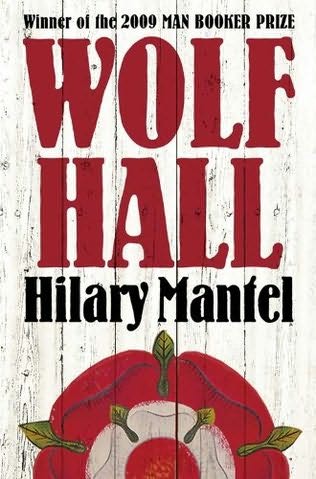
"Wolf Hall" by Hilary Mantel


Year of first publication: 2009
Genre: historical fiction
Country: United Kingdom

The story is one that has been told many times: Henry VIII wants a male heir and he wants it so badly as to ask the Pope for a divorce from his wife Katherine. The problem is that his wife is aunt to Emperor Charles V, so the Pope will not grant Henry his divorce, in order not to displease the most powerful man in Europe. Henry is impatient: he has a lover who goes by the name of Anne Boleyn and she is likely to give him a son, whereas Katherine has been able to give birth to one single daughter, Mary (later to be known as Bloody Mary). Hilary Mantel chooses to tell this story from the point of view of Thomas Cromwell, son of a blacksmith and thus born low, later a soldier and a cloth dealer, later again a lawyer, a secretary to Cardinal Wolsey and finally King Henry’s chief minister. The book is really the story of his rise to power on the background of the king’s great matter, as it was called at the time.
I am lucky enough to know quite a lot about the court of the Tudors, because I have watched “The Tudors”, an English TV show that despite being inaccurate at times gives an idea of the major characters at stake. I have also read a book recently about the “marital problems” of King Henry (“The Six Wives of Henry VIII” by Antonia Fraser). I find the Tudors one of the most fascinating dynasties in history and for sure it is the most engaging soap-opera I have ever seen. If you don’t know much about the people buzzing around King Henry at the time, I think you’ll struggle a bit with this novel. Henry’s best friend Charles Brandon whom he made duke, the powerful Cardinal Wolsey with his ambition to be Pope, the Boleyns, the Seymours and the Howards, Katherine and her ladies-in-waiting, the ambassadors, Thomas More, they all appear in the book and play their role in the development of the story. Nonetheless, Thomas Cromwell is the absolute protagonist of “Wolf Hall”: everything is seen from his point of view, despite the fact that the novel is in the third person. Usually Thomas Cromwell is depicted as a stone-cold and shrewd person, almost a villain, but Hilary Mantel depicts him as a sensitive person, fond of his family and of his protector, the Cardinal. Of course he’s ambitious and I dare say on the good side of shrewdness, if there is one. He’s learned, almost enlightened, he appreciates Italian painting and has a gift for languages. I was delighted by this book and by the world it opens on: Thomas Cromwell is not just a name on a history book, but he steps into the real world. He has passions, faults, virtues of course, doubts and secrets. And so is King Henry, Mary and Anne Boleyn, Thomas More and all the historical characters of the book. I’m waiting for the sequel that Hilary Mantel is writing (the book ends abruptly when King Henry is about to stop by the Seymour and fall in love with Jane, later to become his third wife). Much has been said about “Wolf Hall” since it won the Booker Prize, for example on the meaning of the expression “historical fiction”. It is obvious that Hilary Mantel did a lot of research to write this book, but it’s impossible for a book set in the 16th century to be 100% accurate, not only because it would ruin the literary value of the work, but also because there are many things we don’t know or we are not sure of. Were Mary Boleyn’s children actually the king’s? Did he also sleep with Anne and Mary’s mother? Did Anne make love to distinguished courtier-poet Thomas Wyatt and was she betrothed to Henry Percy, before she became the king’s mistress? Hilary Mantel resolves this by hinting at things we are not sure of as gossips of the time, but even if she changed things, I personally believe that’s alright, as long as you claim yours is just fiction.
Mantel chooses contemporary spelling over “ye olde-style diction”, as Christopher Tayler writes on “The Guardian”, and present tense over the past tenses, giving an aura of uncertainty to the story (of course Thomas Cromwell doesn’t know that they’ll all end with their heads on the block, whereas we know it). They must have been good choices, because after 650 pages you end up wanting more of the Tudor court as imagined by Hilary Mantel.


About the author: Hilary Mantel was born in Glossop, Derbyshire, in 1952. Her first novel, “Every Day is Mother’s Day”, was published in 1985 and its sequel, “Vacant Possession”, a year later. She has written several novels after that, including “The Giant, O’Brien” (1998) and “Giving Up the Ghost” (2003). With “Wolf Hall” (2009), she won the Booker Prize.

Tuesday, September 21, 2010

Zadie Smith @Festivaletteratura – 9 settembre 2010

La giovane autrice che ha esordito a soli venticinque anni con il romanzo best-seller “Denti Bianchi”(2000) presenta in quest’occasione una raccolta di saggi chiamata “Changing My Mind” e che è sottotitolata “Occasional Essays”, per specificare la natura eterogenea degli scritti. L’incontro di questa sera, invece, s’intitola “Lettore e Scrittore: Talenti a Confronto”; ci interessa quindi la vita di lettrice di Zadie, ma anche quella di scrittrice, sia chiaro. La recente maternità le ha ammorbidito i tratti e i capelli lunghi le donano: lei e Tishani Doshi si contendono sicuramente lo scettro di donna più bella del festival. Zadie ha questa voce bassa e parla con un tono così serio che alla radio mi era sembrata un po’ snob, quasi antipatica e altezzosa. Invece da questo incontro traspare proprio l’opposto: è un po’ timida e molto umile.
L’intervistatrice, Simonetta Bitasi, confessa di non essersi preparata come avrebbe voluto per questo evento, ma la colpa è di Zadie Smith, che le ha fatto rileggere i grandi autori di cui parla Zadie nel libro, che spaziano da Vladimir Nabokov a David Foster Wallace. Solo su una cosa non è d’accordo con Zadie: Grace Kelly è migliore di Katherine Hepburn, scherza Simonetta Bitasi. Perché tra i suoi saggi, che trattano gli argomenti più disparati, ce ne è anche uno sul cinema classico.
Nel caso dell’autrice, la saggistica è più personale della narrativa: si imparano molte più cose sulla famiglia e sulla vita di Zadie Smith nel leggere questo libro che non nei suoi tre romanzi. Lei spiega, ostinandosi a parlare il suo “italiano bambino”, che il ritratto di suo padre che aveva fatto in “Denti Bianchi” era comico e leggermente volgare. Ora che lui non c’è più, sente quindi il bisogno di omaggiarlo in modo diverso. Un discorso che è uscito anche nell’incontro con Hanif Kureishi, quasi che il loro “incrocio di antiche culture” abbia portato inevitabilmente ad uno scontro generazionale. O forse no, forse è inevitabilmente quello che succede agli scrittori, che “manipolano vite” anche in modo crudele.
Parlando della lettura, Zadie Smith è convinta che ciò che si legge dai 14 ai 16 anni sia quello che conta di più, che ti caratterizza maggiormente. Dev’essere stata piuttosto precoce come lettrice perché io le mie letture più importanti le ho fatte piuttosto tra i 16 e 18 anni. La lettura ti rende parte di una comunità: due persone sono accomunate solo dal fatto di essere dei lettori. Zadie Smith si fa delle domande buffe (“Ma che legge Berlusconi?”), poi spiega che la sua non era una famiglia di intellettuali, di qui il suo entusiasmo per il mondo dell’università. Zadie Smith, infatti, insegna scrittura creativa alla New York University ed insegna ai suoi studenti che, più che scrivere continuamente o tenere diari (“Quello è cazzo” dice lei, facendo ridere il pubblico in sala), è importante mantenere sia il “sense” che la “sensibility”, cioè non sacrificare il sentimento, la passione che si prova per la letteratura, per l’approccio analitico ai testi in questione.
Alcune domande interessanti arrivano dal pubblico, per esempio sul significato degli incontri con gli autori. Zadie ammette di essere andata solo una volta ad un incontro con uno scrittore che ammirava durante gli anni dell’università. Si trattava di Martin Amis, che per rispondere ad una domanda sul suo lavoro di scrittore e sulla sua giornata tipica rispose che scendendo la sera per cenare i famigliari gli chiedevano com’era andata la giornata e lui gli rivolgeva la stessa domanda, ma dentro di sé pensava “As if I give a fuck” (“Come se me ne fregasse qualcosa”). Ora i due si prendono in giro (“he teases me” dice lei in inglese) per via di questo episodio, ma all’epoca era rimasta perplessa. Dice che alle volte incontrare una persona che si stima può essere deludente o banale, come è capitato a lei nelle uniche due conversazioni che ha avuto con David Foster Wallace (una sui capelli delle donne nere, su quanto spesso si piastra i capelli per la precisione).
Alla fine ci rivela che ha in serbo per noi un romanzo di non più di 200 pagine, intitolato “NW”, il codice postale della zona di Londra dove è cresciuta, ma che ha bisogno ancora di qualche ritocco. D’altronde, con una bambina piccola, il tempo è poco e tutti le preoccupazioni vertono su questioni banali, come quale nido scegliere.
Inutile dire che ho ordinato questa raccolta di saggi (la voglio leggere in inglese) e che mi è venuta voglia di leggere come minimo Martin Amis e David Foster Wallace, che se piacciono a Zadie Smith credo (spero) che piaceranno anche a me, perché come ha osservato lei in questo splendido incontro, uno scrive quello che vorrebbe leggere.

Monday, September 13, 2010

Hanif Kureishi @Festivaletteratura – 8 settembre 2010

Quest’anno finalmente sono andata a quella meravigliosa manifestazione che è il Festivaletteratura di Mantova, la città dei Gonzaga, di Rigoletto e di Virgilio.
Il mio primo incontro, sotto il tendone del Cortile della Cavallerizza, presso il Palazzo Ducale, è stato con lo scrittore anglo-pakistano Hanif Kureishi. Il pubblico, “quello delle grandi occasioni” lo hanno successivamente definito i giornalisti, comprendeva anche Alain Elkann, noto estimatore del festival, in prima fila. Famoso soprattutto per il suo primo romanzo “Il Budda delle Periferie” (1990) e per la sceneggiatura del film “My Beautiful Laundrette” (1985), negli ultimi anni Kureishi ha toccato varie tematiche nella sua attività di scrittore: la sessualità, le relazioni padre-figlio, il successo professionale e il fallimento sul piano personale, la disillusione per la politica e, non da ultimo, la sua ossessione per gli analisti, che ricorrono tre volte nella sua ultima raccolta di racconti, “Il Declino dell’Occidente”. Gli analisti, spiega Kureishi all’intervistatore Gabriele Romagnoli, sono le persone più invidiate da noi scrittori, perché hanno a che fare con le persone più perverse, they are so close to the Hitchcockian. Ed è proprio questo che sembra fare Kureishi nella sua narrativa: parlare di quelle cose che “ammorbano” la nostra vita, quelle tante stranezze e perversioni che solo i migliori scrittori sanno catturare nella loro arte. Il “declino dell’occidente” di cui parla Kureishi è il declino di una generazione, la stessa del Budda delle Periferie, ma invecchiata, disillusa e nostalgica di un tempo in cui si poteva, o anche solo si voleva, cambiare il mondo. E’una generazione di quaranta e cinquantenni che hanno a che fare con tutta una serie di nuove esperienze: il divorzio, i figli appunto, oppure i nuovi avvicendamenti della politica internazionale e le sue conseguenze sulla vita di tutti i giorni.
La conversazione vira sulla realtà contemporanea, fermandosi sulla politica. Tony Blair, secondo lo scrittore londinese, è stato una forte delusione, perché i laburisti, dopo anni di dominio conservatore thatcheriano, si aspettavano un cambiamento in meglio. Kureishi, in vena di confessioni e non disdegnando battute di spirito sempre sagaci, afferma che se sei left-wing and liberal vorresti spostare il nuovo libro di memorie di Tony Blair dalla sezione politica a quella della narrativa. Ma il momento in cui Tony Blair lo ha deluso per la prima volta è stato quando lo ha visto con Berlusconi, scherza Kureishi, lasciando però intendere che cosa pensa del nostro capo del governo: “Insieme hanno trascorso molte notti nella villa di Berlusconi, mi sarebbe piaciuto esserci. Immagino una scena alla Satyricon di Fellini, oppure avranno parlato di filosofia”. “I politici non rispecchiano per forza l’anima di un paese, anche se di certo fanno parte di noi”, puntualizza poi, quasi a tranquillizzarci.
In seguito l’incontro tocca toni quasi esistenziali, perché Kureishi finisce per parlare del rapporto padre-figlio e non solo dei suoi due gemelli adolescenti che gli chiedono se stia rimpicciolendo quando invece sono loro che stanno crescendo, ma anche del rapporto con suo padre, morto qualche anno fa. Il rapporto con la famiglia è stato per Kureishi notoriamente burrascoso, perché uno scrittore, e in particolar modo uno che usa elementi semi-autobiografici come Kureishi, manipola spesso materiale proveniente dalla storia della propria famiglia per costruire storie interessanti, anche nel senso morboso e perverso di cui si parlava prima. Il problema con i morti, afferma Kureishi, è che per zittirli non puoi nemmeno portarli al cinema. Questo per dire che la figura del padre ritorna spesso nella sua attività di scrittore, magari in forme diverse. Nella sua esperienza, le litigate con il padre per fatti successi 35 anni fa non sono per nulla terminate.
Nella sua vita, prosegue Kureishi tornando in ambito più prettamente letterario, sono cambiate molte cose, ma una cosa è rimasta costante ed è la passione per la scrittura. Quando ha iniziato a scrivere (il suo primo romanzo, “Il Budda delle Periferie”, parla dell’integrazione dei giovani asiatici e anglo-asiatici nella società inglese degli anni ’70), sentiva che descrivere il cambiamento dell’Inghilterra in chiave multietnica era necessario ed interessante, e che ancora oggi, a livello europeo, se ci sono degli scrittori che descrivono i cambiamenti dell’Italia o della Spagna in questo senso negli ultimi dieci anni, questi sono sicuramente tra i più importanti e validi in circolazione.
L’incontro termina con il ringraziamento dell’intervistatore, che afferma a ragione che Hanif Kureishi con questo incontro ha fatto letteratura.

Friday, August 6, 2010

"Casa Howard" di E.M. Forster e "Della Bellezza" di Zadie Smith

La mia recensione di “Casa Howard” (Howards End) di E.M. Forster si trova a questo link. Visto che in coda all’articolo avevo menzionato il lavoro di semi-adattamento fatto da Zadie Smith con il suo libro “Della Bellezza” (“On Beauty”) in questa sede mi piacerebbe parlarvi di quel romanzo.
Il mondo degli adattamenti e degli “up-date letterari” è sterminato. C’è chi ha ricreato un capolavoro del cinema come “Psycho” ricalcando ogni minima inquadratura, come ha fatto Gus Van Sant nel 1998, e c’è chi ha creato dei cosiddetti spin-off, delle divagazione sul tema per così dire. Un esempio di quest’ultimo tipo di adattamenti in letteratura che mi salta alla mente è “Il Grande Mare dei Sargassi” (“Wide Sargasso Sea”, 1966) della scrittrice dominicana Jean Rhys che, partendo dal personaggio di Bertha Mason, la moglie pazza di Mr Rochester in “Jane Eyre”, ha scritto un romanzo che ne spiega la storia e le ragioni della pazzia. C’è chi ovviamente ha riscritto un classico adattandolo ai tempi moderni (numerosissimi gli adattamenti, cinematografici e letterari, di Shakespeare) e chi ha creato un ibrido.
Creare un ibrido è proprio quello che ha fatto Zadie Smith con “Della Bellezza” (“On Beauty”, 2005), che è un adattamento-non adattamento di “Casa Howard” (“Howards End”, 1910) di E.M. Forster. L’intento è evidente fin dalla prima frase, che ricalca quel famosissimo “One may as well begin with Helen’s letters to her sister” (solo che nel caso del romanzo di Zadie Smith si tratta di e-mail e non di lettere). Il romanzo parte dalla struttura di fondo di “Casa Howard” – due famiglie estremamente diverse tra loro, dagli ideali quasi opposti, eppure attratte l’una dall’altra, che dibattono su questioni legate alla bellezza, all’arte, alle classi sociali e alla cultura – per poi divagare, modificare gli avvenimenti, inserire temi non presenti nel romanzo di partenza e mescolarne i personaggi. Quel che ne risulta è un romanzo di una complessità non indifferente in termini di psicologia dei personaggi, che è stato recepito con pareri discordanti, anche perché gioca molto sugli stereotipi culturali e razziali.
L’autrice stessa ammette di non aver nemmeno riletto il libro prima di mettersi alla stesura di questo suo terzo romanzo e che i due libri si incontrano solo in due o tre punti (cruciali però aggiungerei io, per esempio la scena in cui Leonard-Carl dimentica un ombrello, che diventa un walkman nella versione di Zadie). “Howards End”, per Zadie Smith, è stato semplicemente “a little hook to hang a novel on”, un piccolo gancio a cui appendere il romanzo.
I protagonisti di “On Beauty” sono due famiglie, i Kipps e i Bentley, che vivono in America, in un quartiere residenziale di una cittadina universitaria della East Coast. L’etnicità delle due famiglie è molto importante per lo svolgersi della vicenda: Howard Bentley è inglese e bianco, mentre la moglie è nera e viene dalla Florida. I figli di conseguenza sono “mixed-race” e alla ricerca della loro identità. Ma attenzione, ci avverte l’autrice, non sono alla ricerca di un’identità perché di razza mista (ma quanto suona male in italiano?), quanto perché appartengono alla modernità che ha creato quest’idea di dover cercare la propria identità, cosa che fa impazzire tutti, mixed-race or not. La famiglia Kipps, di origine caraibica, è quella conservatrice, con la figlia mangiauomini che dovrebbe equivalere allo sciupafemmine che all’inizio di “Howards End” seduce Helen e poi parte per l’Africa defilandosi dal romanzo. Eppure Monty Kipps, il capofamiglia, non equivale a Henry Wilcox, perché alcune sue caratteristiche si riscontrano in Howard, per esempio una certa ottusità nei confronti dell’arte, quella di Rembrandt in particolare. Sarebbe interessantissimo studiare – e sono certa che è già stato fatto in qualche saggio o tesi di laurea - quello che fa Zadie con “Howards End”: dove i due romanzi si incontrano e dove differiscono. La casa, Howards End appunto, diventa per esempio un quadro di un artista haitiano, forse simbolo della ricerca di una certa identità (africana, nera, della migrazione, di quel cavolo che vi pare). Forse quello che Zadie ci vuole trasmettere attraverso questo romanzo – godibilissimo anche se non conoscete la versione di Forster – è che nel ventesimo secolo (e ancora di più nel ventunesimo) le identità, così come la divisione in classi sociali, sono complesse, sovrapponibili, quasi insondabili, ovviamente malleabili e difficilmente gestibili se ci ostiniamo a piazzarle in compartimenti stagni. Non è un caso che Levi, il più giovane tra i figli di Howard, vada in cerca di un’identità “street” tra gli immigrati haitiani, modificandola però, intellettualizzandola e adattandola a sé stesso.
Il romanzo di Zadie Smith è intitolato come un saggio ma in realtà è esattamente l’opposto, cioè un romanzo molto aperto, che non si sa dove porti, ma che parla espressamente di bellezza, in una miriade di forme diverse una dall’altra. C’è la bellezza dei quadri di Rembrandt che Howard non riesce a riconoscere, la bellezza fisica prorompente di Carl e Vee, quella intellettuale di Zora, quella materna di Kiki e poi naturalmente quella della bellezza della scrittura di questa giovane scrittrice inglese che ci regala sempre emozioni e cose su cui riflettere.

A proposito… Zadie Smith a settembre sarà al Festivaletteratura di Mantova, non perdetevela!
Scrissi di lei anche qui, in occasione di un'intervista fatta (non da me!) durante il periodo che ha passato a Roma, nel quartiere Monti, dove ha vissuto con il marito. Ne uscirono riflessioni interessanti sul dibattito letterario (inesistente secondo le Zadie) in Italia.

Tuesday, July 27, 2010

“Mamba Boy” di Nadifa Mohamed + random questions sulla letteratura africana

Anno di prima pubblicazione: 2010
Genere: romanzo
Paese: Scrittrice di origine somala “based” in Gran Bretagna. Romanzo “itinerante” ambientato un po’ in tutta l’Africa orientale e nel Medio Oriente, fino a raggiungere il Galles nel finale.

La recensione di questo è libro è uscita nella rivista di cultura on-line Paper Street ed è disponibile a questo link.

Colgo l’occasione per segnalarvi due puntate della rivista “Che libro fa…” di Giovanna Zucconi che sollevano domande importanti riguardo alla letteratura africana postcoloniale (ma sarebbe ora di abolire questo termine, perché non tutta la letteratura africana tratta necessariamente di tematiche legate al postcolonialismo). La prima è: “perché i kenioti scrivono così poco? E perché lasciano agli stranieri, soprattutto ai giornalisti, il compito di raccontare la loro terra?”. Nel tentativo di portarci un paio di esempi di kenioti che scrivono l’autrice ci nomina Stanley Gazemba, che ha vinto il più importante premio letterario del Kenya e che vive in uno slum, dimostrando che la letteratura non è solo appannaggio dei ricchi, e Lily Mabura, che è stata finalista del Caine Prize con la sua storia “How Shall We Kill the Bishop”.

L’atro quesito sollevato recentemente da “Che libro fa…” riguardo alla letteratura africana è: “ma i neri sudafricani leggono?”. Con riferimento ad un articolo pubblicato sul Times sudafricano che ha creato numerose polemiche e aperto un dibattito, appaiono cause diverse dalla presunzione, razzista, che i neri non leggano. Ovvero, non ci sono biblioteche nelle scuole, scarseggiano le librerie (l’unica di Soweto ha appena chiuso) e, non da ultimi, la gente ha altre cose a cui badare, come ad esempio procacciarsi il cibo per il pranzo di domani. Credo che sia il problema di molti paesi africani. Progetti timidi e personali spuntano qua e là (con una mia amica un tempo era nata l’idea di spedire dei libri in Afghanistan, vedi il banner “A Modest Proposal” qui a fianco), ma chissà perché le persone più volonterose sono sempre quelle prive di fondi. E’ vero: ci sono cose più importanti, come aprire ospedali ed ambulatori, ma il progresso si ottiene solo attraverso l’istruzione, l’ha detto qualcuno di famoso, credo.

Wednesday, April 28, 2010

4. “The Sun Between Their Feet. Collected African Stories Volume 2” by Doris Lessing


Year of first publication: 1973
Genre: collection of short stories
Country: UK / Southern Rhodesia (now Zimbabwe)

When I first bought this book I was excited, but then I started to read the first story and I was somehow disappointed: there was little Africa in “Spies I have known”. Of course I was wrong: there is a lot of Africa in this collection, but it’s not the kind of Africa you’d expect. The Sun Between Their Feet, in fact, details the life of white settlers in Southern Africa. You can often detect some superiority towards white Rhodesians (and Colonials in general) in her stories: she seems to think that they are provincial and conventional. What I adored about this book, however, is the quality of the writing, in other words Lessing’s gift for storytelling, which is what every author should have. In one of the book’s endorsements (in the version published by Harper Collins) Jacky Gillott from The Times says something I agree with: “Doris Lessing can take what appears to be commonplace, mere passing anecdote and turn it deftly until its inner light is released: one feels that she has gazed upon the stories in her mind until that peculiar angle of vision, the angle that pierces obliquely but clean to the heart of a thing, has finally been found”.
The first story fits nicely into the author’s Communist phase (read below). The narrator tells about some spies he has met in his life, but the main bulk of the story is about a man working for the central post office of Salisbury, the capital of Rhodesia. He’s assigned to read the mail for the censorship, and he also attends some meetings of the Left Club. His boss asks him to spy on the communists, but he’s too honest and can’t cope with the fact of lying to anybody. His substitutes are Harry and Dick. Dick is un-intellectual and thinks that the people at the Left Club are “unRodhesian”. He asks them if they think that communism will be good in a country like theirs that has to cope with the “white man’s burden”. Dick thinks in fact that “the natives” should not be advanced too fast for their own good. The communists of Rhodesia think that the wealth should be shared among the whole population of the country, but this excludes the black majority. They are abhorred by the idea that they should mix with them. Dick eventually goes on with his political career and becomes a Member of Parliament, an authority especially regarding “the natives”. “Spies I have known” is Lessing at her best. She describes without exasperation or sentimentalism the racism of the white settlers in Africa (the story could easily be set in South Africa and/or written by Nadine Gordimer).
Some of the other stories deal with the loneliness of women on big farms in the middle of the African veld and with their attempts to adapt to the rough life they are forced to live (“Lucy Grange”, “The Trinket Box”, “A Mild Attack on Locusts”), which is something that Lessing herself experienced in her life. Some other stories, instead, deal with childhood or adolescence in a way reminiscent of Janet Frame’s short fiction (“Traitors”, “The Words he Said”, “Flavours of Exile”). One of the stories I liked the most is “The Black Madonna”, maybe because one of the main characters is an Italian, like me. In the story, Michele, an Italian artist and a former war prisoner, is asked to build a fake German village for a demonstration of shell-fire in a small community of white settlers in Zambesia (now Zimbabwe and Zambia). Michele is friend with a British officer who’s married to a white girl whom he seldom visits. Instead, he sleeps with some native girls. Michele is compared to “the natives” for his laziness, but actually he’s only eager to enjoy life, something that the British settlers are not able to do. For example, Michele is not ashamed of crying out of nostalgia for his country, while the stiff British officer cannot do that, until after he’s had a nervous breakdown. As a matter of fact, Michele builds the fake German village and even includes a church. Inside the church he paints a black Madonna, which shocks the Captain. It’s the halo that unsettles him, but also the fact that the picture reminds him of his favourite native girl. Michele teaches the Captain to let off of his emotions and to come to terms with the fact that his marital wishes didn’t come true. “The Black Madonna” is one of those deeply psychological stories that you need to interpret and reflect upon.
“Hunger”, however, at novella-length is in my opinion the most interesting piece of the collection. The main character is a black African man, Jabavu, who’s always hungry, not only for food but also for the life of the white man. He taught himself to read and decides to leave his poor village to find a job in the white man’s town. He walks for many days and he’s almost recruited by some people who want him to work in the mines of Johannesburg, but finally he reaches his destination. He manages to get a permit to seek job in town but gets involved with a beautiful girl called Betty who’s in a gang. After having been warned by a certain Mrs Kambusi who runs a shebeen, he runs away from her and goes on to meet Mr Mizi, a leader of the revolutionary movement. Jabavu likes Mr Mizi and his people, whom Mrs Kambusi calls “the people of light”. He wants to be like them, but he keeps on switching from “the people of light” to the gang (he’s a gifted thief and finds out that he can make a lot of money in that way). Jerry, the leader of the gang, is jealous of Jabavu and forces him to steal in Mr Mizi’s house. Jabavu, however, awakes Mr Mizi to warn him about the robber. This reminds me of Dickens’s Oliver Twist, to the point that I think the story could be read as a sort of African version of the novel (which also deals with social issues). “Hunger”, however, ends in a different way: Jabavu is arrested and Mr Mizi won’t help him in the trial. He’s redeemed anyway, because he finally feels part of a “we” in a way that was not allowed to him in the village. In other words, he’s become a man and his hunger has eventually gone.
By the way, it's curious how much the metaphore of hunger is recurrent in literature and cinema (just recently, I came across it in Anita Desai's Fasting, Feasting, in Satyajit Ray's Pather Panchali and in Deepa Mehta's Water).

About the author: Doris Lessing was born of British parents in Persia (now Iran) in 1919 and was taken to Southern Rhodesia (now Zimbabwe) when she was five. She spent her childhood on a large farm there and got her education in Salisbury (now Harare). She got married and divorced twice before going to England for the first time, in 1949. She brought with her the manuscript of her first novel, The Grass is Singing, which was published in 1950 with outstanding success. Since then her international reputation not only as a novelist but as a non-fiction and short-story writer has flourished. Back in Rhodesia she became involved with the Left Book Club, a communist book club. Because of her campaigning against nuclear arms and South African apartheid she was banned from that country and from Rhodesia for many years. Her fiction is usually divided in three phases: the Communist theme (1944-1956), when she was writing radically on social issues, the psychological theme (1956-1969) and finally the Sufi theme, which she explored in a science-fiction series. Her switch to sci-fi was not popular with the critics, though. She was awarded the Nobel Prize in Literature in 2007.

Sunday, March 14, 2010

49. “Blonde Roots” by Bernardine Evaristo


Year of first publication: 2008
Genre: novel, dystopian novel, fantasy novel, satirical novel
Country: UK

Doris Scagglethorpe lives in a cottage with her family in England. One day she is kidnapped and put aboard a slave ship bound for an imaginary country called New Ambossa. In a photographic negative of the slave trade, Bernardine Evaristo imagines what would have happened if the “whyte Europanes” were enslaved by “blak Aphrikans”. After experiencing the horrors of the Middle Passage, Doris becomes the playmate of a spoilt Ambossan brat called Little Miracle. Ambossans are rich and powerful: the women show with pride their plaited hair and their big bottoms, while the men go naked even when they are “hunting for Europanes” on the Cabbage Coast of England. This is of course because they can’t accept to wear the warm clothes of the Europanes, whom they consider inferior. Ambossans are in fact regarded as more sophisticated and African culture is universally considered more developed. Europanes, on the other hand, are barbaric people, who live in primitive square houses and have ridiculous customs, like that of having pets.
Doris, now renamed Omorenomwara in spite of her, works for Chief Kaga Konata Katamba I, who also has a huge plantation with whyte slaves in the New World. The second part of the novel is in fact set in a plantation ironically called Home Sweet Home, where Doris is sent to work as a slave. Here, there is a whole community of whyte slaves who speak “patois” and mix Europanes and Afrikan customs. Doris tries to escape twice and in one of her “runs for freedom” she walks through the city of Londolo, where the disused underground now serves as a clandestine way to escape from slavery. In the “Vanilla Suborbs” of Brixtane freed whytes spend hours trying to have an Aphro or have cheap nose-flattening jobs, while blak people shout “Go home, you’re stealing our jobs!”.
Evaristo worked really well with the language (she has a poetry background), giving an African twist to place names and English words. Despite being so innovative and postmodern, the book is reminiscent of Swift’s satire, with the same caricatures that made him famous.
Very humorous, but also very bitter at times, Blonde Roots, which is and adaptation of Alex Haley’s 1976 novel Roots, tells us of the horrors of the slave trade in a different way. While you’re reading it, you keep forgetting that Doris is white and her cruel master black. This helps you understand how things could have been easily reversed, had history taken a different turn. Evaristo mixes the historical into the contemporary, creating a dystopian novel that is very easy to read and engaging. It is nonetheless a very painful read, as other great novels about slavery are (I only name Toni Morisson’s Beloved, one of my all-time favourites).
My only criticism is a couple of unlikely coincidences and the confusing change of global geography (why should Europe be moved on the southern emisphere and Ambossa, which has the shape of England, placed off the African coast?), but overall it is an enjoyable novel.


About the author: Bernardine Evaristo was born in London to an English mother and a Nigerian father, the fourth of eight siblings. She is the author of three critically-acclaimed novels in verse: Lara (1997), The Emperor’s Babe (2001) and Soul Tourists (2005). Lara traces the roots of a mixed-race English-Nigerian-Brazilian-Irish family over 150 years. Her second novel tells the story of Zuleika, girls of Sudanese parentage, who grows up in Roman London 1800 years ago and who has an affair with Roman Emperor Septimius Severus. Soul Tourists is about a car journey across Europe straring a mismatched couple, with cameo appearances en route from ghosts of colour from European history such as Pushkin, Alessandro De Medici and Mary Seacole. Blonde Roots (2008) is her first novel in prose.

Friday, March 12, 2010

Commonwealth Writers' Prize + Man Asian rules changed

Commonealth Writers Prize: shortlist for regional winners has been announced. I'm happy for Albert Wendt in the South East Asia and Pacific region. He's a Samoan writers who also works and writes in New Zealand. I read a couple of hi short stories and they were really good. When I have time, I will browse the web looking for plots and interesting books...

Africa
The shortlisted writers for Africa's Best Book are:
Trespass by Dawn Garisch (South Africa)
The Double Crown by Marié Heese (South Africa)

The Thing Around Your Neck by Chimamanda Ngozi Adichie (Nigeria)
Eyo by Abidemi Sanusi (Nigeria)
Tsamma Season by Rosemund Handler (South Africa)
Refuge by Andrew Brown (South Africa)
Kings of the Water by Mark Behr (South Africa)

The shortlisted writers for Africa's Best First Book are:
I Do Not Come to You by Chance by Adaobi Tricia Nwaubani (Nigeria)
The Shape of Him by Gill Schierhout (South Africa)
The Shadow of a Smile by Kachi Ozumba (Nigeria)
Come Sunday by Isla Morley (South Africa)
Sleepers Wake by Alistair Morgan (South Africa)
Jelly Dog Days by Erica Emdon (South Africa)
Harmattan Rain by Aysha Harunna Attah (Ghana)

Caribbean and Canada
The shortlisted writers or the Caribbean and Canada Best Book are:
The Winter Vault by Anne Michaels (Canada)
February by Lisa Moore (Canada)
Euphoria by Connie Gault (Canada)
Goya's Dog by Damian Tarnopolsky (Canada)
Galore by Michael Crummey (Canada)
The Golden Mean by Annabel Lyon (Canada)

The shortlisted writers for the Caribbean and Canada Best First Book are:
Under this Unbroken Sky by Shandi Mitchell (Canada)
Daniel O'Thunder by Ian Weir (Canada)
The Island Quintet: Five Stories by Raymond Ramcharitar (Trinidad)
Diary of Interrupted Days by Dragan Todorovic (Canada)
The Briss by Michael Tregebov (Canada)
Amphibian by Carla Gunn (Canada)


South Asia and Europe
The shortlisted writers for South Asia and Europe Best Book are:
Solo by Rana Dasgupta (Britain)
For Pepper and Christ: A Novel by Keki Daruwalla (India)
The Beijing of Possibilities by Jonathan Tel (Britain)
Heartland by Anthony Catwright (Britain)
Another Gulmohar Tree by Aamer Hussein (Pakistan)
The Immortals by Amit Chaudhuri (India)

The shortlisted writers for South Asia and Europe Best First Book are:
The Hungry Ghosts by Anne Berry (Britain)
Arzee the Dwarf by Chandrahas Choudhury (India)
In Other Rooms, Other Wonders by Daniyal Mueenuddin (Pakistan)
Among Thieves by Mez Packer (Britain)
An Equal Stillness by Francesca Kay (Britain)
Tail of the Blue Bird by Nii Parkes (Britain)


South East Asia and Pacific
The shortlisted writers for South East Asia and Pacific Best Book are:
Summertime by J.M Coetzee (Australia)
A Good Land by Nada Awar Jarrar (Australia)
The Adventures of Vela by Albert Wendt (Samoa)
Singularity by Charlotte Grimshaw (New Zealand)
The People's Train by Thomas Keneally (Australia)
Parrot and Oliver in America by Peter Carey (Australia)

The shortlisted writers for South East Asia and Pacific Best First Book are:
The Ice Age by Kirsten Reed (Australia)
After the fire, a still small voice by Evie Wyld (Australia)
Look Who's Morphing by Tom Cho (Australia)
Document Z by Andrew Croome (Australia)
Come Inside by Glenys Osborne (Australia)
Siddon Rock by Glenda Guest (Australia)


Do yo remember the Man Asian Literary Prize? I wrote about it a few times. It’s supposed to help English-speaking readers to discovers Asian literature, promoting books unpublished in English, which means that they might have written in another language, let’s say Chinese or Thai.
Great thing, except that now the rules have changed. A blogger friend from Malaysia, Sharon of Bibliobibuli, wrote about it with more details. Well, to sum it up now the prize is opened only to novels first published in English in 2010… so forget about those countries whose literature you wanted to get your hands to. No more Vietnam or Myanmar, Sharon says.

Wednesday, November 25, 2009

The book to redemption


The Man Asian Literary Prize was awarded to Su Tong’s The Boat to Redemption. Now, you might have never heard of Su Tong, but apparently he’s a bestselling author in China. His novella Raise the Red Lantern was made into an Oscar-nominated movie directed by Zhang Yimou (it’s called Lanterne Rosse in Italian if anybody’s wondering). The Boat to Redemption is set in the period of the Cultural Revolution and it’s about a womaniser who’s banned from his home by the local authorities and starts his redemption by living on a boat (read an excerpt here, it’s really worth it). I’m happy that a book not originally written in English has won the prize and I’m even happier because a Chinese author has won it. I want to see more Chinese names on the shelves of our bookshops!

I didn’t blog the shortlist for the prize (only the longlist and some musings on the prize itself), but there were some interesting pieces in there. Apart from “the Chinese treat” aforementioned, the list was dominated by writers from the Indian subcontinent. The most interesting book, in my opinion, was Residue, written by Kashmiri-born Nitasha Kaul, which explores the evolving relationship between Keya Raina and Leon Ali, two Kashmiris who have never lived in their “homeland” (read excerpts here). Then there’s Omair Ahmad’s Jimmy the Terrorist, about politics in an Indian Muslim community (read an excerpts here), and Siddharth Chowdhury's Day Scholar, which tells of a powerful Delhi property broker and political dealer, who brings his mistresses to the hostel he runs (read excerpts here). The list is completed with The Descartes Highlands by Manila-born Eric Gamalinda, the story of a woman who buys a baby in Manila (read excerpts here).
This prize is three years old and, apart from raising criticism for its geographical definition of Asia, aims to bring Asian literature to the attention of the public. I really hope that some of these books (especially if they are in translation, I can’t really understand which ones are apart from the winner) will come to the attention of the Western readers!

By the way...

Other “Chinese-themed” books I’d like to read: A Concise Chinese-English Dictionary for Lovers by Xiaolu Guo, Waiting by Ha Jin and American-born Chinese by Gene Luen Yang.

Zadie Smith’s new collection of essays is out, it’s called Changing My Mind: Ocassional Essays and I’m very excited to read it. Some people say that she is better as a critic than as a novelist. I'm not sure about that, but she has a sharp mind. Here's an essay called "Speaking in Tongues", based on a lecture that she gave at the New York Public Library in December 2008 and a sneak peek of Zadie's literature criticism.

Thursday, October 8, 2009

Hilary Mantel wins Man Booker Prize 2009


The winner of this year’s Man Booker Prize has been announced: it’s Hilary Mantel’s Wolf Hall.
No surprise, it was this year’s favourite. She has beaten excellent writers such as A.S. Byatt and J.M. Coetzee (the favourite in my poll!).
I have never read a novel by Hilary Mantel and I didn’t know her name before reading about her nomination, but apparently she has written ten novels before this one. It’s sad when an author is awarded such an important prize and you had never heard of her/him or read one of his/her books. Wait for the next post on the Nobel Prize for Literature and you'll have the same reaction you had last year: uh?

Wolf Hall is a piece of historical fiction (most books in the shortlist were) concerning Thomas Cromwell, an adviser of King Henry VIII. It’s not exactly a quick read, the hard back being exactly 672 pages long, but most people who have read it think it’s really worth it.

James Naughtie, chair of judges said :

Hilary Mantel has given us a thoroughly modern novel set in the 16th century. Wolf Hall has a vast narrative sweep that gleams on every page with luminous and mesmerising detail. ... It probes the mysteries of power by examining and describing the meticulous dealings in Henry VIII's court, revealing in thrilling prose how politics and history is made by men and women. ... In the words of Mantel's Thomas Cromwell, whose story this is, "the fate of peoples is made like this, two men in small rooms. Forget the coronations, the conclaves of cardinals, the pomp and processions. This is how the world changes."

Other posts on this year's Man Booker Prize: longlist and comment (here) and shortlist and comment (here). On last year's Booker Prize, won by Araving Adiga's The White Tiger, here and here.


By the way, Not the Booker Prize, the competition created by Sam Jordison of The Guardian has been won by Rana Dasgupta’s Solo. I don’t know if he’s a good fiction writer (yes, it’s a man!) but I’ve read some of his articles published in English newspapers and he seems to be pretty good at writing.

Saturday, September 12, 2009

25. “Lord of the Flies” by William Golding


Year of first publication: 1954
Genre: novel, adventure novel, allegorical novel
Country: England

In italiano: Il Signore delle Mosche di William Golding, edito da Mondadori nella Collana Oscar Classici Moderni (1980), € 8,40

Nobel Prize for Literature 1983

About the author: William Golding was born in 1911 in Cornwall, England. After graduating from Oxford, he worked as a teacher actor and director, then became a schoolteacher. He participated in the Second World War and became aware of the evils of which humanity is capable. After the war, he resumed teaching and began writing novels. His first novel, Lord of the Flies (1954), after having been rejected by more than twenty publishers, became a best seller in both Britain and the USA. Golding retired from teaching and published several other novels, notably Pincher Martin (1956), and a play, The Brass Butterfly (1958). He was awarded the Nobel Prize for Literature in 1983.

Plot: A group of English schoolboys crashes on an uninhabited tropical island during a raging war. Free from the rules of society and civilization, they descend into savagery. The boys divide in two factions: a group works together and tries to achieve common goals, while the other seeks only violence and conflict. The novel is an allegory of the conflict between the civilizing instinct and the savage nature of humanity.

Some thoughts: Quite a few classics of contemporary English literature are passing in my hands in this period. This novel didn’t grab me as it should, considering its reputation. Maybe it was the writing style: Golding uses a non-poetical, straightforward language that is good for young adults (as a matter of fact, this book is widely read in secondary schools all over England) but it didn’t work well with me. Apart from this, I appreciated the philosophical interludes and the symbolisms of the novel (the shell used by Ralph to ask for an assembly, for example, represents order and democratic power; Piggy’s glasses are a symbol for science and rationality etc.).
Whether the story of Lord of the Flies is a symbol of the evils of which humanity is capable or whether it is a representation of the history of civilization until the Second World War (humanity had just come out from the horrors of war when Golding wrote the novel), it is much more than the story of a group of boys crashing on an island and trying to survive (LOST, anyone?).
The central problem of the novel is the savage instinct that lurks within every human being: the monster feared by the boys, the Lord of the Flies, is not a physical beast, but rather this evil impulse that prompts every human being to enforce one’s will with the use of violence. The novel shows how different people feel the instincts of civilization and savagery: Piggy and Ralph almost don’t have a savage instinct, even though they are briefly tempted by the savages, whether people like Roger and Jack cannot even understand why the other group want to preserve their civilization. Simon is the only truly good character, because his moral code is not forced by society. Unlike Ralph, who keeps repeating that they are all English (read civilized) boys, Simon is naturally good to everyone and in fact he gets killed, meaning that the savage instinct is far more widespread and common among people. Simon is the first one to understand that the beast doesn’t really exist but it’s rather something that’s inside them. The beast, the Lord of the Flies, physically represented by a severed sow’s head that Jack had impaled on a stake, becomes the totem of the savages. Jack learns to use the fear of the beast to scare other people and turn them to his will, a reminder of how religion and superstition can be used to manipulate people and gain power.
I would recommend this book especially to students in secondary schools, maybe when they are studying the reasons that led to the Second World War, one of the periods in history when humanity lost sight of his civilization and descended into savagery.

Friday, September 4, 2009

24. “Nineteen Eighty-four” by George Orwell


Year of first publication: 1949
Genre: dystopian fiction, science fiction
Country : England

About the author: see this post

Plot: Hidden away in the Record Department of the sprawling Ministry of Truth, Winston Smith skilfully rewrites the past to suit the needs of the Party. Yet he inwardly rebels against the totalitarian world he lives in, which demands absolute obedience and controls him through the all-seeing telescreens and the watchful eye of Big Brother, symbolic head of the Party. In his longing for truth and liberty, Smith begins a secret love affair with a fellow-worker Julia, but soon discovers the true price of freedom is betrayal.

Some thoughts: I like “dystopian” novels like Huxley’s Brave New World or Bradbury’s Fahrenheit 451 (of this one I’ve just seen the movie, though). Of Nineteen Eighty-four I had seen the movie during high-school and I vividly remember this big eye that controls everything, the Big Brother. I don’t remember if the reality show was already on TV at the time, but I think it’s quite sad that now this words, Big Brother, only remind us of trash TV.
In both Fahrenheit 451 and Nineteen Eighty-four there is a man who discovers that there is a way out of homologation and tries to gain intellectual freedom. He fights against the totalitarian regime that controls every aspect of his life and brainwashed the whole humanity.
I loved the neologisms, in particular “doublethink”, the twisted way of thinking that teaches you how to accept the opposite of what would make sense. “War is peace, freedom is slavery and ignorance is strength” is the motto of the Party and it is the finest example of “doublethink”. I know of some real politicians that use “doublethink” with nonchalance (“war on terror”, does it ring the bell?). Nineteen Eighty-Four is a frightening novel, also because many people think that the time of the events in the novel is not far away as it may seem, but it shares much with England in the 1940s, when the novel was written. Actually, while I was reading the novel I found many similarities with the modern world and in particular with the political situation in Italy: the censorship in the medias for example or the unbelievable contradictions and lies of the government (“In the end the Party would announce that two and two made five, and you would have to believe it”).
It is a novel that warns you against both communism and fascism (in other words, against every form of totalitarism). The end is very sad, I could not believe in the betrayal and I was literally dying for clues of a possible – but very unlikely - happy ending or of a little hope for the future of Julia and Winston. I didn’t like Julia much, though. I don’t mean as a character, but as a woman. It is true that she is a rebellious and independent woman, but she only cares about her sexual life and the pleasures that she cannot have, such as real coffee or sugar. Winston, on the other hand, is more interested in intellectual freedom and discovering what happened before this endless war (the glass paperweight is the symbol of his desire to connect with the past). The tone of the novel is dark, frustrated and pessimistic, but it is a wonderful novel nonetheless. It makes you think a lot. It’s one of those novels that will never leave me, like Crime and Punishment or Toni Morrison’s Beloved.