Showing posts with label Non-fiction. Show all posts

Tuesday, May 10, 2011

"Con il Sari Rosa" di Sampat Pal

Anno di prima pubblicazione: 2008
Genere: memoir
Paese: India

"Con il Sari Rosa" di Sampat Pal (in collaborazione con Anne Berthod), edito da Edizioni Piemme, 16 €


Ho sentito parlare di Sampat Pal e della sua Gulabi Gang per la prima volta qualche anno fa e la storia mi aveva colpito. Si tratta di un gruppo di donne indiane generalmente appartenenti alle caste più basse che hanno creato una rete di solidarietà femminile che si impegn a difendere i diritti delle donne di fronte ai più svariati soprusi. Come marchio di riconoscimento indossano tutte un sari rosa (gulabi vuol dire appunto rosa) e portano sempre con sé un lathi, il tipico bastone da combattimento usato anche dalla polizia indiana. 
"Con il Sari Rosa" è il memoir della fondatrice dell'associazione, Sampat Pal, scritto con l'aiuto di una ghost writer, Anne Berthod, giornalista francese che ha scritto, tra l'altro, "Slumgirl Dreaming", sulla storia rags to riches della bambina di "Slumdog Millionaire" (libro che mi risparmio volentieri). Sampat Pal Devi è nata da una famiglia poverissima dell'Uttar Pradesh ed appartiene ad una delle caste più basse, i gadaria, letteralmente "mandriani". Infilatasi alla scuola locale di nascosto trascurando il lavoro nei campi che i suoi genitori si aspettavano da lei, Sampat Pal impara a faticosamente a leggere l'hindi, che non è nemmeno la sua lingua materna, dato che in casa sua si parla un dialetto locale. Data in sposa alla tenera età di dodici anni com'è usanza tra la gente umile da cui viene, Sampat dimostra fin da subito di che pasta è fatta. Non vergognandosi di controbattere a nessuno, neanche ai bramini che, approfittando di essere la più rispettata delle caste indù, si prendono gioco degli altri e scroccano ai gadaria utensili che poi non restituiscono mai, Sampat Pal comincia a farsi conoscere in paese come la più sfacciata tra le donne, la più ribelle e ostracizzata, ma anche la più sveglia. Il suo linguaggio sboccato mi ricorda la Phoolan Devi del film "Bandit Queen", personaggio con cui condivide alcuni particolari biografici e senza dubbio la determinazione. Mi avevano colpito, ad esempio, quei "motherfucker" e "sisterfucker" disseminati nel film e Sampat Pal riflette proprio su questa fissazione di usare le donne nelle imprecazioni, arrivando a criticare due fratelli che in modo molto sciocco e ridicolo insultano la loro stessa madre o sorella. 
Nonostante lo scarso livello d'istruzione, Sampat Pal capisce al volo come gira il mondo: la corruzione, i raggiri dei funzionari locali e dei piccoli commercianti, per non parlare del potere spropositato dei mariti sulle loro mogli. Così decide di fondare una scuola per insegnare alle donne a cucire e a leggere, trasmettendo allo stesso tempo le sue idee sull'emancipazione femminile. Non avrà la vita facile: più volte sarà allontanata dal suo villaggio per non essersi piegata ai soprusi dei più potenti e sarà perseguitata dai dada, i sicari a pagamento. Non risparmia parole aspre per nessuno, a partire dal Primo Ministro dell'Uttar Pradesh, Kumari Mayawati, che era stata la prima intoccabile a giungere a quella carica. Colpevole di essersi buttata alle spalle i suoi ideali e di essere venuta a patti con le caste superiori per accaparrarsi più voti, Sampat Pal nomina invece come modelli personaggi come Lakshmibai, la mitica regina di Jhansi che ha combattuto contro gli inglesi, o Chanakya, il consigliere dell'imperatore Chandragupta conosciuto in Occidente come "il Machiavelli indiano". La gulabi gang, ci spiega il libro, è nata solo dopo anni di lotte contro le ingiustizie e non ha niente a che vedere con le assistenti sociali. La fondatrice si aspetta infatti che le persone che vengono aiutate poi partecipino attivamente all'associazione, portando il sari rosa d'ordinanza e impegnandosi in prima persona a migliorare le cose.  
La veste grafica di questo libro non è delle migliori: a vederlo sugli scaffali della libreria si potrebbe pensare che sia uno dei soliti libri creati apposta per saziare la nostra sete di donne abusate e segregate in casa nei paesi del terzo mondo. "Con il Sari Rosa", però, non si sofferma a compatire le donne indiane, ma per esempio discute di come uscire da alcuni circoli viziosi, descrive l'organizzazione della vita sociale nei villaggi e denuncia la pigrizia della maggior parte delle donne che non hanno né la forza né il coraggio di farsi valere. 
Sampat Pal e la sua gulabi gang
Di certo la giornalista francese che ha messo per iscritto le parole di questa attivista indiana non è un Premio Nobel per la letteratura, ma ha avuto il buon senso di lasciar trasparire il linguaggio semplice e schietto della protagonista, elemento che rende questo libro un po' come la versione indiana di "Mi chiamo Rigoberta Menchù". Più azzeccato questo paragone, a mio parere (nonostante le polemiche che girano intorno al Premio Nobel per la Pace guatemalteco), che quello con la più famosa Arundhati Roy, donna diversissima per formazione, metodologia e approccio a Sampat Pal, che alle parole preferisce l'azione sul campo e che i soprusi li ha vissuti in prima persona. E anche perché le parole dure Sampat Pal non le risparmia neppure ai naxaliti, con cui Sampat Pal non vuole avere niente a che fare, sostenendo, in maniera forse un po' sommaria, che sono solo un'organizzazione spietata, che fa largo uso di armamenti, a differenza sua, che come arma ha solo un bastone.     


Saturday, March 12, 2011

"A Writer's People. Ways of Looking and Feeling" by V.S. Naipaul


Year of first publication: 2007
Genre: non-fiction / memoir
Country: Trinidad and Tobago / UK

In this book Naipaul writes about those writers he came into contact with, helping him find his own way of looking and feeling, that is to say his style and his way of observing the world. As a writer who comes from a place without solid traditions and culture, he had to work out his own material. He examines various writers, as different as Derek Walcott and Cicero, Flaubert and Anthony Powell, not to mention his own father Seepersad Naipaul, trying to explain their ways of seeing the world and of translating their feelings and impressions into words. Halfway between memoir and non-fiction, “A Writer’s People” is not scared to express strong opinions (wink to Vladimir Nabokov) such as ‘ I didn’t do English in the sixth form; and when I saw the text books, the “Lyrical Ballads” and so on, I considered myself lucky’ (p.8) or again ‘what a relief it was to feel that I need never read another letter of sweet nothings from Henry James again’ (p.56). Even though these sentences could sound arrogant out of context, I think that Sir Vidia was honest and humble in this work. He never thinks he is (or was) any better than the writers he assesses, though one must be very careful because the distinction is sometimes subtle. Many things he says about writing are undeniably true: ‘There is a kind of writing that undermines its subject. Most good writing , I believe is like that’ (p.40) and he manages to say what he wants with terse, simple language.
In the first chapter, sardonically called ‘The Worm in the Bud’, Naipaul writes about his nemesis Derek Walcott. Naipaul mocks those who, like Walcott, celebrate the culture of the Caribbean, suggesting that things like the steel band or the calypso are not really worth being called ‘culture’. He claims that Walcott tried to fill up the cultural emptiness felt by the inhabitants of the West Indies by borrowing from other cultures (Greek mythology, for instance) and giving people distorted ways to fill this lack, such as racial hatred and rage against the white people who exploited the islands. Walcott’s mind, according to Naipaul, remained anchored to his small little island, refusing to see the greater picture. For his pessimism, Naipaul has been dubbed by Walcott (a Nobel Prize apiece they are!) V.S. Nightfall and a mocking poem has even been written on the topic. The problem is that by the end of this chapter (and this book) I still haven’t grasped what really is his particular way of seeing and feeling. Apart from feeling disconnected from most writers on the face of the earth, the author does not say it.
In the second chapter ‘The English Way of Looking’, the author writes at length about his friend and fellow-writer Anthony Powell, an influential English writer in the 1950s. He laments that Powell wrote about English society in great detail, but without undermining the subject from within. Probably true. The reason is, according to Naipaul, that every aspect of English society, and especially of English country life, has already been written. However, he also criticized English travel writers (Graham Greene, Evelyn Waugh, Somerset Maugham) for assuming that people knew about the socio-political entanglements of the countries they were writing about. He thinks that ‘it seemed, in strange way, that at the end, when the dust had settled, the people who wrote as though they were at the centre of things might be revealed as the provincials’ (p.55). He did not convince me. Naipaul seems to ignore the fact that society is always changing and so is history: a novel written about the English society in 2011 will not be the same as a novel written about that same society in, say, 2007. The recession has happened and the Arab world is in revolt, for instance. Relationships, reactions and lifestyles continually change and are affected by a multitude of factors, so there will always be new material to write on.
The last three chapters follow a circular pattern: the author starts writing about what he believes is an Indian way of seeing and then passes on to some Latin authors, only to shed light on his ideas about Indian contemporary culture, which he essentially condemns as materialistic and culturally dependent on the West. Naipaul details the life of Gandhi, whom he portrays essentially as a provincial man whose view of the world was rather dim, but who had some great intuitions. Strangely enough, the ‘half-view’ of classical authors resembles the Indian way of seeing and feeling, that the author calls ‘looking and not seeing’. Naipaul laments that Indians claim they know Gandhi, without acknowledging the various elements that created his philosophy (his experience in London studying law, his imprisonment in South Africa, the observation of his mother’s faults and essentially the conflict between his admiration and his disgust for the colonizers). Indians, according to Naipaul, are confused. ‘India has no autonomous intellectual life’ he writes at the end of the book, blaming expatriate writers for writing overtly autobiographical novels moulded on creative writing courses that ultimately look all the same.
I don’t know what to make of this book. Did I like it? Did I not like it? I am uncomfortable with some of the conclusions, but I was spellbound while I was reading it. Written in spare prose, with anecdotes that are affectionate and cruel at the same time, Naipaul knows how to use his words and understands what it means to be a writer, the challenges and frustrations of the job. I had never imagined, for instance, that a writer like V.S. Naipaul never got over his shyness in seeing his name in print!

About the author:
V.S. Naipaul was born in 1932 in Trinidad. He belongs to a family which descends from the indented workers brought from India to replace the African slaves who refused to work on the sugar plantations. His father Seepersad was a pioneer writer in the small intellectual community in Trinidad. Naipaul left his island for England with a scholarship and studied in Oxford. After his studies he began to write and has pursued no other profession. Among his first novels are “The Mystic Masseur” (1957), “A House for Mr Biswas” (1961) and “In A Free State” (1971). The latter has won the Booker Prize. He has also travelled the world and written about it: his acclaimed Indian Trilogy (“An Area of Darkness”, “India: A Wounded Civilization” and “India: A Million Mutinees Now”) and “Among the Believers: An Islamic Journey” are some examples of his travel writing. Naipaul has been awarded the Nobel Prize in Literature in 2001 ‘for having united perceptive narrative and incorruptible scrutiny in works that compel us to see the presence of suppressed histories’. His work has raised a lot of controversy, mainly for political reasons and for his unsympathetic portrayal of the developing world, especially in his travel writing.

Sunday, November 14, 2010

“Changing My Mind. Occasional Essays” by Zadie Smith


Year of first publication: 2009
Genre: non-fiction, essays
Country: UK

It is unusual for a collection of essays to be so personal, but it’s undeniable that you will find out more about Zadie Smith’s private life by reading this than you did in the three novels she has written so far (and if you haven't read them just run to the nearest bookstore!). You discover many things about her family and her background, her “too old” white father and her younger brother for example, but you also learn about her passions (old cinema, stand-up comedy, Vladimir Nabokov and much more).
This collection is divided in four parts: Reading, Being, Seeing and Remembering. The best essay – and in a sense the most challenging – is the one about Nabokov, one of her favourite writers and it is of course in the first section, Reading. Smith argues that Roland Barthes’s “The Death of the Author” and Nabokov’s masterpieces (she admits of being a “Pnin” nerd herself!) don’t quite agree with each other. She used to get excited at Barthes, we all do. We tend to get excited at his accessibility and at his infinite possibilities. Zadie herself has indulged in writing essays like “Please Sir, Can I Have Some More: Bulimic Rejections of Self in Oliver Twist”. Nabokov, with his aim at directing the reader exactly where he wants without him realizing anything, sort of denies Barthes’s assumption that the author has lost its importance and the reader has the complete power. She has found this after reading tons of Nabokov of course, not just “Lolita”, like most of us have done*. That’s how she changed her mind about the death of the author, thanks to Vladimir Vladimorovic.
But Zadie Smith has changed her mind about other things too. One of these things is her father, whom she portrayed in her first novel in a comic and slightly vulgar way (her words). Now that he has passed away, she writes about him in two or three essays, relating about him storming the beach at Normandy during World War II (“Accidental Hero”) and about his passion for stand-up comedy, which he passed on to his immediate family (“Dead Man Laughing”).
Zadie Smith also writes, amongst other things, of E.M. Forster and his status of “middle manager”, because he was a sort of bridge between classes, sometimes writing for an ideal audience of people who might have stumbled on one of his novels by chance. Zadie’s passion for Forster stems out of the book, and so does her love for Katherine Hepburn (“Hepburn and Garbo”), Anna Magnani (“Note on Visconti’s Bellissima”) and David Foster Wallace (“Brief Interviews with Hideous Men: The Difficult Gifts of David Foster Wallace”), the latter also recently passed away.
Another outstanding and engaging essay in the collection and one I have to name in this post is “Speaking in Tongues”, based on a lecture she gave at the New York Public Library, in which she relates of people who speak in different accents, including her, Barack Obama and Eliza Dolittle. I had always wondered why Smith had such a posh accent, coming from a working-class environment and here I got my answer. She got it at Cambridge where she went to college and in this process she lost her original Willesden accent.
This is a collection of essays that doesn’t read like boring, dull non-fiction but rather like narrative newspaper articles or even like short stories. Zadie Smith is that sort of writer who doesn’t make you regret her fiction-writing when you read her engaging, witty non-fiction pieces, so I thoroughly advise this book to everyone who appreciate literature (or is a fan of Hepburn, or again loves Tony Hancock).


* Nabokov is one of the most popular authors amongst Anglophone readers of a certain “weight”, but he’s just the obscure Russian-born writer of “Lolita” to Italian readers. Or so it seems to me.

Sunday, June 6, 2010

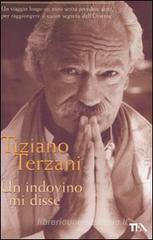
7. “Un indovino mi disse” by Tiziano Terzani


Anno di prima pubblicazione: 1995
Genere: reportage di viaggio
Paese: il reporter è italiano, ma i reportage riguardano Laos, Birmania, Tailandia, Malesia, Singapore, Indonesia, Cambogia, Vietnam, Cina, Mongolia e Russia.

In English: “A Fortune-Teller Told Me: Earthbound Travels in the Far East” by Tiziano Terzani

Nel 1976 Tiziano Terzani si trovava ad Hong Kong, dove un indovino gli disse che nel 1993 avrebbe corso un grosso pericolo e non doveva assolutamente volare. Gli anni passarono in fretta e quando arrivò il fatidico 1993 Terzani decise di continuare il suo lavoro di reporter viaggiando per l’Asia usando tutti i mezzi di trasporto tranne l’aereo. In ogni paese che visita cerca un indovino, in una specie di rito scaramantico a cui per altro non crede per niente. Qualche mese dopo precipita un elicottero delle Nazioni Unite pieno di giornalisti diretti in Cambogia, elicottero che se non avesse ascoltato la profezia dell’indovino di Hong Kong avrebbe preso di certo. Coincidenza o preveggenza? Inizia così un viaggio per tutta l’Asia interrogandosi sul paranormale, sull’arte della divinazione e su quella commistione tra pragmaticità e soprannaturale che caratterizza gran parte delle società asiatiche. E’ un libro da leggere mentre si scorre con il dito il percorso intrapreso, con l’atlante aperto alla pagina Asia. Mentre si legge il libro una domanda sorge spontanea: la magia in Asia è cialtroneria oppure quel che rimane di un’antica sapienza orientale che sta venendo via via soppiantata dalla scienza empirica occidentale?
Scrivendo con il piglio di Kapuscinski, a cui recentemente è stato attribuito anche un pregio narrativo oltre che giornalistico, Terzani ci accompagna attraverso molti paesi asiatici. Parte dal Laos, interrogandosi sul significato di “modernità”, in altre parole se questa possa arrivare solo come l’intendiamo noi occidentali. Il fiume Mekong, infatti, divide il Laos dalla modernissima Tailandia ma non c’è, almeno quando lo visita Terzani, un fiume che colleghi il paese, senza sbocco sul mare, con la Tailandia e quindi con il porto di Bangkok. I fiumi di turismo che hanno rovinato ed occidentalizzato la Tailandia, non arrivano a scalfire paesi “chiusi” all’occidente come il Laos e la Birmania. Ed è proprio in Birmania che Terzani si introduce di soppiatto (è interdetto dal paese perché considerato un giornalista scomodo), raccontandoci delle varie etnie e dei loro conflitti, dei regnanti che dominavano la Birmania prima dell’arrivo degli inglesi e della scaramanzia dei governanti di oggi, in particolare di Ne Win, che per scongiurare le predizioni di un indovino cercava sempre degli stratagemmi per non farle avverare. Dalla Tailandia “corrotta” dal turismo alla Malesia che ha fatto dell’Islam una bandiera in contrapposizione all’immigrazione cinese degli ultimi cent’anni, Terzani incontra uno o una veggente in ogni paese, facendosi ammaliare da alcuni di loro ed etichettando altri come cialtroni. Incontra quegli stessi cinesi della diaspora anche in Malesia e nell’iper-moderna Singapore o in Indonesia. Quello che li accomuna è il desiderio di arricchirsi e un sentimento d’identità legato alla madrepatria ancora molto forte.
L’Asia è un continente di contrasti e dopo il materialismo e lo sfarzo di Singapore Terzani raggiunge paesi messi in ginocchio dalle guerre, come la Cambogia che i Khmer rossi hanno praticamente ridotto ad un ossario o il Vietnam dove, aprendo il finestrino per fotografare la regione natale di Ho Chi Min, Terzani riceve in regalo un getto di fango e di sterco dagli abitanti del luogo, delusi dalla rivoluzione. Poi prende un treno che lentamente lo riporterà in Europa, attraversando, tra gli altri paesi, la Mongolia, paese un tempo satellite dell’Unione Sovietica. La modernità ha reso i mongoli, discendenti di Gengis Khan, pallidi fantasmi di sé stessi. Sono infatti ridotti a fare sì lo stesso percorso dei loro antenati conquistatori, ma solo per vendere merce a buon mercato. D’altronde l’Asia, secondo l’autore, è un continente dalla “bramosia autodistruttrice”, dove il desiderio di modernizzarsi e arricchirsi porta inevitabilmente alla perdita di quelle conoscenze che avevano reso l’Asia magica ai nostri occhi occidentali.

Tuesday, March 9, 2010

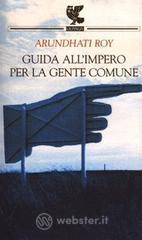
48. “Guida all’Impero per la Gente Comune” di Arundhati Roy [Italian version]


Anno di prima pubblicazione: 2002-2003
Genere: saggistica
Paese: l’autrice è indiana, ma gli articoli hanno anche a che fare con altri paesi, come l’Iraq, l’Afghanistan e il Pakistan

La mia recensione di Guida all’Impero per la Gente Comune è uscita in italiano sulla rivista culturale Paper Street ed è disponibile a questo link. Per non ripetermi, scriverò un po’ più in generale dell’autrice e di un recente risvolto del suo attivismo politico.

Arundhati Roy la cannibale, Arundhati Roy la hooligan. Alcuni la odiano e altri la amano. Io sono tra quelli che l’amano, sebbene non sia sempre d’accordo con lei. Per esempio quando, in un recente articolo pubblicato su Outlook India (pubblicato anche con il titolo “La guerra nel cuore dell’India” su Internazionale n.821, 13/19 Novembre 2009) , giustifica i ribelli maoisti, un gruppo di guerriglieri che sta dando numerosi problemi al governo indiano. Secondo me, il problema non è se queste persone abbiano ragione o no (naturalmente hanno ragione a non volere che le loro terre vengano sfruttate ed espropriate), il problema è che usano la violenza e il terrorismo per farlo. Roy ha per caso dimenticato il “metodo non-violento gandhiano” che ha portato il suo paese all’indipendenza? E’ arrivata alla conclusione che è fuori moda ed inutile digiunare e scioperare per i propri diritti di questi tempi? La violenza porta solo ad altra violenza: “occhio per occhio e tutto il mondo diventa cieco” diceva Gandhi. Per di più, tutti i gruppi di guerriglia che mi vengono in mente (le FARC colombiane o gli Shan in Birmania) hanno cominciato come idealiste e poi hanno finito per usare metodi illegali come il traffico di droga per finanziarsi, curandosi sempre meno dei loro scopi originali.
A parte i miei disaccordi personali con alcune delle sue opinioni, quello che ti fa ammirare questa quarantottenne indiana magrolina che vuole cambiare il mondo è che usa la scrittura come un’arma. E’ la passione che ci mette in quello per cui lotta e per cui crede che ti fa leggere con trepidazione ogni articolo che scrive, anche si tratti di qualcosa di distante dalla nostra vita di tutti i giorni come i gruppi tribali indiani. E la mia ammirazione per lei non è stata scalfita da questo esito inaspettato del suo attivismo.
Guida all’Impero per la Gente Comune è una collezione di saggi di Arundhati Roy scritti tra il 2002 e il 2003, nel periodo successivo all’11 settembre. Lungi da sembrare datati, gli articoli riguardano la relazione tra i potenti e le persone comuni, impotenti e sfruttate da quelli che detengono il potere. Che siano talebani, un gruppo tribale indiano o cittadini americani poco importa, ad Arundhati Roy importa delle persone comuni, ed è evidente nel suo difendere i ribelli maoisti, che sono persone comuni privare della loro terra.
Ora i ribelli maoisti hanno chiesto ad Arundhati Roy di mediare con il governo. Roy ha rifiutato naturalmente, dicendo che lei è una scrittrice e non ha le capacità di un mediatore. Invece spera in un cessate il fuoco di entrambe le parti. Perciò mi chiedo se Arundhati Roy di fatto approvi i mezzi usati dai maoisti per ottenere quello che vogliono, in assenza di alternative, oppure è d’accordo soltanto con la loro causa? Perché mi sembrava che, almeno dall’articolo sopraccitato, non stesse solo sostenendo la loro causa, ma stesse anche giustificando i loro atti di violenza nel nome di “un bene più grande”.

48. “The Ordinary Person’s Guide to Empire” by Arundhati Roy [English version]


Year of first publication: 2002-2003
Genre: non-fiction
Country: the author is Indian, but the essays also deal with other countries such as Iraq, Afghanistan and Pakistan.

My review of The Ordinary Person’s Guide to Empire has appeared in Italian on the cultural magazine Paper Street and it’s available at this link. In order not to repeat myself, even if in another language, I will write more in general about the author and about a recent outcome of her political activism.

Arundhati Roy the cannibal, Arundhati Roy the hooligan. Some people hate her and some people love her. I’m among those who love her, even though I don’t always agree with her. For example when, in a recent article published in Outlook India, she justified the Maoist rebels, a guerrilla group that is giving a lot of troubles to the Indian government. In my opinion, the problem is not whether or not these people are right (of course they’re right in wanting their lands not to be exploited and expropriated), the problem is that they use violence and terrorism to do that. Has Roy forgotten the “Gandhian non-violent approach” that led her country to independence? Has she come to the conclusion that it’s old fashioned and useless to fast and strike for your rights in times like these? Violence only lead to more violence; “an eye for an eye makes the whole world blind” Gandhi used to say. Moreover, all the guerrilla groups I can think of (the Colombian FARC or the Shan in Burma) started off as idealistic and ended up using illegal activities like drug smuggling to finance themselves, caring less and less about their original aims.
Apart from my personal disagreements with some of her opinions, what makes you admire this 48-year-old skinny Indian woman who wants to change the world is that she uses writing as a weapon. It’s the passion that she puts in what she fights for and believes in that makes you read with trepidation every article that she writes, even if it’s about something very distant from your everyday life as the tribal groups of India. And my admiration for her has not been touched by this unexpected outcome of her activism.
The Ordinary Person’s Guide to the Empire is a collection of essays by Arundhati Roy written in 2002-2003 on the aftermath of 9/11. Far from sounding dated, the essays are about the relationship between the powerful and ordinary people, helpless and exploited by those who detain the power. Whether they are Talibans, a tribal group of India or American citizens, ordinary people are what matters for Roy and this is evident in her defence of the Maoist rebels, who are ordinary people deprived of their lands.
Now the Maoist rebels have asked Roy to mediate with the government. Roy has of course rejected the offer, on the grounds that she is a writer and she doesn’t have the skills of a mediator. She hopes for a ceasefire on both sides, instead. So does Arundhati Roy actually support the Maoist’s means to get what they want in absence of alternative ways or does she only agree with the cause? Because it seemed to me that, at least from the article aforementioned, she was not only advocating their cause, but also justifying their acts of violence in name of “a greater good”.

Saturday, December 19, 2009

Parole dette al vento - Niente narrativa dal 1971!

Un paio di settimane fa su Internazionale (n.824 – 4/10 dicembre 2009) è uscito un articolo di David Randall, un autorevole giornalista britannico, intitolato “Ho smesso di leggere i romanzi”.

Randall sostiene di non leggere un’opera di narrativa dal 1971 e di leggere solo ed esclusivamente saggistica. La cosa sconcertante non è tanto che David Randall preferisca la saggistica alla narrativa, ma che accantoni la narrativa con la motivazione che se i personaggi sono plausibili, non vale la pena leggere un’opera uscita dalla fantasia di uno scrittore.

Visto l'argomento del mio blog, non potevo che non essere d'accordo. Non leggere narrativa è un po’ come dire “non mi piace la fotografia d’autore perché conosco già com’è fatta la realtà”. La letteratura è una forma d’arte come la pittura o la scultura, come il cinema o, appunto, la fotografia. Secondo me i romanzi ci offrono punti di vista alternativi ed originali, a cui altrimenti non avremmo mai accesso. Un’opera di narrativa può scandagliare la mente umana in modi che i saggi scientifici non faranno mai, perché indaga le emozioni da un punto di vista personale, soggettivo, e non sempre affidabile (vedi per esempio “Il Giro di Vite” di Henry James). La narrativa fa riflettere sull’esistenza umana, sulla complessità e la vastità dei sentimenti e delle esperienze umane, ci fa conoscere parti del mondo e categorie di persone che altrimenti ci sarebbero inaccessibili.

Se per esempio leggiamo un saggio di storia sulla Londra vittoriana, avremo davanti ai nostri occhi una serie di dati e la consapevolezza, per esempio, dell’estrema povertà di un certo strato sociale di Londra, la presenza endemica di orfani e del lavoro minorile. Ma la storia, oltre a fornirci dati sulle masse, ci racconta quasi solamente dei grandi personaggi: la regina Vittoria o al massimo il suo consigliere prediletto. Per entrare nella vita delle persone comuni, per esempio di un ragazzino dell’epoca vittorian, e capirne le sofferenze e le emozioni non possiamo fare altro che leggere Dickens. Ho studiato a fondo la guerra di secessione americana e le sue cause, legate allo schiavismo e all’abolizionismo, ma posso dire di aver “capito” che cosa volesse dire essere uno schiavo nel profondo sud americano – se si può affermare di poter capire una cosa talmente orrenda - solo leggendo “Amatissima” di Toni Morrison! Ho pianto lacrime amare leggendo quel libro, cosa che non mi è mai capitata leggendo un libro di storia sull’argomento. E un'ultima cosa vorrei aggiungere, che tra l'altro calza a pennello perché ho appena citato Toni Morrison, che è una scrittrice dalla prosa a dir poco "poetica". La letteratura è spesso poesia! Il modo in cui vengono usate le metafore, le sinestesie, le allitterazioni... e poi l'ironia, il sarcasmo, la satira. C'è tutto e ancora più di tutto nella letteratura: c'è la sociologia, la psicologia, la storia e la politica.

PS: Mi sono ricordata che circa un anno fa avevo dato vita ad una serie di post intitolati
"Parole dette al vento", scritture volanti rigorosamente in italiano dove intrecciavo autori che amo e parole o poesie nella speranza che qualcuno le "cogliesse" come le avevo colte io. Ne ho scritti solo due (e uno su Toni Morrison!) e poi me ne ero dimenticata, ironia della sorte. Ora ho rimesso il tag, ma credo che ci fossero altri post che potrebbero essere taggati con quel nome...

PS2:
il link ad un'altra opinione sull'articolo di David Randall, da parte di un blogger di nome Patassa.

Wednesday, September 30, 2009

28. “Maximum City. Bombay Lost and Found” by Suketu Mehta


Year of first publication: 2004
Genre: narrative non-fiction, memoir, travelogue, reportage, socio-political analysis
Country: USA / India

In italiano : “Maximum City. Bombay Città degli Eccessi”, edito da Einaudi (2006), € 13,80

About the author: Suketu Mehta (born in 1963) is a writer based in New York City. He was born in Calcutta and raised in Bombay until the age of 14, when he moved with his family to the New York area. Maximum City, which is an autobiographical account of his experiences in Bombay in the two-and-a-half years spent to research the book, was released in 2004 and was a finalist for the Pulitzer Prize. Suketu Mehta also co-wrote the screenplay of Bollywood movie Mission Kashmir with novelist Vikram Chandra. He is currently writing a book about the New York City immigrant experience.

What it’s all about: This book offers a fascinating insight into one of the world's largest, most vibrant and most chaotic cities in the world: Bombay (now renamed Mumbai). It covers everything from organized crime and prostitution to the Bollywood industry, from the political parties that control the city to the religious conflicts and riots between Muslims and Hindus.

Some thoughts: Maximum City is neither a common travelogue nor an average non-fiction book about Indian society; it’s more like an engaging novel with political and social insights. In a whirlwind of unforgettable characters, Suketu Mehta takes you to the flamboyant city of Bombay a.k.a. Mumbai a.k.a. the Gateway of India.
The people encountered by Mehta during his time in Bombay are not the boring people of everyday life, but peculiar, interesting people who could easily come out of a novel, almost to the point that you ask yourself how much of the book comes from firsthand experiences and how much is the result of the author’s re-work of these same experiences. Each Bombayite in the book inhabits his own Bombay: from Sunil, a Hindu nationalist who rises from street thug to Shiv Sena party leader, to Monalisa, a “beer bar” dancer, and Ajai Lal, who claims to be the only non-corrupted policeman in Bombay.
On the back cover of my Italian edition, there’s a recommendation from Salman Rushdie who says that Maximum City is the best book ever written about Bombay. Moreover, travel writer William Dalrymple considers it one of the best city books ever written and he must be right, because this book is excellent! Suketu Mehta is a successor of that tradition of travel writing that has Bruce Chatwin and Ryszard Kapuscinsky as their mentors.
Mehta portrays a city of shocking contradictions, where extreme poverty and opulence live close together. He meets gangsters, hit men, prostitutes, transvestites, policemen, wannabe poets, actors, film directors, aspiring jain monks and every kind of person that makes the incredible city of Bombay as it is. Bombay appears to be built entirely on sex, money and criminality: the aura of spirituality that pervades the western idea of India is completely swept away by the materialism of the people who inhabit the city, from its slums to its richest neighbourhoods. Those who are not part of this materialistic society, like the aspiring poet Babbanji, are crushed by the cruelty of Bombay.
By reading this book, I think I came to understand what writers such as Salman Rushdie (another Mumbaikar!) mean when they say that in a country like India “magical realism” is reality and not just fantasy: the violence that spurts out of Bombay is so shocking that it seems unreal to the reader of this book, sit in his comfy chair in a Western living room of a first-world country.
After reading this book, I almost came to the conclusion that I don't want to set foot in Mumbai whatsoever. Let's see if some other Bombayite book is going to make me reconsider this.


Wednesday, July 29, 2009

19. "Leggere Lolita a Teheran" by Azar Nafisi

Anno di prima pubblicazione: 2003
Genere: memorie, saggistica
Country: Iran

Sull’autrice: Azar Nafisi è nata nel 1955 in Iran. Dopo essere stata espulsa dall’Università di Teheran per essersi rifiutata di portare il velo, ha lasciato il suo paese per trasferirsi negli Stati Uniti, dove tra l’altro si era laureata. Ora vive a Washington D.C. con il marito e i figli ed insegna alla John Hopkins University. Ha scritto per il New York Times, il Washington Post, il Wall Street Journal e numerose alter testate giornalistiche. Ha appena pubblicato il suo secondo libro di memorie, Things I've Been Silent About.

La recensione di questo libro si trova nella rivista on-line Paper Street (qui il link) con cui ora collaboro.


Iran e Libri

Un paio di settimane fa, sull'inserto TuttoLibri de La Stampa, c'erano ben due pagine dedicate all'Iran e ai romanzi in uscita sul paese mediorientale. Tra i titoli proposti:
Quest'ultimo si trova in praticamente tutte le librerie ed ha una copertina a dir poco suggestiva (e cliccateci su quei link!), ma tra la Babele di libri di narrativa sui paesi mediorientali ho scelto di comprare La collezionista di Storie di Randa Jarrar, che sto leggendo ora.
Tra gli altri libri sull'Iran di recente uscita, il fumetto Persepolis di Marjane Satrapi, da cui l'omonimo film.

Tuesday, April 28, 2009

11. "The Shadow of the Sun" di Ryszard Kapuscinsky ("Ebano")

Anno di prima pubblicazione: 1998 (in polacco)
Genere: non-fiction, saggistica, reportage,
Paese: Polonia / Africa sub-sahariana (Ghana, Tanzania, Uganda, Nigeria, Mauritania, Sudan, Rwanda, Liberia, Etiopia, Eritrea e probabilmente altri che non ricordo)

In italiano: “Ebano” di Ryszard Kapuscinsky, pubblicato da Feltrinelli nella collana Universale Economica (2002), 8 €

L’autore:
Ryszard Kapuscinsky è nato nel 1932 a Pinsk, che oggi si trova in Biellorussia ma che all’epoca era Polonia. Studiò a Varsavia e lavorò in Polonia fino al 1981 come corrispondente estero per l’agenzia di stampa polacca Pap, dove era responsabile per 50 paesi. Ha viaggiato molto in Africa, Asia e America, scrivendo sulle guerre, i colpi di stato e rivoluzioni in vari paesi del mondo. Tra i suoi libri più conosciuti, Il Negus (1983), che parla del declino dell’impero di Haile Selassie in Etiopia e Shah-in-shah (2001) sulla caduta di Mohammad Reza Pahlavi, l’ultimo shah dell’Iran. Il suo approccio ai paesi più disparati avveniva attraverso la lettura; era infatti solito leggere per mesi sul paese che stava per visitare. La sua scrittura è forse più narrativa che giornalistica, perché descrive gli incontri fatti durante i suoi viaggi e li usa per parlarci di come sono fatte le persone in paesi diversi dal nostro, ma anche per illustrare le caratteristiche di un certo luogo, sia questo il deserto, la giungla o un villaggio sperduto dell’Africa sub-sahariana. Kapuscinsky è stato più volte vicino a vincere il premio Nobel, prima della morte nel 2007.

Trama: Kapuscinski vive in prima persona tutte le guerre e i cambiamenti dell’Africa dagli anni ’50 agli anni ’90, dal Ghana che sta per ottenere l’indipendenza all’ascesa al potere di Amin in Uganda, dalla rivoluzione sull’isola di Zanzibar al genocidio in Rwanda.

Alcuni pensieri: Il modo di scrivere di Kapuscinsky è a metà strada tra il reportage e la letteratura, un po’ come il Bruce Chatwin de Le Vie dei Canti. Mi sono piaciuti in modo particolare tre capitoli, o almeno sono quelli che ricordo meglio ora, anche se il libro mi è piaciuto nella sua interezza.
Il primo è il capitolo su Idi Amin, personaggio che affascinava Kapuscinsky al punto che avrebbe voluto scrivere un libro su di lui. Amin è stato il dittatore dell’Uganda dal 1971 al 1979. Spiegare come quest’ufficiale dell’esercito poco istruito ma molto carismatico sia potuto salire al potere e dettar legge in Uganda per otto anni è lo scopo del saggio di Kapuscinsky. Avevo avuto modo di conoscere questo dittatore africano tramite un film, The Last King of Scotland (2006), che parla di un giovane medico scozzese che si reca in Uganda, inconsapevole del dominio incontrastato e delle atrocità commesse dal suo padre padrone. La storia che ci racconta Kapuscinsky aiuta a comprendere come personaggi come Mobutu in RDC o Mengistu in Etiopia (ma anche gli odierni Mugabe o al-Bashir) possano avere avuto tanto seguito e perché i genocidi e i colpi di stato continuino a susseguirsi in Africa, mentre in altre parti del mondo, per esempio in America Latina, sembrano essere cessati.
Un altro capitolo che mi ha particolarmente colpito è quello che spiega le ragioni del genocidio in Rwanda in maniera eccellente. Non solo Kapuscisnky spiega per filo e per segno su che cosa si basava la distinzione tra hutu e tutsi (una forzatura dei colonizzatori belgi, com’è risaputo), ma la paragona al sistema delle caste indiane, rendendo l’idea di quanto è stata forzata e insensata la divisione. Anche qui ho un collegamento cinematografico da consigliarvi, ovviamente Hotel Rwanda.
Il terzo capitolo che mi ha colpito è quello sulla Liberia, paese nato per ospitare gli schiavi liberati negli Stati Uniti, a cui è stato dato un pezzo di Africa a caso, ignorando le popolazioni africane che già abitavano quelle parti. Mi ha sempre affascinato la storia curiosa di questo paese e il meccanismo per cui degli ex-schiavi (o i loro figli e nipoti) sono diventati padroni in un paese che forse gli apparteneva ancestralmente, ma nel quale non si sono mai sentiti perfettamente a loro agio, rifiutando di integrarsi nella società africana che li aveva accolti. Gli ex-schiavi hanno riproposto quello che già conoscevano, cioè la relazione servo-padrone e il dominio di una parte della popolazione, quella americano-liberiana, su un’altra, quella africana, creando un vero e proprio regime di apartheid tra persone con la pelle dello stesso colore.In definitiva, non vedo l’ora di leggere un altro dei libri di Kapuscinsky (magari in italiano questa volta) per imparare altre cose sul mondo e sui paesi e personaggi che hanno affascinato l’autore e che continuano ad affascinare noi europei.

Sunday, November 23, 2008

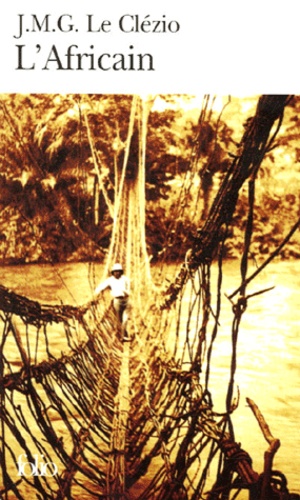
"L'Africain" by J.M.G. Le Clézio


Year of publication: 2004
Genre: biography, memoir
Setting and Time: Nigeria, Cameroon, France and Guyana, before and after the Second World War
Themes: Africa, family relationships, vocational jobs, colonialism

Nobel Prize in Literature 2008

About the author: read this post

What it’s all about: In this short book Le Clézio remembers his father, who was a “jungle doctor” first in Guyana and then in Cameroon and Nigeria. Here you can find his thoughts about his African childhood and about life in remote places.

Some thoughts: Can you start to understand why Le Clézio won a Nobel Prize by reading this nice little book? Not really. I mean, this is simply the account of the life of Le Clézio’s father as a doctor in various parts of the world, not a full-length novel. Of course, you can learn about his background and understand why he wrote about so many different parts of the world (sort of like Bruce Chatwin I would say).
The childhood of the Le Clézios in Africa is the antithesis of colonial life: they don’t have a big house with many servants (even though they have a “houseboy”) and they are the only white people in their village, so they are not enjoying the kind of life that Doris Lessing or Muriel Spark might recount about their African experience. There were a few fascinating things that he remembers about Africa, for example some of its animals and the life style of the people over there. The most interesting thing is how Le Clézio’s father is changed and shaped by his hard life in remote places of the world: when he goes back to France he is a real African man. There is nothing exotic in Le Clézio’s tale: his father led a lonely life in very isolated places and sometimes he had little human contact. Moreover, he lived with the frustration of not having the right medicines to cure the most common diseases of the villagers.
I’d like to read more about this author, as I’m not really in a position to say if he deserved the Nobel Prize or not. For the moment, I’m happy that I managed to read this small book in its original language and I can say that I quite enjoyed it.

Just click on the tag called Nobel Prize in Literature 2008 for some "musings" on this year's Nobel Prize Award.


Sunday, October 12, 2008

“Shakespeare in Venice” di Shaul Bassi e Alberto Toso Fei

Anno di pubblicazione: 2007
Pubblicato da: Elzeviro ( € 19,50)
Temi: Shakespeare, Venezia, leggende, storia, storia dell’arte

Read review of this book in English here.

Gli autori
: Shaul Bassi insegna letteratura inglese e postcoloniale all’università Ca’ Foscari di Venezia. I suoi interessi di ricerca si dividono tra Shakespeare (con una particolare passione per Otello) e la letteratura contemporanea (con una particolare passione per Rushdie). Alberto Toso Fei, viaggiatore e giornalista, discende da una delle antiche famiglie di vetrai di Murano. Ha dato vita ad una ‘trilogia del mistero’ (vedi libri consigliati alla fine del post).

Di cosa si tratta: Il Mercante di Venezia e Otello furono ispirati da un reale viaggio a Venezia o Shakespeare immaginò la città a distanza per scrivere i suoi due capolavori veneziani? Anche se gli studiosi ritengono che egli non abbia mai messo piede in Italia, nel passeggiare per Venezia è forte la tentazione di credere il contrario: sono così tanti i luoghi, i monumenti maestosi e gli angoli nascosti che ci sembrano sussurrare “Shakespeare è stato qui”. Perché i campi e le calli di Venezia raccontano molte storie e Shakespeare non sapeva resistere alle storie.

Pensieri: Sia che tu ami Venezia sia che tu ami il bardo, troverai questo libro a dir poco sfizioso. Io, che li amo tutti e due, l’ho trovato magico. Shaul Bassi è stato il mio professore di letteratura inglese postcoloniale all’università e lo stimo molto. Tra i suoi (tanti) interessi c’è appunto Otello, personaggio shakesperiano che mi ha sempre affascinato più di ogni altro, e la cultura ebraica. Siccome tra i miei vicini di casa veneziani posso vantare il presidente della comunità ebraica italiana, il signor Amos Luzzatto, ho cominciato ad interessarmi pure di questa comunità dimenticata, eppure così tipicamente veneziana. Fare una passeggiata per il ghetto di sabato è magico, è come se Shylock prendesse vita. Delle volte, camminando da quelle parti, si scorge la statua di un moro dietro la vetrina di un antiquario e le connessioni shakespeariane sorgono spontanee.
Tramite questo libro ho scoperto tutta una serie di piccole curiosità e leggende veneziane, che vanno ben oltre il ‘Ponte delle Tette’ o quello ‘dei Pugni’. Mi spiego anche i motivi per cui Venezia è una specie di isola felice in un Veneto popolato da xenofobi: arabi, turchi, africani, ebrei ashkenaziti e sefarditi… chi più ne ha più ne metta, insomma. Venezia era (ed è) un vero crogiolo di genti. Il libro è corredato da bellissime foto in bianco e nero e da citazioni delle opere del bardo che in qualche modo riguardano la città lagunare. Per conoscere la geografia di Otello e Desdemona, ma non solo.

Altre guide alternative di Venezia:
  • Venezia è un Pesce – Tiziano Scarpa
  • Veneziaenigma. Tredici Secoli di Cronache, Misteri, Curiosità e Straordinarie Vicende Tra Storia e Mito – Alberto Toso Fei
  • Leggende Veneziane e Storie di Fantasmi – Alberto Toso Fei
  • Misteri della laguna e racconti di Streghe – Alberto Toso Fei

Sunday, September 21, 2008

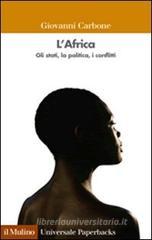
“L’Africa. Gli stati, la politica, i conflitti” di Giovanni Carbone


Anno di pubblicazione: 2005
Pubblicato da: Il Mulino (€11,5)
Genere: non-fiction
Temi: Africa, geopolitica, colonialismo, conflitti, tensioni etniche

L’autore: Giovanni Carbone insegna Scienze Politiche presso l’Università degli Studi di Milano, è “visiting yellow” presso il Crisis States Research Centre della London School of Economics e ricercatore associato presso l’Istituto per gli Studi di Politica Internazionale (ISPI) di Milano.

Di cosa si tratta: Un intero continente pressoché rimosso, di cui sappiamo pochissimo, che si impone alla nostra attenzione soltanto in occasione di avvenimenti “estremi”: questa è oggi l’Africa per il resto del mondo. Ripercorrendo i maggiori snodi politici che ne hanno delineato il volto contemporaneo, il volume presenta i tratti principali e le dinamiche più comuni dei sistemi politici del continente africano, in riferimento al più ampio contesto sociale, culturale ed economico. Ne emerge una vicenda che si caratterizza per la pesante eredità del colonialismo, la forte concentrazione e personalizzazione del potere, una competizione politica segnata da aspre connotazioni etniche, una diffusa corruzione e reiterate violenze. Un quadro che tuttavia ha visto anche, in tempi recenti, una precaria riduzione dei conflitti armati e importanti seppure incerti tentativi di democratizzazione.

Pensieri: Questo libricino (non più di 200 pagine) è prezioso per capire i retroscena di alcune tragedie e problematiche africane. Spiega, con chiarezza e precisione, il processo che ha portato gli stati africani ad essere quello che sono, partendo dagli assetti politici del tempo del colonialismo, passando per il momento in cui sono diventati indipendenti, per finire con l’instabilità politica e la corruzione degli stati odierni. Carbone spiega in particolare perché il colonialismo è la causa principale dei problemi politici e sociali dell’Africa dei giorni nostri.
Uno spazio considerevole è dedicato al concetto di ‘etnia’ e alle sue implicazioni, con particolare attenzione agli errori di valutazione degli europei, con conseguenze disastrose. Il libro parla dell’importanza delle divisione etniche nella nascita dei conflitti civili africani, senza però tralasciare le altre cause (corruzione, arricchimento personale, sfruttamento delle risorse, interessi internazionali). Ci sono anche schede dettagliate sul percorso politico di alcune zone calde dell’Africa (Rwanda, Somalia, Sud Africa). C’è da specificare che l’Africa di cui parla l’autore è, per scelta, quella sub-sahariana: per motivi culturali i paesi che si affacciano sul Mediterraneo non vengono trattati in questo libro. Se esistesse un corso universitario di ‘Storia dell’Africa’ (e c’era a Ca’ Foscari fino a qualche anno fa), questo sarebbe un testo altamente consigliato. Sull’argomento è molto interessante anche Vado Verso il Capo di Sergio Ramazzotti (Feltrinelli, 8 €), un resoconto di viaggio allucinante: da Algeri a Città del Capo con i mezzi pubblici.

Tuesday, August 26, 2008

"Gomorra" (Gomorrah. The Other Mafia) by Roberto Saviano


Year of publication: 2006
Genre: UNO (Unidentified Narrative Object), non-fiction

About the author: Roberto Saviano was born in Naples in 1979. He employs prose and news-reporting style to narrate the story of the Camorra (the mafia of Naples and the surrounding area). His first book, Gomorra, which describes the illegal activities of the Camorra business, was a bestseller in Italy. He has been threatened by several Neapolitan “godfathers” belonging to the Casalesi clan, so he was assigned a permanent police escort by the Italian Minister of the Interior. He now writes for newspapers such as ‘La Repubblica’ and ‘L’Espresso’.

What it’s all about: This is a powerful and shocking insight into Neapolitan mafia (Camorra) and its wide implications in Italy’s and the world’s organized crime. Gomorra was made into a movie of the same name directed by Matteo Garrone, which premiered at Cannes Film Festival in 2008.

Some thoughts: The first man who had the guts to write about mafia, with names and everything: I tip my hat to Roberto Saviano. Forget about Mario Puzo. Even forget about Camilleri’s Commissario Montalbano. This is the real mafia, and that’s probably why the English version is subtitled The Other Mafia.
I get so pissed off when I meet some people who, as soon as they learn that I am Italian, state that they love Italian cinema, and if I dare to ask which movies they like, they answer very proudly: The Godfather and Quentin Tarantino. Apart from the fact that those are American movies with American actors made by American people, mafia is not like that. Mafia is an unpalatable reality few outside of Italy understand or are able to believe. Its implications are worldwide and its power huge and unstoppable. As I come from the north of Italy, where organized crime takes more subtle forms, I was quite shocked to learn the extent of the phenomenon. Saviano gives a very detailed account of the business of mafia, explaining how every economical activity in the outskirts of Naples is linked to the Camorra clans. What is astonishing is that these clan leaders consider themselves to be simple businessmen who work in the ‘system’. The fact that their activities are illegal seems to be quite normal for them.
In towns like Secondigliano and Casal di Principe, the underground is the only way to earn a living, since there is one of the highest unemployment rates in Europe. During this year’s Olympic Games, a boxer called Clemente Russo from Marcianise, Caserta, dedicated his silver medal to the youths of his town, with the hope that they find a way out of the widespread criminality of the area.
It is clear that nobody in the Italian government has read this book, otherwise they would have sent some soldiers to Secondigliano and the surrounding area, instead of scaring the pigeons in Piazza del Plebiscito!
On the literary merits of the book: at the beginning, I was baffled because I could not understand whether I was reading plain non-fiction or a narrative, highly informative fiction book. Certain parts of the book have a first person unnamed protagonist and some characters, though underdeveloped. After having read half of the book, I came to the conclusion that this is a new narrative form in Italian literature (Wu Ming 1 called it Unidentified Narrative Project: Quite appropriate!).

Oh, please make sure that you check Wu Ming, a group of Italian writers who were once part of the famous Luther Blissett Project. Click
here.
Check out another review of Gomorra from a blogger friend, here.

Thursday, August 7, 2008

"Le Racisme Expliqué à Ma Fille" (Racism Explained to my Daughter) by Tahar Ben Jelloun

Year of publication : 1998
Genre: non-fiction for children and young adults

About the author: Tahar Ben Jelloun was born in Fez, Morocco, in 1944. After having attended bilingual schools in Morocco, he studied philosophy and psychology in Paris and has been living in France since 1971. He became famous with the novel L’enfant de Sable (The Sand Child, 1985). His novel La Nuit Sacrée (The Sacred Night, 1987) won the Prix Goncourt, the most prestigious literary prize in France. Racism Explained to my Daughter was a best seller in France, Italy and Germany.

What it’s all about: This book was conceived during a demonstration against an immigration law in Paris and answers his daughter’s questions about the reasons for racism. It is aimed primarily at children and teenagers and it was widely read in schools in France.

Some thoughts: I don’t usually read non-fiction books, but I’ve always desired to have this book on my shelf. I know many people (in the sad sad place where I come from) who should read this. Unfortunately, as the author says many times, adults’ preconceptions are difficult to eradicate, which means we should work with children. I would strongly advice every Italian school to have this read in class, but as for Treviso, there is a long way to go.
I also learned a few things from the book, apart from some racial slurs in French that I’ll never use. For example, I learned that 5 out of 6 French people are of ‘foreign descent’ and a bit of history of the Jewish population of Morocco.

Now I’d like to share a short anecdote with you. It’s from a letter addressed to the author included in the annexes (pardon me if I'm too lazy to translate or find the English version):

Lorsque ma fille avait quatre ans, lors d’une promenade dans notre petite ville où nous ne rencontrions à l’époque presque jamais de personnes d’ascendance africaine, nous voyons venir en notre direction un bel homme de très haute stature, aux traits africains, à la peau presque d’ébène. Lorsqu’il nous a croisés et qu’il est à quelques pas derrière à nous, ma fille me demande si je pense qu’il est hollandais. Je suis surprise de sa question; je n’ai vu que des traits africains, une peau de couleur très foncée. « Pourquoi penses-tu qu’il est hollandais ? » lui demandai-je. « Eh bien, me dit-elle, c’est parce qu’il porte des sabots. » Je me retourne et , en effet, le jeune homme portait des sabots. Cela m'a fait chaud au cœur.