Showing posts with label Somalia. Show all posts

Tuesday, July 27, 2010

“Mamba Boy” di Nadifa Mohamed + random questions sulla letteratura africana

Anno di prima pubblicazione: 2010
Genere: romanzo
Paese: Scrittrice di origine somala “based” in Gran Bretagna. Romanzo “itinerante” ambientato un po’ in tutta l’Africa orientale e nel Medio Oriente, fino a raggiungere il Galles nel finale.

La recensione di questo è libro è uscita nella rivista di cultura on-line Paper Street ed è disponibile a questo link.

Colgo l’occasione per segnalarvi due puntate della rivista “Che libro fa…” di Giovanna Zucconi che sollevano domande importanti riguardo alla letteratura africana postcoloniale (ma sarebbe ora di abolire questo termine, perché non tutta la letteratura africana tratta necessariamente di tematiche legate al postcolonialismo). La prima è: “perché i kenioti scrivono così poco? E perché lasciano agli stranieri, soprattutto ai giornalisti, il compito di raccontare la loro terra?”. Nel tentativo di portarci un paio di esempi di kenioti che scrivono l’autrice ci nomina Stanley Gazemba, che ha vinto il più importante premio letterario del Kenya e che vive in uno slum, dimostrando che la letteratura non è solo appannaggio dei ricchi, e Lily Mabura, che è stata finalista del Caine Prize con la sua storia “How Shall We Kill the Bishop”.

L’atro quesito sollevato recentemente da “Che libro fa…” riguardo alla letteratura africana è: “ma i neri sudafricani leggono?”. Con riferimento ad un articolo pubblicato sul Times sudafricano che ha creato numerose polemiche e aperto un dibattito, appaiono cause diverse dalla presunzione, razzista, che i neri non leggano. Ovvero, non ci sono biblioteche nelle scuole, scarseggiano le librerie (l’unica di Soweto ha appena chiuso) e, non da ultimi, la gente ha altre cose a cui badare, come ad esempio procacciarsi il cibo per il pranzo di domani. Credo che sia il problema di molti paesi africani. Progetti timidi e personali spuntano qua e là (con una mia amica un tempo era nata l’idea di spedire dei libri in Afghanistan, vedi il banner “A Modest Proposal” qui a fianco), ma chissà perché le persone più volonterose sono sempre quelle prive di fondi. E’ vero: ci sono cose più importanti, come aprire ospedali ed ambulatori, ma il progresso si ottiene solo attraverso l’istruzione, l’ha detto qualcuno di famoso, credo.

Friday, January 22, 2010

Italia e Corno d’Africa: “Madre Piccola” di Cristina Ali Farah

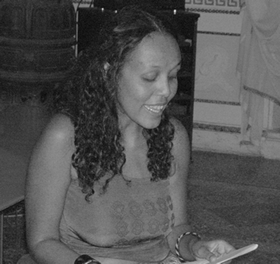
Ubax Cristina Ali Farah è nata a Verona nel 1973 da padre somalo e madre italiana. Le piace dire che è suo padre l'africano, mentre sua madre è italiana, ribaltando la consuetudine che vuole siano le spesso bellissime donne africane a sposare gli uomini bianchi, e non viceversa. Cristina è vissuta a Mogadiscio dal 1976 al 1991, quando è stata costretta a fuggire a causa della guerra civile scoppiata nel paese. Ora vive a Roma, dove organizza eventi letterari e si occupa di educazione interculturale, con percorsi rivolti a studenti, insegnanti e donne migranti. E’ anche co-fondatrice della rivista di letteratura della migrazione El-Ghibli. Poetessa ed autrice di diversi racconti, nel 2007 è uscito il suo primo romanzo, Madre Piccola.

Barni e Domenica Axad sono due cugine, cresciute insieme a Mogadisco e legate da un filo sottile ma resistentissimo. Vengono separate contro il loro volere quando Domenica parte, insieme alla madre, alla volta di un paese a lei sconosciuto, ma che in realtà è quello della madre: l’Italia. Quando le due cugine finalmente si rincontrano a Roma dopo molti anni, la Somalia è ormai “persa” perché in preda alla guerra civile, ma ancora viva nei loro ricordi di bambine. Barni decide di essere la habaryar, la madre piccola, del figlio che Domenica porta in grembo. “Madre piccola” è infatti il modo in cui i somali si riferiscono alla zia materna.

Attraverso questo libro Cristina Ali Farah ci parla della Somalia dove la colonizzazione italiana ha lasciato tracce evidenti e anche ferite non meno profonde, ha stretto forti legami tra Mogadiscio e Roma, legami che però ora che la Somalia è in preda alla guerra civile l’Italia sembra aver dimenticato. In Italia non si ricorda mai questa brutta parte della nostra storia nazionale, quando ci siamo macchiati di crimini di cui spesso accusiamo le altre nazioni – Inghilterra, Francia o Spagna. Questa parte della nostra storia non si studia a scuola e i giornalisti non ne parlano spesso. Cristina Ali Farah parla dei somali della diaspora, sparsi nelle città di mezzo mondo, ma anche dei “meticci” italo-somali, poco accetti in entrambe le culture. Quegli stessi discorsi che sembrano banali se riferiti ad uno scrittore algerino di lingua francese o ad uno scrittore guyanese di lingua inglese, non sono banali per la poco conosciuta “letteratura postcoloniale italiana”, definizione alquanto dubbia quanto quella di “letteratura italofona”. Cristina, cresciuta a Mogadiscio, ha studiato in una scuola italiana su libri italiani, è di madrelingua italiana e quando le si domanda se si sente italiana (domanda che le è stata posta da un anziano signore alla presentazione del libro a cui sono andata lo scorso anno), rimane un po’ sorpresa. E come potrebbe non sentirsi italiana? Eppure si sente anche somala ed è una cosa che si percepisce molto nel libro, impreziosito da espressioni e parole somale. Non sono due cose che non possono convivere, l’essere italiani e l’essere somali, giacchè l’autrice, così come la Domenica Axad del libro, lo fa nei suoi due nomi di battesimo, Ubax, un nome somalo, e Cristina, un nome italiano.

Di questo primo libro di Cristina mi ha colpito molto il modo di scrivere, la sintassi proprio, rotta, discontinua, discorsiva, bellissima. Non so come spiegarvelo, ma l’ho interpretato un po’ come un modo per dimostrare a quel signore che le ha posto quella domanda che sì, lei è proprio di madrelingua italiana, che usa l’italiano con tutte le sue sfaccettature e le sue complessità. Non posso far altro che riportarvi un piccolo assaggio del libro:

" Soomaali baan ahay*, come la mia metà che è intera. Sono il filo sottile, così sottile che si infila e si tende, prolungandosi. Così sottile che non si spezza. E il groviglio di fili si allarga e mostra, chiari e ben stretti, i nodi, pur distanti l'uno dall'altro, che non si sciolgono.
Sono una traccia in quel groviglio e il mio principio appartiene a quello multiplo.
Il mio principio è Barni mentre mangiamo insieme dal piatto comune. Siamo sedute per terra l'una accanto all'altra e i maschi ridono per come tengo le gambe. Sulla stuoia le ginocchia si toccano, una gamba di qua e una gamba di là. Non ti si spezzano dalbooley*? Vedessi quando corre quanto fa ridere, i polpacci che vanno a destra e a sinistra.
Barni, persino i maschi hanno paura di lei. Si alza e li prende per il collo, graffia, dovresti vedere come graffia. Nessuno si azzardi a scherzare. Il piatto quasi pieno si rovescia ed eccola, la mia Barni con la sua voglia a cuore proprio in mezzo alla fronte, che corre a protestare, mai un giorno che si possa mangiare senza dover fare a botte con questi prepotenti. Ve lo faccio vedere io chi è più forte. Io ci ho provato una volta, volevo essere come lei, ma di Barni ce n'è una sola.
Il mio principio è noi due che ci infiliamo in cucina, vediamo la papaia tutta aperta con i suoi semini tondi tondi ed ecco, un po’ a te e un po’ a me, poi corriamo in cortile e facciamo una buca profonda nella sabbia rossa, domani torniamo e magari, chissà, è spuntato qualcosa. Barni che mi dice coraggio, quel giorno che hanno messo la trappola per il gatto, quello che rubava sempre la carne dal cesto della spesa, e ora che l’hanno beccato le danno tante di quelle bastonate che non riesco neanche a guardare. L’hanno buttato per strada, ma quello è tornato, ora non ruba più la carne, ha un occhio raggrinzito. Forse è tornato per ricordare che il nostro profeta Maometto amava i gatti, dicono che una volta un gatto gli si è addormentato sul braccio e il profeta, per non svegliarlo, ha deciso di tagliarsi la manica.
Il mio principio è Barni quando tocca a me raccontare le storie, mi chiede quelle dei libri che leggo e traduce le parole che non so, come quella volta che volevo dire la storia della sirenetta e io raccontavo, una donna metà pesce e metà donna, come si dice, gabareymaanyo dice Barni, ecco come di dice. Vorrei anch’io essere una gabareymaanyo, ma non so nuotare, al mare volevo raggiungerla nell’acqua, ma c’era una buca, meno male che Barni è più alta di me, è venuta subito a tirarmi fuori, mamma mia che paura, ho ancora il sapore dell’acqua salata.
Il mio principio sembra spezzarsi quel giorno, mentre Barni mi sta pettinando i capelli per la partenza, così tua nonna vedrà come sei diventata bella!, spalma l’olio e separa le ciocche e io dico, Barni non vedo niente, mi sembra come una nuvola nera davanti agli occhi. Poi mi manca il respiro e sento solo l’acqua fredda che mi scende dalla fronte al petto, ha perso conoscenza, dicono. Domenica, domenica! e mentre mi chiamano io ricomincio a vedere gli occhi di Barni che mi fissano così vicini. Allora io le dico, abbaayo* io non voglio più chiamarmi con questo nome che fa ridere tutti e lei dice, non ti preoccupare d’ora in avanti ti chiamerai Axad, come il principio.”


* Soomaali baan ahay: “Somalo io sono”, poesia composta nel 1977 da Cabdulqaadir Xirsi Siyaad “Yamyam”
Dalbooley: persona dalle gambe valghe
Abbaayo: sorella (anche in senso affettivo)


La prossima volta, Gabriella Ghermandi e il suo libro Regina di Fiori e di Perle

Wednesday, September 3, 2008

"Links" by Nuruddin Farah


Year of publication: 2003
Genre: novel
Setting and time: Mogadiscio, mid 1990s
Themes: civil war, exile, family, friendship, neo-colonialism, ethnic tensions, national identity, justice

About the author
: Nuruddin Farah is Somalia’s most important writer. He was born in 1945 in Baidoa, then Italian Somaliland temporarily under British control. His family moved to Ogaden, a region populated by Somali people, but now part of Ethiopia. At school he learned English, Arabic and Amharic (the Somali language being codified only in the 1970s). In 1963, only three years after the independence of Somalia from the English and the Italians, he was forced to flee his home region of Ogaden due to serious border conflicts. Thanks to a scholarship, he persued a degree in literature and philosophy in India and then he returned to teach in Mogadiscio. His first novel, From a Crooked Rib (1970), tells the story of a nomad girl, Ebla, who flees her family camp because she has been promised in marriage to an old man, 40 years her senior. The novel reveals the authoritarian role of the patriarchal clan system, in which women are exploited and denied individual rights.
In 1974 Farah escaped from Somalia because of his second novel, A Naked Needle. Siad Barre’s regime banned all of his novels in Somalia and ordered that the author be killed. Since then, Farah has held teaching positions in different parts of the world. He saw again his home country in 1996, after 22 years of exile. He has written two trilogies: ‘Variations on the theme of an African dictatorship’ (1980-1983), which draws parallels between the colonial practices and authoritarian regimes in postcolonial Somalia, and ‘Blood in the Sun’, a study of the pain of cultural uncertainty in postcolonial reality. In 1998 he was awarded the Neustadt International Prize for Literature, widely regarded as the most prestigious international literary award after the Nobel.

Plot
: Returning to Somalia twenty years after he was imprisoned and then sent into exile, Jeebleh arrives at a remote Mogadiscio airport now under the control of a major warlord. He has come from his adopted home in America to help Bile, his oldest friend from childhood, find and rescue his kidnapped niece Raasta, a ‘miracle child’ in many ways. Bile is affiliated with a warlord in the south of the city, but Jeebleh may be in a particularly good position to help him if the child has been taken by a rival, since he belongs to the same clan as the warlord controlling the north. The network of clan loyalties is so complicated and absurd that Bile and the abductor, Caloosha, though half-brothers, are rivals. The political situation is so tangled that at times no one really knows who is allied with whom.

Some thoughts
: There’s a persistent buzz that Nuruddin Farah will be one of the next Nobel laureates. The recipient of the Nobel Prize is usually involved in some kind of social commitment or comes from a problematic country, and Somalia is certainly problematic (check out my post on Somalia here).
One of the greatest strengths of the book is the portrait of a city and a country ravaged by civil war and by years of colonialism (the Arabs, the Italians, the English and finally the Americans all invaded Somalia). Somalia appears to be a lawless country, where personal interests overcome justice or friendship relationships. His account of the tangled network of clan loyalties is astonishing. Jeebleh has lived in America for twenty years and does not recognize his own country, discovering that America has changed him in many ways. He does not want to rely on clansmen like all the other Somalis, and he is disgusted by the quality of food and accommodation in Mogadiscio (notice the spelling that Farah and Italians use for the English ‘Mogadishu’). He has no idea who’s to trust and who’s not, because he is no longer familiar with the ways of the Somalis.
I particularly enjoyed the references to Italy and its culture: each section of the book begins with a quote from Dante’s Inferno, clearly a metaphor for the nightmare of Mogadiscio, where Jebleeh’s life is constantly in danger. I am always amazed and surprised when I hear about people eating pasta all’amatriciana or drinking an espresso in East Africa (Somalia was an Italian colony).
Some critics argue that Farah’s English is a bit awkward, sometimes resulting in obscure sentences. It is true that sometimes the characters of the novel sound the same, but I understand the author’s choice to write in English, the language in which he was educated and one that gives you a wide audience. At the beginning of the novel, it was difficult to remember character’s names, so I had to look back and check every time. I started to enjoy the book when all the characters’ connections were clear to me. Strangely enough, Farah does not mention the names of the warlords that control the city of Mogadiscio or the names of the different clans to which the characters belong to. I would have appreciated more details on the clan divisions. Does the author think that western readers are not able to understand African culture or politics? One of the most interesting parts of the book, despite being a bit out of context, is the point of view on the American ‘peace-keeping invasion’ of Somalia (1992-93). I think that some of Farah’s reflections can also be applied to America’s involvement in Iraq or Afghanistan. Farah is quite harsh on American politics and the role of the US troops in peace-keeping efforts:

Bile agreed, adding that, from the moment they landed and started putting on a circus for the benefit of prime-time TV back home, you felt they couldn’t have come to do God’s work. “Why did they come, then?” Seamus said. And when no one spoke, he gave his theory: that everything could’ve gone wrong for the Yanks had gone wrong because they saw everything in black and white, had no understanding of and no respect for other cultures, and were short on imagination, as they never put themselves in anyone else’s shoes. They were also let down by their intelligence services, arriving everywhere unprepared, untutored in the ways of the world; he brought up the collapse of the Soviet Union and the former Yugoslavia, Iraq’s invasion of Kuwait, and the disintegration of several ramshackle states in different parts of the globe. “They came to show the world that they could make peace-on-demand in Somalia, in the same dramatic fashion as they had made war-on-demand in the Gulf. They came to showcase peace here, as a counterpoint to their war effort elsewhere. Iraq and Somalia had one thing in common: both were made-for-TV-shows. Christ, they were uppity, but they never lost their focus – the prime-time performance was their focus all along.”

And then again:
Bile spoke. “The U.S. forces failed to define why the really came to Somalia in the first place, soon after the Gulf War. This was never made clear. The ‘good’ Americans, just back from defeating Bad Guy Saddam, were seen on TV holding a dozen starving babies at a feeding center – a picture of postcard quality. Later, after the trigger-happy U.S. soldiers massacred hundreds of innocent civilians and turned the life of the residents into hell, we asked ourselves how the Americans could reconcile the earlier gestures of mercy with the bombings of the city, in which many women and children were killed.”
Of course, he also admits that ‘there are millions of Americans who are good people, and millions of Somalis who wouldn’t hurt an American fly’. All in all, Farah’s has good potential, I’d like to know which of the novels he has written is considered his best one and continue with that.

Wednesday, August 6, 2008

Raise Awareness #2: Somalia

Somalia currently suffers from the absence of all forms of law and order: Somalia has had no permanent government since 1991. The crisis in Somalia features political insecurity, constant fighting among factions involving the death of many civilians, frequent droughts and at least 600,ooo displaced people in refugee camps in poor or desperate conditions, with little international assistance. Additionally, there were thousands of deaths at sea of people trying to reach Yemen. In Italy we sometimes hear of Somali people reaching our country as illegal immigrants and asking for political asylum. Not everyone in Italy is aware that Somalia was an Italian colony; the memory of it has been removed and the history of the Italian colonization in Africa isn't in our school books. Most Italians are not aware that some of the problems and crisis of countries like Somalia, Ethiopia, Eritrea or Libya may be the consequences of our misdeeds in Africa. Read a good article on the "memory of colonization" (in Italian) here. When you learned that Iolanda Occhipinti and Giuliano Paganini were freed did you ask yourself what the hell is happening in Somalia? So here's a brief history of a tormented country:

A Little Bit of History Won't Kill You, Believe Me!
The interest of Italy in Somalia dates back to the late 19th century (and not to Mussolini's time as Italian people erroneously think). While the British only established a protectorate in the north of what is now called Somalia, Italy gave life to a real colony, involving the emigration of many civilians. In 1936, Italian Somaliland was combined with Somali-speaking districts of Ethiopia (Ogaden) to form a province of the newly formed Italian East Africa. During World War II, Italian forces invaded British Somaliland; but the British, operating from Kenya, retook the region in 1941 and went on to conquer Italian Somaliland. Britain ruled the combined regions until 1950, when Italian Somaliland became a UN trust territory under Italian control.
Somalia reached its indipendence in 1960, when British Somaliland and former Italian Somalia united to form the Somali republic. The government supported the idea of a Greater Somalia, re-uniting all Somali people living in Ogaden (eastern Ethiopia), French Somaliland (now Djibouti) and north-eastern Kenya. Hostilities with Ethiopia regarding the region of Ogaden erupted in the 1960s.
In 1969, a coup headed by Siad Barre took over the country and Somalia became a socialist republic with strong ties with the Soviet Union. In the late 1970s, however, after Somalia began supporting ethnic Somali rebels seeking independence for the disputed Ogaden region of Ethiopia, the Soviet Union sided with Ethiopia, and Somalia won backing from the United States and Saudi Arabia. Somalia invaded the disputed territory in 1977 but was driven out by Ethiopian forces in 1978. Guerrilla warfare in the Ogaden continued until 1988, when Ethiopia and Somalia reached a peace accord.
In 1991 Barre was ousted from power by nationalist guerrillas and an insurgent group in Northern Somalia (former British Somaliland) announced the secession of the Somaliland Republic. In the capital, Mogadishu, two different rival factions tried to seize power. A devastating drought and civil war led to the loss of some 300,000 lives in 1992. UN peacekeepers and troops from both the US and other countries attempted to restore political stability and offer some food-aid, but they were forced to withdraw in 1994 due to the hostility of the militant factions. While Mogadishu and most of the south (former Italian Somalia) were ruled by violence, the breakaway Somaliland, although internationally unrecognized, mantained a stable existence. Both Puntland (north-east Somalia) and Jubaland (in the south) declared their independence in 1998.
Since the conflict is not seen as based on ideological or religious differences but rather on the 'thirst for power', a conference held in 2000 in Djibouti elected a new transitional government led by Abdikassim Salad Hassan. The militias, nonetheless, refused to recognize the new governement, which anyway had little if no power outside Mogadishu. In the meantime Southwestern Somaliland declared itself independent. In 2004 a new government led by Abdullahi Yusuf Ahmed was convened in Kenya and the warlords battled for the control of Baidoa, the city that was supposed to become the new capital.
At the beginning of 2006 new conflicts broke out between militia forces alligned with the Islamic Courts (which attempt to establish shari'a law in the country) and militias loyal to several warlords. The Islamic militias seized Mogadishu and much of the south, except for Baidoa, the temporary capital. There were increased tensions between the Islamic Courts and Ethiopia over the presence of Ethiopian troops in Somalia in support of the interim government. Eritrea was accussed of supplying arms to the Islamic Courts, raising the specter of a wider war involving Ethiopia and Eritrea. Government forces reconquered Mogadishu and Kismayo, calling for the surrender of warlords. This was only partially achieved. In 2007 the United States launched airstrikes against suspected Al Qaeda allies of the Islamic Courts, and also conducted some operations in the south of the country. Ethiopian and government forces soon found themselves fighting militias opposed to disarmament and motivated also by interclan distrust and anti-Ethiopian sentiment and Islamist guerrillas. Fierce battles in March and April in the capital caused hundreds of thousands to flee, and hundreds died.

The situation in Somalia continues to be extremely complicated and unstable, but the media seldom speak about it, only mentioning Somalia if an Italian national is kidnapped or missing, and often without speaking properly about the conflict.

Read more on Somalia here and here. You might also enjoy Cristina Ali Farah's Madre Piccola (in Italian), or any book by Nuruddin Farah, the most important Somali writer, who's rumoured to be a possible Nobel Prize winner.

Coming soon: - More on Somalia after I'll have read Links, a book by Somali author Nuruddin Farah;
- Raise Awareness #3: Zimbabwe;
- Brief History of the (Many) Invasions of Afghanistan, as I'm trying to understand the background of Hosseini's The Kite Runner.