Showing posts with label India. Show all posts

Sunday, December 22, 2013

"Meatless Days by Sara Suleri


"Leaving Pakistan was, of course, tantamount to giving up the company of women. [M]y reference is to a place where the concept of woman was not really part of an available vocabulary: we were too busy for that, just living, and conducting precise negotiations with what it meant to be a sister or a child or a wife or a mother or a servant” (1). This is how Sara Suleri's memoir Meatless Days begins. It relates the author's life as a woman, a daughter, a sister and a friend in Pakistan, but it is also concerned with how these experiences converge. Sara is the daughter of a Pakistani journalist obsessed with his country, whom she affectionately calls Pip, like a famous Dicken's character. Her mother is Welsh and therefore can afford to “disappear into Welshness”, remaining mostly silent or smiling only.
 
In spite of the first sentence, the memoir is filled with the presence of women, but their lives are sadly dotted by tragedies: the author’s sister Ifat got murdered for unknown reasons, while her mother got knocked down by a rickshaw and died. There are also funny moments and anecdotes, like Mustakori's funny nicknames, or the instance where Sara's mother's Urdu is mocked:
"Mamma's Urdu was an erratic thing, with sudden moments of access into idioms whose implications would throw her audience into gasps of surprise. When Barkat's recalcitrance kept her children denuded of clean white starched shirts and dresses to wear to school each day, Mamma's Urdu took a deep breath and opened the nearest idiomatic door, which sent her unknowing into the great precisions of classic amorous discourse. Barkat did not know where to look in his chagrin when Mamma gazed at him and said, her reproach as clear as a bell, “Barkat, how could you cause me such exquisite pain?” (41).
Sara Suleri knits the history of her family with that of her home country, Pakistan, so much that the years are counted on the names of cooks and dictators (“in the Allah Ditta era”, “in the Bhutto era” and so on). It is a book full of metaphors – the food and the fasting of the title being the most obvious. Because of this, it is not an easy read and it requires some efforts.
 

The author's father is often at the centre of the discussion on nationalism, Westernization and the role of women in a Pakistani household. Sara Suleri confesses that his father's two degrees, one in Persian and another in journalism, made him “torn […] between the literary and the political” (112). He gave up Urdu or Hindi for English, at the time the language of history: “In later years he would tell me with a sigh 'I did myself disservice when I gave up my tongue'” (ibidem). She goes on writing that:  “Generations of Urdu conversation in his genes must have shuddered with desertion as Papa's imperatives sent him off, away from poetry, into an English daily. He adopted it with a Dickensian zeal, picking up phrases and tonalities that he would never lose” (ibidem). Furthermore, Pip has a devotion for Jinna, “the most aware of all the politicians of India at that time of how to maintain a poetical posture in its history” (113). The Quaid, the Leader, is how Jinnah is called in Pakistan, Suleri says. It is like a god in the household: her father calls him simply the Father, creating an implicit connection between fatherhood and the nation that stays with the author (a chapter is called 'Papa and Pakistan').

"Meatless Days" is overall an engaging read. It is not often that we hear about Pakistani women with this degree of without being sentimental. From her exile in the West, Sara Suleri tells us about her country with enthusiasm and the right doses of criticism.

Wednesday, August 24, 2011

"The Ramayana" by R.K. Narayan


As the back cover points out, “The Ramayana” ‘is, quite simply, the greatest of Indian epics’. It was first put in writing between 1500 and the fourth century B.C., but it has been adapted and retold many times, each storyteller offering a slightly different version in the intent to accommodate the tale to one’s demands and preferences. This version, told by R.K. Narayan, is based on the Tamil version written by Kamban (the original is in Sanskrit, instead). Narayan (1906 – 2001) has been one of the greatest Indian writers in English and he is still one of the country’s favourites. His contribution to the Indian novel in English  predates Salman Rushdie by almost fifty years, his first novel “Swami and Friends” being written in 1935. He has written books on Indian legends and epic sagas that are still wildly read and offer a decent introduction to a story that is larger than life. Narayan’s book is a shortened prose adaptation and those who are looking for a rich version of the story with all its strands and descriptions should look somewhere else. His writing is not without charms, however.
The story is well known: Rama, the favourite son of the King of Ayodhya and an incarnation of the god Vishnu, is married to Sita, whom he has conquered by managing to wield the incredibly heavy bow of god Shiva owned by her father, the King of Mithila. Rama is destined not to live in peace, however. In fact, his stepmother plots against him and manages to send him into exile in the woods for twelve years. The forest being a rather dangerous place, the couple, accompanied by Rama’s brother Lakshmana, have a hideous encounter with a demon, a rakshasa woman who tries to seduce Rama and is disfigured by Rama’s brother in punishment. As a consequence, her brother Ravana plots to abduct Sita, by sending another demon disguised as a golden deer to distract Rama and his brother. Ravana tries to conquer Sita’s heart, but she sternly waits for her husband to set her free. Rama in the meantime has formed an alliance with Hanuman, a monkey hero. Rama learns from a vulture that Sita is in the island of Lanka, so Hanuman crosses the sea and spies on Ravana. After a war between Ravana and Rama’s forces, Sita is freed. Her trials are not ended, though, because her husband seems cold and distant. This is because he is not sure that Ravana has not touched her, therefore she proposes to undergo a trail by fire. Sita, eager to prove her innocence, steps into the fire and is protected by Agni, the god of fire. Narayan’s adaptation ends with Rama and Sita going back to Ayodhya after the end of their period of exile, thus omitting a part of the tale that the author considers not popular enough and, always according to him, a later addition to the story.
The most interesting and controversial part of the epic, the trial by fire, is dealt with rather briskly, whereas other parts are described at length with evident gusto. Sometimes I found Sita annoying, for example when she insists that her husband should catch the golden deer for her, even though he suspects that it is just a trick from s demon, as golden deer notoriously don’t exist. I guess that the whole concept of duty (dharma actually) is explored in the epic, but for a “modern”, western mind it is not easy to grasp.
Another thing that I noticed and that puzzled me is that when Sita offers to prove her purity by entering the fire, Narayan considers that Rama was wrong in not stopping her. The author, in this case, enters the epic tale and makes his own corrections and comments, as many tellers of the story have done in the past. Narayan justifies Rama by claiming that in that moment he didn’t remember he was an avatar of Vishnu. Errare humanum est, Narayan seems to tell us. It is often said that “The Ramayana” is a somehow male chauvinist text, but if we take Narayan’s version for granted it is not so.
I also find Hanuman, the king of the monkey people, an interesting character. I like the parallels between the monkeys’ virtues and values with those same qualities in the human people. These qualities are often highlighted and contrasted with the prejudice and low esteem of the monkey people. As for the prejudices, one clear example is when Ravana is furious because he did not manage to kill “the monkey”, whereas the low esteem of Hanuman and his peers is evident when his army needs someone else (Sampathi, brother to the eagle Jatayu) to tell them that they can take any form they want, thus finding a way to cross the sea to rescue Sita. Some people even suggest that Hamunan and its people are a mythological version of the indigenous inhabitants of the south of India, as a contrast with the northern people of Aryan descent (Rama’s people). This is a fascinated hypothesis, but I wonder if it is a correct interpretation or just some gibberish talk.   
Although I already knew bits and pieces of the story, I enjoyed Narayan’s short book. It is an extreme summary for a complex story and the writing is sometimes too stiff for my taste, but it was altogether a pleasant reading experience. 

Thursday, July 14, 2011

“Because of India. Selected Poems and Fables” by Suniti Namjoshi

Rated among the best Indian contemporary poets, Suniti Namjoshi has published several books of verse. In spite of this, her best achievement are nonetheless prose pieces: unusual fables, “Feminsit Fables” (also the title of one of her books) of which there are a couple of examples in this  collection published in 1989. Being fables, Nanjoshi’s fragments – I cannot but call them such, as they are merely one page each in length – feature animals rather than humans and have a moral lesson.
My favourite fable of this book is “The One-Eyed Monkey Goes into Print”, where the monkey wants to have its book published, but she is been told that, as they are not many one-eyed monkeys, she should write about humans if she expects humans to read her book (or about crocodiles if she expects them to read her book). Consequently, the monkey leaves a blank space every time the expression ‘one-eyed monkey’ appears in her manuscript, but she is been told by the editor that it is not clear who is talking to who, therefore it is not possible to publish the book. Tired and frustrated, the monkey fills the gaps with the original words and tries with a small publishing house. Her book is accepted, but because there is no audience for such a book, she is asked to contribute with some money for the publication. At the end of the story, the monkey decides to rewrite her book with the help of her crocodile friends and she publishes it with the title ‘The Amorous Adventures of a One-Eyed Minx’.

This story tells of how the publishing world works, of course, but is also a metaphor for the situations which people like the author have to face every day. Suniti Namjoshi is in fact an Indian lesbian feminist writer, hence the choice of a one-eyed monkey as the protagonist of her fable: they are not very common, they can even be called exceptions in the natural world, as lesbians and, even more, Indian lesbians are. Yet, the monkey would like to be published and the reader clearly wants the monkey to achieve its goal. Sadly, there is hardly any audience for third-world lesbian poets. Suniti Namjoshi uses animals as a metaphor for gender and for a different sexual orientation that makes her Other. She writes in the preface to a section of poems called “The Jackass and the Lady”: ‘It’s apparent to many women that in a humanist universe, which has been male-centred historically, women are “the other”, together with the birds and the beasts and the rest of creation. And identification with the rest of creation, possibly with the whole of it, would only be logical” (pg. 29). Now I’m curious to read more of these fables and that is what I will do when I’ll look for another of Namjoshi’s books. In my opinion, they are so much better than her poetry: more original and fresh, funny and immediate, but also deep and wise.

Through the words of Suniti Namjoshi (in this book there are poems, but also short introductions to every section) the reader learns of the steps the author took before reaching a feminist and lesbian conscience. It is interesting and puzzling to learn that at the beginning, she did not even included the word ‘lesbian’ in her vocabulary, resorting to a ‘“Well, all right, do what you like, but BE DISCREET”’ (p.9) kind of attitude.


Her poetry is simple and linear (she uses everyday words exclusively), but the result is sometimes stilted. Luckily, when her poetry is more relaxed (this collection spans twenty years, with ups and downs) some interesting images come out (an upside swan, for example, has me thinking since I read that poem). In her work she often expresses the difficulty and fear of facing a real love affair and not imagined, unnreal ones (‘And if I spoke to you, what would I say? / That there’s a change? That I can still feel the ground / Shifting and giving under my feet?’), but also tackles issues such as cultural clash, or the bundle of languages spoken in contemporary India (‘The government official / speaks in English with friends, / in Hindi with servants, / and reserves his mother tongue / for his 2 Alsatian dogs’) and the role of poetry in a world of violence (‘Next time a battery / of poets will be ready’).

She often resorts to mythology – ‘Homage to Circe’, for instance, is one of my favourite poems in the collection – or literature: “Alice in Wonderland”, a book congenial to her because of ‘the sense of the absurd, the satirical devices, the effective alteration of perspective ad the subversive skills of “the outsider”’ (p.103), but also Shakespeare’s “The Tempest”, attractive perhaps because of its exotic location (‘in English, things Indian became exotic’, p.42) and of course because of the presence of Caliban, a perfect Other.

All in all, it is a nice introduction to this little known poet. It provides a lot of information on how, when and where her single books were written. It is not exhaustive and one feels that a couple more fables would have been appropriate, but for that you have her other books anyway. There are some interesting ideas in the poems as well, but it is not the kind of poetry I enjoy the most: no word plays, no lyrical moments, almost no verses that stick to your mind, only down-to-earth evocations of the most common images of poetry (the mermaid, the moon, the rose). The fables are so much better: who can resist a fragment called 'The Saurian Chronicles'?


Tuesday, June 21, 2011

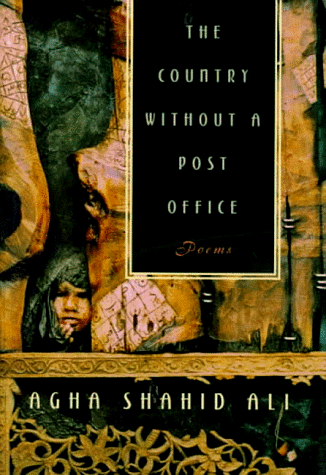
“The Country Without a Post Office” by Agha Shahid Ali

In the case of Agha Shahid Ali (1949 – 2001), the entry about the author’s country that I usually have at the beginning of every review makes me feel ill at ease, so I decided to leave that out. We are speaking of a Kashmiri-American poet, born in New Delhi in a newly independent India and forced into exile in the United States  because of the violent reality of Kashmir, which was annexed to a mostly Hindu nation, India, even if it was a predominantly Muslim region also claimed by Pakistan. To express this uneasiness, the poet uses among other things the metaphor of stamps (“I’ve brought cash, a currency of paisleys / to buy the new stamps, rare already, blank, / no nation named on them”).

The country without a post office in the title is obviously Kashmir, written in endless ways (“Kashmir, Kaschmir, Cashmere, Qashmir, Cashmir…”) to stress the elusiveness of the places of memory, which in the meantime change but in our minds are  still as we left them, even though faded and distorted by the present time we live in. In Kashmir, incidentally, several layers created by migrations, conquests and conversions have set up a multiplicity of meanings, mirrored in the name of the region and in its different transliterations. These layers, superimposed but also cause of frictions and fractures, perfectly describe the poems of Agha Shahid Ali. Outlining it, Meena Alexander speaks of a “geography of dissonance, place tearing open to reveal another place, an elsewhere the poet must claim in order to reach where he wants to go” (Poetics of Dislocation, p.9). It is thus possible that the phone rings in America and, when the conversation has finished, you hang up the phone in Kashmir, as it happens in the poem that gives its name to the entire collection.

 Those who in front of a poem always feel the urgency to understand should take note that Agha Shahid Ali’s poetry is built through associations rather than through a concrete narrative plot. Yet the poet often speaks of real events, like when in 1990 the post office of Srinagar closed down for several months because of violent insurrections against the government and the mail piled up in the house of a friend of the poet’s father.

Agha Shahid Ali’s poetry is packed with nostalgia and awareness of the fact that once you have left the native country and one’s past are irretrievable. The dreamlike quality of his poetry are triggered by this desire to grasp, to own once again the places of childhood and one’s roots. Yet it is a desire accomplished only in brief moments when several places superimpose, or in dreams, which obstinately and unreasonably bring us back to the places we have lived in, distorting them and adapting them to the concrete reality of the present. Exile, for the poet, is like the Arab language, used in prayer by all Muslims, but not always possessed or understood. In the couplets of a ghazal, Agha Shahid Ali expresses these feelings:

The only language of loss left in the world is Arabic –
These words were said to me in a language not Arabic.
[…]
From exile Mahmoud Darwish writes to the world:
You’ll all pass between the fleeting words of Arabic.

At an exhibition of miniatures, such delicate calligraphy:
Kashmiri paisleys tied into the golden hair of Arabic!
[…]
When Lorca died, they left the balconies open and saw:
his qasidas braided on the horizon, into knots of Arabic.
(“Ghazal”)

Agha Shahid Ali has introduced Americans to the poetic form of the ghazal, through his works and his translation of the great Urdu poet Faiz Ahmed Faiz. Some American poets, after him, have experimented with this poetic form in English, as García Lorca had done before with Spanish. Ali said that every couplet, repeating in its second verse the rhyme in the first couplet, is like a stone from a necklace, which should continue to shine in that vivid isolation.

This is the kind of poetry that has apt quotations, sometimes from poets also interested in the problems of nationalism and self-rule, for instance Yeats “Now and in time to be / Wherever green is worn, … / A terrible beauty is born”), or from cherished poets, like Emily Dickinson who lived in Amherst like him. Of her he reports a few lines at the beginning of a poem (“If I could bribe them by a Rose /  I'd bring them every flower that grows./ From Amherest To Cashmire”). In spite of this he has an extremely original style: he uses free verse as well as some specific poetic forms (villanelle or ghazal, for instance), thus mixing several poetic traditions. He speaks of utterly personal feelings and experiences of loss and nostalgia, but he also reflects on the ultimate meaning of history and of human conflicts.

About the author: Agha Shahid Ali was born in New Delhi in 1949. He was educated there and in Kashmir, before emigrating to America. There he was the recipient of several grants. He is the author of, among other things, "A Nostalgist's Map of America" (1991), "Call me Ishmael Tonight: A book of ghazals" (2003) and "The Country Without A Post Office" (1998). He also edited a book of ghazals in English, "Ravishing Disunities: Real Ghazals in English" (2000). He died of brain cancer in 2001.

“The Country Without a Post Office” di Agha Shahid Ali

Nel caso di Agha Shahid Ali (1949 – 2001), la voce sulla nazionalità dell’autore che di solito metto all’inizio di ogni recensione mi mette a disagio, così ho deciso di toglierla del tutto. Si tratta infatti di un poeta kashmiro-americano, nato a Nuova Delhi in un’India appena indipendente e costretto all’esilio negli Stati Uniti a causa della realtà violenta che imperversa nel Kashmir, annesso ad un’India a maggioranza indù pur essendo in larga parte musulmano e rivendicato dal Pakistan. Per esprimere questo disagio, il poeta usa tra le varie cose la metafora dei francobolli (“I’ve brought cash, a currency of paisleys / to buy the new stamps, rare already, blank, / no nation named on them”[1]).  

Il paese senza un ufficio postale del titolo è ovviamente il Kashmir, scritto in infinite maniere (“Kashmir, Kaschmir, Cashmere, Qashmir, Cashmir…”) per sottolineare l’inafferrabilità dei luoghi della memoria, che nel frattempo mutano ma nella nostra mente rimangono così come li abbiamo lasciato, sebbene sbiaditi e distorti dal presente che viviamo. In Kashmir, tra l’altro, diversi strati formati da migrazioni, conquiste e conversioni hanno creato una molteplicità di significati, che si rispecchiano nel nome della regione e nelle sue diverse traslitterazioni. E sono proprio questi strati, sovrapponibili ma capaci anche di creare attriti e corti circuito, a descrivere al meglio la poesia di Agha Shahid Ali. Nel descriverla Meena Alexander parla di “una geografia della dissonanza, un luogo che si apre, si scarta per rivelare un altro luogo, un altrove che il poeta deve  rivendicare per arrivare dove vuole” (Poetics of Dislocation, p.9, traduzione mia). Così può capitare che il telefono squilli in America e che, a conversazione finita, lo si riagganci in Kashmir, come accade nella poesia che dà il titolo alla raccolta.

Bisogna far notare a coloro che di fronte alla poesia sentono l’urgenza di capire che la poesia di Agha Shahid Ali è costruita per associazioni piuttosto che con un filo narrativo ben preciso. Nonostante questo il poeta parla spesso di avvenimenti reali, come quando nel 1990 l’ufficio postale di Srinagar fu chiuso per dei mesi a causa delle violente insurrezioni contro il governo e la posta si accumulava in casa di un amico del padre del poeta.  

I versi di Agha Shahid Ali sono intessuti di nostalgia e coscienza del fatto che una volta che si è partiti il paese natio e perciò anche il proprio passato non sono più recuperabili. La qualità onirica della poesia di Ali è dovuta proprio a questo desiderio di afferrare, di possedere di nuovo i posti dell’infanzia e delle proprie radici, ma è un desiderio che si compie soltanto in brevi momenti di sovrapposizioni tra più luoghi, o nei sogni, che ostinatamente e in maniera insensata ci riportano nei luoghi dove abbiamo vissuto, distorcendoli e adattandoli alla concreta realtà del presente. L’esilio, per il poeta, è come l’arabo, usato in preghiera da tutti i musulmani, ma non sempre posseduto o conosciuto. Nei distici di un ghazal, Agha Shahid Ali incastona questi sentimenti:

The only language of loss left in the world is Arabic –
These words were said to me in a language not Arabic.
[…]
From exile Mahmoud Darwish writes to the world:
You’ll all pass between the fleeting words of Arabic.

At an exhibition of miniatures, such delicate calligraphy:
Kashmiri paisleys tied into the golden hair of Arabic!
[…]
When Lorca died, they left the balconies open and saw:
his qasidas braided on the horizon, into knots of Arabic.[2]

(“Ghazal”)

Agha Shahid Ali ha introdotto gli americani alla forma poetica del ghazal, attraverso i propri componimenti e le sue traduzioni del grande poeta urdu Faiz Ahmed Faiz. Alcuni poeti americani, dopo di lui, hanno sperimentato con questa forma nella lingua inglese, come già aveva fatto García Lorca con lo spagnolo. Ali disse che ogni distico del ghazal, cioè ogni coppia di versi, che ripete nel secondo verso la rima presente nel primo distico della poesia, è come la pietra di una collana, che da sola dovrebbe continuare a brillare in vivido isolamento. 

Questo è il genere di poesia che risplende di citazioni calzanti, a volte di poeti che si sono interessati ai problemi legati al nazionalismo e all’indipendenza, per esempio Yeats (“Now and in time to be / Wherever green is worn, … / A terrible beauty is born”[3]), e altre volte di poeti amati, ad esempio Emily Dickinson, vissuta ad Amherst come lui, di cui riporta un passaggio all’inizio di un componimento (“If I could bribe them by a Rose /  I'd bring them every flower that grows./ From Amherest To Cashmire”[4]). Tuttavia, è anche un tipo di scrittura molto personale, che utilizza i versi liberi così come alcune forme poetiche ben definite (la villanelle o il ghazal), mescolando così varie tradizioni poetiche. Si riferisce a sentimenti ed esperienze molto personali di perdita e di nostalgia, così come riflessioni sul senso ultimo della storia e dei conflitti umani. 

Sull'autore: Agha Shahid Ali è nato a Nuova Delhi nel 1949. Ha studiato a Nuova Delhi e in Kashmir, prima di trasferirisi in America, dove ha vinto numerose borse di studio. Tra le sue collezioni di poesie figurano "A Nostalgist's Map of America" (1991) e "Call me Ishmael Tonight: A Book of Ghazals" (2003), oltre che "The Country Without a Post Office" (1998). Ha curato anche un libro di ghazal in lingua inglese, "Ravishing Disunities: Real Ghazal in English" (2000). E' morto prematuramente di cancro al cervello nel 2001.


[1] “Ho portato dei contanti, una valuta di tessuti a motivi cashmire / per comprare i nuovi francobolli, rari di già, spogli / nessuna nazione vi è nominata” (traduzione mia).
[2] “L’unica lingua della perdita rimasta al mondo è l’arabo / Queste parole mi furono dette in una lingua che non era l’arabo. / […] Dall’esilio Mahmoud Darwish scrive al mondo: /  Passerete tutti per le parole sfuggenti dell’arabo. / Ad una mostra di miniature, una calligrafia delicatissima: / motivi cashmire annodati ai capelli d’oro dell’arabo! / […] Quando Lorca morì, lasciarono le finestre aperte e videro: / le sue qasidas intessute nell’orizzonte, nei nodi dell’arabo” (traduzione mia).
[3]Ora e nel tempo avvenire, / Ovunque s'indossi il verde, […] / Una bellezza terribile è nata.” (da “Pasqua 1916”).
[4]Se potessi corromperli con una Rosa / Gli porterei ogni fiore che cresce / Da Amherst al Kashmir!”.

Tuesday, June 7, 2011

"Jasmine" by Bharati Mukherjee

Year of first publication: 1989
Genre: novel
Country: India / Canada / USA

Jyoti, Jasmine Vijh, Jase and Jane Ripplemeyer are not the same person. Jyoti lives in a village in Punjab, in a house without electricity and toilets, while Jasmine lives with her husband Prakash in a small apartment in Jullundhar, where she endeavours to read a VCR manual in order to brush up her English, in the wait of emigrating to America. Jase is a live-in caregiver in a spacious and expensive apartment in the Upper West Side of New York City, and has a crush on her employer, whereas Jane Ripplemeyer is the pregnant young wife of a middle-aged Iowa banker who has left his wife for her. Unfortunately, he has become an invalid after an indebted farmer shot him twice at the back, in front of the door of his house on a Christmas eve. Moreover, Jane is an illegal immigrant and has a past of violence and confusion which she is trying to forget. Yet, this is not a book with several apparently unconnected stories, but one single story, where the protagonist constantly reinvents herself, modifying her identity as her American experience goes on and as she acquires consciousness of what it means to start a new life in a new country.

Leaving behind her widowhood (her husband suddenly died, murdered by a Sikh terrorist), Jasmine is first raped by a disfigured sailor, the captain of the fishing boat with which she illegally arrived in America, and then ends up in the ghettoised neighbourhood of Flushing, in New York, hosted by a former professor of her deceased husband. Dissatisfied of that life, too similar to the one she had in India, Jasmine finds a job as a live-in caregiver for the Hayes, who treat her as if she were a host and a friend, not a maidservant. The story unfolds in endless flashbacks, so that the reader doesn’t understand almost until the end of the book how Jasmine has ended up in a rural community in Iowa, where people struggle to understand her origins and what they involve.

The plot, as the New York Times has written about another of her novels, has never been one of Bharati Mukherjee’s strengths: in several instances the development of the characters’ vicissitudes is unrealistic or even preposterous. For example, the protagonist kills a man who wanted to abuse her, stabbing him several times at the abdomen, then continues on her way, becoming a caregiver, a wife and a mother. She never mulls over the reasons leading the man, a deeply-scarred sailor evil as only characters of the fairytales can be, to earn his living with the smuggling of human beings. She is not upset nor has nightmares about it, only a slight hesitation, followed by pure pleasure, at the moment of entering the shower, a commodity that she first experienced in the motel where she was staying with this man. Jasmine is even able to tell her adopted son Du, grown up in a Vietnamese refugee camp where he has see all kinds of atrocities, that she has committed murder once, without thus damaging the mother-son relationship. The inconsistencies don’t end up here: fifteen-year-old Du suddenly decides to leave his adoptive family in order to join his sister, who works in a taco stand in Los Angeles, without saying goodbye to his father and leaving his mother at home alone with a rifle on her lap, because she has to defend herself from a depressed and homicidal-murderous neighbour who threatens to kill her. I could quote more examples, but the gist is that in this book the farewells, the losses, the traumas aren’t tackled and analysed deeply enough. In other words, the characters don’t brood over their choices as it happens in real life, and wounds don’t leave permanent scars. 

It isn’t nevertheless a boring read: the story is gripping, also thanks to the frequent use of short sentences, which sound however stilted sometimes, as if the author had wanted to reproduce the style of a male American author, concise and pragmatic. Twenty years ago for the themes tackled the book was probably rather innovative and certainly shocking. The America described by Bharati Mukherjee is a country of endless possibilities, where an illegal immigrant who has committed a murder can become a respectable Mrs. Ripplemeyer, but it’s also a dangerous country, where a father and loving husband becomes an invalid following a gun fire or where illegal immigration flows illicitly without Americans realizing it.

Jasmine has always lived on the edge of change: that same Punjab where an astrologer predicted her a life as a widow has been swept away by scooters and television, and also the farmers in Iowa have been living an era of great changes. New, hyphenated identities are in town and new possibilities open up for young farmers of the area. By the end of the book Jasmine will need to choosee between an old life of duties, in other words between the life of a caregiver, and a new freer existence, identified by the American spirit and the expansion towards the West. The ending catches the reader rather unprepared and leaves a feeling of uneasiness, especially for ethical reasons, but also for structural coherence.

The protagonist becomes first infatuated with and then falls in love with her employer, Taylor Hayes:  ‘I fell in love with his world, its ease, its careless confidence and graceful self-absorption. I wanted to become the person they thought they saw: humorous, intelligent, refined, affectionate.’ (p.171). Taylor is, in other words, like America itself, unconsciously fascinating, so much that it inspires a desire to be imitated and assimilated. At a certain point in the novel, Du’s teacher says that he is in a hurry to become all American. This is exactly what Jasmine is trying to do: she is constantly replacing saris with T-shirts and cords, learning the names of local baseball teams, buying Dairy Queen at the mall and even learning how to walk like an American. It is a complete metamorphosis: by the end of the book the protagonist is conscious of having completely cut off her Indian self, differently from her son who has kept in contact with his community of origin, but she doesn’t seem to make any steps towards her son’s direction. It seems to me that this choice reflects the culture of the ‘melting pot’ still popular in the 1980s and 90s, when immigrants were supposed to melt into a more homogenous culture.

About the author: Bharati Mukherjee was born in Calcutta in 1940 into a wealthy family and was educated in India and the USA (Iowa). She has lived for ten years in Canada with her husband and has Canadian citizenship, but now she lives in the USA. Her works often relate the difficulties of forging a new American identity and the problems faced by Asian Americans. Among her novels, at least “Desirable Daughters” (2002) deserves to be mentioned, and among her collections of short stories her most influential work has been “The Middleman and Other Stories” (1988), which won the National Book Critics Circle Award and contains the short stories that was the bud of her novel “Jasmine” (1989).  

“Jasmine” di Bharati Mukherjee


Anno di prima pubblicazione: 1989
Genere: romanzo
Paese: India / Canada / USA

Jyoti, Jasmine Vijh, Jase e Jane Ripplemeyer non sono la stessa persona. Jyoti vive in un villaggio del Punjab indiano, in una casa senza elettricità e senza servizi igienici, Jasmine invece vive con il marito Prakash in un piccolo appartamento a Jullundhar, dove si sforza di leggere il manuale d’installazione di un videoregistratore per esercitare il suo inglese, in attesa di poter emigrare in America. Jase è una ‘live-in caregiver’, cioè una bambinaia, in un ampio e costoso appartamento dell’Upper West Side di New York, ed ha una cotta per il suo datore di lavoro, mentre Jane Ripplemeyer è la giovane moglie di un banchiere dell’Iowa di mezza età che per lei ha lasciato la moglie e da cui aspetta un bambino. Purtroppo però lui è diventato invalido dopo che alla vigilia di Natale un agricoltore sommerso dai debiti gli ha sparato due colpi di pistola alla schiena davanti alla porta di casa, mentre lei si trova illegalmente nel paese e ha un passato di violenza e confusione che cerca di dimenticare. Non si tratta però di un libro in cui si intrecciano diverse storie apparentemente scollegate tra loro, ma un’unica vicenda, in cui la protagonista si reinventa continuamente, modificando la propria identità man mano che la sua esperienza americana prosegue e man mano che conquista consapevolezza di che cosa significhi rifarsi una vita in un paese nuovo.

Lasciandosi alle spalle la vedovanza (il marito viene improvvisamente ucciso da un attentatore Sikh), Jasmine viene prima abusata dal marinaio sfigurato che comandava la nave container con cui è arrivata illegalmente in America, poi finisce nel quartiere-ghetto di Flushing, a New York, ospite del vecchio professore del marito morto. Insoddisfatta di quella vita, troppo simile a quella che conduceva in India, Jasmine trova lavoro come bambinaia presso gli Hayes, che la trattano come fosse un’ospite e un’amica, anziché una domestica. La storia si dipana con continui flashback, perciò non capiamo fino quasi alla fine del libro come Jasmine sia finita in una comunità rurale dell’Iowa, dove la gente fa fatica a capire le sue origini e che cosa implicano.

La trama, come scrisse il New York Times a proposito di un altro libro dell’autrice, non è mai stato il punto forte di Bharati Mukherjee: diversi sono i punti in cui il dipanarsi delle vicissitudini dei personaggi diventa poco realistico o addirittura assurdo. Per esempio, la protagonista uccide un uomo che la voleva violentare, infliggendogli numerose coltellate all’addome, poi prosegue per la sua strada, diventano bambinaia, moglie e madre. Non si arrovella mai sulle ragioni che avevano portato l’uomo, un marinaio dal volto sfigurato, cattivo come solo i personaggi delle favole, a guadagnarsi da vivere con il contrabbando di vite umane. Non ha turbamenti, né incubi, se non una leggera esitazione, seguita da puro piacere, quando entro in doccia, essendo questa una comodità provata per la prima volta proprio nella camera del motel doveva alloggiava con quest’uomo. Jasmine può persino dire a Du, il figlio adottivo, cresciuto nei campi profughi vietnamiti dove ha visto ogni tipo di atrocità, che una volta ha ucciso un uomo, senza che il rapporto madre-figlio si incrini. Ma le inconsistenze non finiscono qui: Du, che ha solo quindic’anni, decide di lasciare la famiglia adottiva per raggiungere la sorella che lavora in uno stand di tacos a Los Angeles, senza neanche salutare il padre e lasciando la madre con un fucile in mano per difendersi dal vicino di casa depresso ed esasperato che minaccia di ucciderla (o di uccidersi). Potrei fare molti altri esempi, ma il succo è questo: gli addii, le perdite, i traumi non sono affrontati ed analizzati in modo abbastanza approfondito. In altre parole i personaggi non rimuginano sulle loro scelte, come succede nella realtà, e le ferite non lasciano cicatrici indelebili. 

Si tratta tuttavia di un libro per niente noioso, dal ritmo abbastanza incalzante, anche grazie anche all’utilizzo di frasi spesso molto corte, che però suonano talvolta innaturali, come se l’autrice avesse cercato di riprodurre il romanzo di un perfetto scrittore maschio ed americano, conciso e pragmatico. Vent’anni fa per i temi affrontati il libro era probabilmente abbastanza innovativo e certamente scioccante. L’America di Bharati Mukherjee è il paese dalle mille possibilità, dove un’immigrata illegale che ha ucciso un uomo può diventare una rispettabile Mrs. Ripplemeyer, ma è anche un paese pericoloso, dove un padre di famiglia e un marito amorevole può rimanere invalido in seguito ad un conflitto a fuoco o dove l’immigrazione illegale scorre clandestinamente senza che gli americani ne siano coscienti.

Jasmine ha sempre vissuto sull’orlo del cambiamento: il Punjab in cui un astrologo le aveva predetto una vita da vedova è stato spazzato via nel giro di qualche anno dalla rivoluzione degli scooter e della televisione, ed anche i contadini dell’Iowa stanno vivendo un’epoca di cambiamenti. Nuove identità segnate da un trattino sono arrivate in città e nuove possibilità si aprono per i giovani agricoltori della zona. Alla fine Jasmine dovrà scegliere tra una vecchia vita di oneri e doveri, in altre parole una vita da ‘care-giver’, e una nuova esistenza più libera, identificata con lo spirito americano e l’espansione verso ovest. Il finale spiazza e mette molto a disagio, soprattutto per motivi etici, ma anche strutturali al libro.

La protagonista si invaghisce e poi innamora del suo datore di lavoro, Taylor Hayes: ‘Mi innamorai del suo mondo, del suo essere sempre a proprio agio, della sua spontanea sicurezza e del suo aggraziato auto-assorbimento. Volevo diventare la persona che pensavano di vedere: divertente, intelligente, raffinata, affettuosa.(p.171). Taylor è, in poche parole, l’America stessa, inconsciamente affascinante, tanto da voler essere imitata ed assimilata. Ad un certo punto l’insegnante di Du osserva come egli stia cercando di diventare americano il più in fretta possibile. E’ esattamente quello che cerca di fare anche Jasmine: sostituisce il sari con ‘T-shirts and cords’, impara i nomi delle squadre di baseball locali e compra Dairy Queen al centro commerciale, imparando anche a camminare come un’americana. E’ una metamorfosi completa: nel finale la protagonista è cosciente di aver completamente reciso la sua metà indiana, a differenza del figlio che ha mantenuto dei contatti con la comunità di origine, ma non sembra fare alcun passo per andare nella direzione del figlio. A me sembra che questa scelta rifletta un po’ quella cultura del ‘melting pot’ che andava di moda in America negli anni ’80 e ’90: un calderone in cui il nuovo immigrato si immerge per sciogliersi in una cultura più omogenea.

Sull’autrice: Bharati Mukherjee è nata a Calcutta nel 1940 in una famiglia benestante ed ha studiato sia in India che negli Stati Uniti (Iowa). Ha vissuto per una decina d’anni in Canada con il marito, prendendo la nazionalità canadese, ma ora vive negli Stati Uniti, dove insegna scrittura creativa. I suoi lavori parlano spesso delle difficoltà nel forgiarsi una nuova identità americana e dei problemi affrontati dalla comunità indiano-americana. Tra i suoi romanzi, ricordiamo “Desirable Daughters” (2002) e tra le raccolte di racconti “The Middleman and Other Stories” (1988), che ha vinto il National Book Critics Circle Award e che contiene la storia da cui è nato il germe del romanzo “Jasmine” (1989). In italiano, a quanto mi risulta, è stata tradotta solo la raccolta di racconti "Episodi isolati" (edito dalla Feltrinelli, 1992, e pubblicato originariamente negli Stati Uniti nel 1985 con il titolo "Darkness").

Tuesday, May 17, 2011

"My Story" by Kamala Das

Year of first publication: 1973 (in Malayalam), 1988 (revised edition in English)
Genre: memoir
Country: India

American poet and activist Muriel Rukeyser once said "What would happen if one woman told the truth about her life? The world would split open". What Rukeyeser recognized was a certain unspeakability of the feminine world, in comparison with a narrative that for centuries had been exclusively male. Reading the autobiography of Kamala Das, one of the foremost poets of the Indian subcontinent, one really has the feeling that with a simple act of sincerity the world would indeed split open, letting out demons and demons. When this book came out, in fact, the prudish Indian society was scandalized at the outspoken woman who could so freely talk about her extramarital affairs and her teenage lesbian crushes. The effect for the reader is now somehow softened by the dozens of women writers who have recently made sex and desire the subject of their books, even in squeamish India (see Shobhaa De, whom I haven't read and whom I will not rush to read, not because I'm prudish, but for the same reason that I don't read Sophie Kinsella!).
Kamala Das never revealed if the content of her autobiography was the honest truth or if it was fruit of her longing for a different life (a dilemma that makes me think of Janet Frame's autobiography). The preface by K. Satchidanandan (I have an Indian edition of the book) says that "the writer, ever mischieviously enigmatic, kept them [the readers] tantalized by dropping contradictory hints, first confessing it was nothing but truth and then declaring it was just a wish-fulfilling fantasy, an alter-life she has created for herself" (p.vii). Kamala Das had an apparently normal life: she was born in Malabar, Kerala, and was forced to move very often, following her husband and family to Calcutta, Bombay and several other cities within the boundaries of India. In this book she denounces the phobia of the Nair community for sex and intimacy ("No wonder the women of the best Nair families never mentioned sex. It was their principal phobia. They associated it with violence and bloodshed. They had been fed on the stories of Ravana who perished due to his desire for Sita and of Kichaka, who was torn to death by Draupadi's legal husband Bhima only because he conveted her", p.23) and the roughness and stupidity of certain men (of a student leader she was in love with, she writes "I tried to wear flowers in my hair. But all he said was that I should without wasting any more time, begin to read Marx and Engels", p.61). 
The book is filled with poetry, the simple prose actually better than the real poems at the beginning of each chapter. The author of the aforementioned introduction quotes a passage from the first version of the book, written in Malayalam: "I like to call this poetry even if my words lose their music when, after raising in my innards a beautiful liquid turbulence, they come to surface in the relatively solid contours of prose. I had always longed for the strength necessary to write this. But poetry does not grow ripe for us, we grow ripe enough for poetry" (p.viii). When the author lingers on her everyday life, the tale remains sketchy: it is the simple story of a woman scribbling poetry or writing stories in her spare time, after the children have gone to bed. She never mentions, except once in passing, other important writers she spent time with, so the book does not read like the tale of the famous writer's glamorous life, but more like the story of a restless woman, who felt very lonely and longed for a lover who could make her happy and satisfy her sensual and intellectual appetite. Because the book was published in 1973 and then revised in English in 1988, it doesn't mention one the most controversial issues of Kamala Das's life: her conversion to Islam in 1999 and her later repentance. 
While I sometimes rolled my eyes at the endless line of imaginary or real lovers in the book, I was hungry for the parts where the poet reflects on what it means to be a woman, a mother and a writer in a conservative society. I'll finish with one of Das's most striking considerations: "Wherever a writer goes, her notoriety precedes her. The non-writers do not normally trust the writers. This is because they are entirely dissimilar except in appearance. The mind being an invisible limb, is not taken into consideration. Even birds have their own particular heights. The land birds who do not rise far into the lonely sky, often wonder why the eagles fly high, why they go round and round like ballerinas. The essence of the writer eludes the non-writer. All that the writer reveals to such people are her oddities of dress and her emotional excesses. Finally, when the muscles of the mind have picked up enough power to read people's secret thoughts, the writer shies away from the invisible hostility and clings to her own type, those dreaming ones, born with a fragment of wing still attached to a shoulder" (p.169-170).   

Tuesday, May 10, 2011

"Con il Sari Rosa" di Sampat Pal

Anno di prima pubblicazione: 2008
Genere: memoir
Paese: India

"Con il Sari Rosa" di Sampat Pal (in collaborazione con Anne Berthod), edito da Edizioni Piemme, 16 €


Ho sentito parlare di Sampat Pal e della sua Gulabi Gang per la prima volta qualche anno fa e la storia mi aveva colpito. Si tratta di un gruppo di donne indiane generalmente appartenenti alle caste più basse che hanno creato una rete di solidarietà femminile che si impegn a difendere i diritti delle donne di fronte ai più svariati soprusi. Come marchio di riconoscimento indossano tutte un sari rosa (gulabi vuol dire appunto rosa) e portano sempre con sé un lathi, il tipico bastone da combattimento usato anche dalla polizia indiana. 
"Con il Sari Rosa" è il memoir della fondatrice dell'associazione, Sampat Pal, scritto con l'aiuto di una ghost writer, Anne Berthod, giornalista francese che ha scritto, tra l'altro, "Slumgirl Dreaming", sulla storia rags to riches della bambina di "Slumdog Millionaire" (libro che mi risparmio volentieri). Sampat Pal Devi è nata da una famiglia poverissima dell'Uttar Pradesh ed appartiene ad una delle caste più basse, i gadaria, letteralmente "mandriani". Infilatasi alla scuola locale di nascosto trascurando il lavoro nei campi che i suoi genitori si aspettavano da lei, Sampat Pal impara a faticosamente a leggere l'hindi, che non è nemmeno la sua lingua materna, dato che in casa sua si parla un dialetto locale. Data in sposa alla tenera età di dodici anni com'è usanza tra la gente umile da cui viene, Sampat dimostra fin da subito di che pasta è fatta. Non vergognandosi di controbattere a nessuno, neanche ai bramini che, approfittando di essere la più rispettata delle caste indù, si prendono gioco degli altri e scroccano ai gadaria utensili che poi non restituiscono mai, Sampat Pal comincia a farsi conoscere in paese come la più sfacciata tra le donne, la più ribelle e ostracizzata, ma anche la più sveglia. Il suo linguaggio sboccato mi ricorda la Phoolan Devi del film "Bandit Queen", personaggio con cui condivide alcuni particolari biografici e senza dubbio la determinazione. Mi avevano colpito, ad esempio, quei "motherfucker" e "sisterfucker" disseminati nel film e Sampat Pal riflette proprio su questa fissazione di usare le donne nelle imprecazioni, arrivando a criticare due fratelli che in modo molto sciocco e ridicolo insultano la loro stessa madre o sorella. 
Nonostante lo scarso livello d'istruzione, Sampat Pal capisce al volo come gira il mondo: la corruzione, i raggiri dei funzionari locali e dei piccoli commercianti, per non parlare del potere spropositato dei mariti sulle loro mogli. Così decide di fondare una scuola per insegnare alle donne a cucire e a leggere, trasmettendo allo stesso tempo le sue idee sull'emancipazione femminile. Non avrà la vita facile: più volte sarà allontanata dal suo villaggio per non essersi piegata ai soprusi dei più potenti e sarà perseguitata dai dada, i sicari a pagamento. Non risparmia parole aspre per nessuno, a partire dal Primo Ministro dell'Uttar Pradesh, Kumari Mayawati, che era stata la prima intoccabile a giungere a quella carica. Colpevole di essersi buttata alle spalle i suoi ideali e di essere venuta a patti con le caste superiori per accaparrarsi più voti, Sampat Pal nomina invece come modelli personaggi come Lakshmibai, la mitica regina di Jhansi che ha combattuto contro gli inglesi, o Chanakya, il consigliere dell'imperatore Chandragupta conosciuto in Occidente come "il Machiavelli indiano". La gulabi gang, ci spiega il libro, è nata solo dopo anni di lotte contro le ingiustizie e non ha niente a che vedere con le assistenti sociali. La fondatrice si aspetta infatti che le persone che vengono aiutate poi partecipino attivamente all'associazione, portando il sari rosa d'ordinanza e impegnandosi in prima persona a migliorare le cose.  
La veste grafica di questo libro non è delle migliori: a vederlo sugli scaffali della libreria si potrebbe pensare che sia uno dei soliti libri creati apposta per saziare la nostra sete di donne abusate e segregate in casa nei paesi del terzo mondo. "Con il Sari Rosa", però, non si sofferma a compatire le donne indiane, ma per esempio discute di come uscire da alcuni circoli viziosi, descrive l'organizzazione della vita sociale nei villaggi e denuncia la pigrizia della maggior parte delle donne che non hanno né la forza né il coraggio di farsi valere. 
Sampat Pal e la sua gulabi gang
Di certo la giornalista francese che ha messo per iscritto le parole di questa attivista indiana non è un Premio Nobel per la letteratura, ma ha avuto il buon senso di lasciar trasparire il linguaggio semplice e schietto della protagonista, elemento che rende questo libro un po' come la versione indiana di "Mi chiamo Rigoberta Menchù". Più azzeccato questo paragone, a mio parere (nonostante le polemiche che girano intorno al Premio Nobel per la Pace guatemalteco), che quello con la più famosa Arundhati Roy, donna diversissima per formazione, metodologia e approccio a Sampat Pal, che alle parole preferisce l'azione sul campo e che i soprusi li ha vissuti in prima persona. E anche perché le parole dure Sampat Pal non le risparmia neppure ai naxaliti, con cui Sampat Pal non vuole avere niente a che fare, sostenendo, in maniera forse un po' sommaria, che sono solo un'organizzazione spietata, che fa largo uso di armamenti, a differenza sua, che come arma ha solo un bastone.     


Monday, April 25, 2011

"Tabaccherie Orientali" di Clara Nubile

Anno di prima pubblicazione: 2010
Genere: racconti
Paese: Italia

"Tabaccherie Orientali", di Clara Nubile, LAB, collana "Gli Ulivi", € 11

E' bastato un commento al blog di Silvia a scatenare un'emozionante momento serendipico, che coinvolgeva la poetessa indiano-americana Meena Alexander, la giovane scrittrice pachistana Kamila Shamsie e il poeta kashmiro-americano Agha Shahid Ali, quest'ultimo a formare da cuscino naturale, per una volta smilitarizzato, tra le due. E' così che sono arrivata a conoscere questo libro emozionante, i cui momenti lirici non rovinano il tessuto del racconto.

"Ai miei studenti d'America dicevo sempre, prendete le vostre parole, quelle parole che avevo scritto con caparbia e presunzione, con impeto e pietà. Prendete le vostre parole e mettetele spalle al muro, poi spogliatele. E sparate, senza pensarci nemmeno un attimo. Gonfiatele di proiettili, dilaniatele, riempitele di piombo. Infine raccogliete i resti, i cadaveri ancora palpitanti delle vostre parole e avvolgetele in un sudario. Di notte, cullatele. Vegliate sulle vostre parole sbrindellate. Fate la veglia funebre alle vostre parole, ai vostri romanzi, alle poesie, ai racconti, ai passaggi, alle lettere. E al terzo giorno resusciteranno, senza le vostre mani. Da sole le parole si alzeranno dal sepolcro di carta e si incammineranno per strada, investite di luce vergine, libere da rimorsi e somiglianze. Forse a quel punto potrete anche pensare di avere scritto due versi, due righe degne di essere lette." (p.42)

Agha Shahid Ali
A parlare così è Agha Shahid Ali, poeta kashmiro-americano purtroppo non ancora tradotto in Italia (se non per sporadiche poesie in qualche antologia), che è anche uno dei personaggi di questa raccolta di racconti, sospesi tra l'India, il Salento e una manciata di altri luoghi del globo. In ogni storia a parlare è un personaggio realmente vissuto: poeti, attivisti e viaggiatori, ma anche boss della mala, narcotrafficanti e banditesse indiane. Non unicamente modelli da imitare, o persone da riverire, quindi, ma anche criminali o gente dalla vita travagliata, la cui umanità palese è rappresentata dalle pantofole di Topolino che indossava Pablo Escobar, il più potente narcotrafficante che la Colombia abbia mai conosciuto, al suo funerale. Il mio racconto preferito, tra i dieci proposti, è forse proprio quello dedicato al poeta che viene da un paese in cui non ci sono più gli uffici postali, che poi sarebbe appunto quella vallata dove "creano desolazione e la chiamano pace", il Kashmir.    
Quando deve imbucare una lettera, lui che come tanti altri scrittori vive in esilio, deve per forza decidere se comprare un francobollo per l'India o per il Pakistan. Ma come può decidere? Un francobollo per il Kashmir non esiste, com'è tristemente noto. Il bello di questo racconto è la rielaborazione dei versi del poeta, che funzionano per accumulazione ed associazione, mentre i racconti normalmente scorrono perché c'è un filo narrativo e la stessa noiosa logica che riempie le nostre giornate. Ma la poesia contemporanea - e quella di Agha Shahid Ali in modo particolare - è come un sogno, così capita di arrivare in ritardo di dieci anni ad uno spettacolo al cinema, oppure di passeggiare per le strade della vecchia Delhi completamente deserte. Ricordi ed immagini forgiate dall'esilio, dalla nostalgia, dalle migrazioni.
La banditessa Phoolan Devi
Ma non è lui l'unico personaggio dall'esistenza tormentata: c'è la dacoit e parlamentare indiana Phoolan Devi, che parla nello stesso linguaggio sboccato del film biografico "Bandit Queen", e la cantante di ghazal Begum Akhtar, che saliva sul palco con una fiaschetta di whisky e con la sigaretta perennemente in bocca. Ci sono anche personaggi nati in Occidente che però, come l'autrice, avevano il prurito sotto i piedi e hanno girato il mondo: Bruce Chatwin, l'indimenticabile autore de "Le Vie dei Canti", o Mildred Cable, missionaria inglese che si è spinta fino in Cina. Quest'ultima accompagna l'io narrante del racconto "La notte che scoprii di essere Mildred Cable". Ogni tanto infatti spunta questo personaggio, presumibilmente autobiografico: una ragazza che sta viaggiando per l'India e si trova allo stesso tempo spaesata ed estasiata dal nuovo paese che sta imparando a conoscere e ad amare. Nel primo di questi racconti, "Persino il cielo è diventato verde", vengono evocati i canali del Kerala, a quanto mi dicono non dissimili da quelli veneziani che conosco bene, e le verdissime risaie, anch'esse paragonabili a quelle della pianura padana, poi di nuovo le montagne del Kashmir, regione che Hans vuole visitare a tutti i costi nonostante il conflitto, inseguendo una leggenda che sarà per lui una maledizione. Incapsulato di nuovo da un verso di Agha Shahid Ali ("separation can't be borne / when the rains come"), questo racconto è infatti dedicato a Hans Christian Ostro, viaggiatore e danzatore norvegese che è stato ucciso in Kashmir. La morte e la malattia è un po' un fantasma in questi racconti che sprizzano voglia di vivere ma dove la morte è appunto o inaspettata oppure giunge in modi raccapriccianti, come nel caso del virus misterioso che ha stroncato la vita straordinaria, sempre sulla cresta dell'avventura, dello scrittore di viaggio inglese Bruce Chatwin. Infarciti di versi di poesie e di citazioni, che alle volte travalicano le dimensioni del tempo e dello spazio, come quando Begum Akhtar cita una canzone di Vinicio Capossela, questa raccolta di racconti che non supera le ottanta pagine è una bella ventata di aria fresca nel mercato stantio della letteratura italiana.


Sull'autrice: Clara Nubile è nata a Brindisi, nel 1974. Nel 2001 è partita per Bombay, dove ha fatto la ricercatrice, ma ha vissuto anche ad Antwerp, in Belgio, e a Ravenna. E' traduttrice e scrittrice. Ha pubblicato "Io ti Attacco nel Sangue" (Fazi, 2005) e "Lupo" (Fazi, 2007). La trovate anche nel blog di Tabaccherie Orientali.

Sunday, February 20, 2011

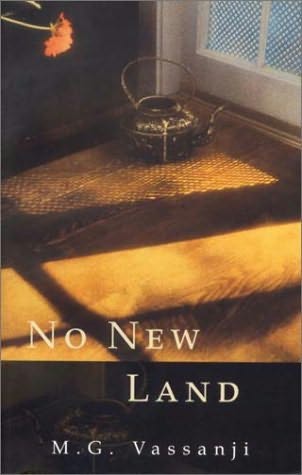
"No New Land" by M.G. Vassanji


Year of first publication: 1991
Genre: novel
Country: Canada / Tanzania / India

Nurdin Lalani is new in Toronto. He arrived with his family from East Africa, where his father had moved in 1906 from India, his country of origin, when Germany employed Indians to build their empire in Tanganyka. Nurdin can’t find a job in Toronto because he has no “Canadian experience”, in spite of having sold shoes in his country for eight years. All he can get are degrading menial jobs. He lives in an apartment building called Sixty-nine, full of immigrants, many are East Africans of Indian origin, like him. The immigrants have business going on in the building: they cook samosas and chapattis to take away, they offer babysitting services and open-houses. Nurdin and his family experience racism and attempts of exploitation when, newly-arrived in town, they are all invited to a party, which reveals to be a strange kind of fashion show. Moreover, a friend is beaten up by locals - only he reinvents himself as a painter and goes back to Dar, becoming a fashionable exotic artist for Western tourists. Nurdin bonds particularly with two people from his community: a part-time university professor called Nanji who once had a girlfriend in New York but is now lonely and lives in a unfurnished apartment, and Jamal, a successful lawyer who likes expensive cars.
One day Nurdin gives shelter for one night to a couple visiting from Guyana (he didn’t even know where Guyana was, but he had heard there were Indian people there too!) and he’s offered a job by his host’s brother, Romesh. Romesh gives him pork sausage to eat, therefore Nurdin reflects on the prohibition to eat pork. He thinks that’s when he began to “rot”. He’s changed, his well-educated friend Nanji tells him, after having eaten pork. After that, Romesh offers him a sip of his beer and takes him to a peep show. Nurdin even starts a “romantic friendship” with a lady he knew back in Dar. He feels guilty because he’s being “corrupted” by the Western way, the Canadian way. In spite of considering the CN Tower a sort of lighthouse, his fixed mark in his new country, he's confused by a new whirlwind of experiences and temptations.
He offers help to a girl who is crying but she accuses him of rape (echoes of “A Passage to India” are blatant here). Ironically enough, the girl is also from an immigrant community, the Portuguese who abound in Toronto. The novel finishes with Nurdin and Jamal fixing the situation by promising help to come to Canada to the girl’s relatives in Portugal (Jamal is an influential lawyer by now and he lies by saying he is about to open an office in Lisbon).
It’s the usual immigrant-in-a-new-land-novel, only some coordinates are different: the émigré is from Dar es Salaam, but eats samosas while he drinks gallons of tea, and the new city is Toronto, instead of New York or London.
The title of the novel nonetheless suggests that the land where Nurdin and his friends have settled is not new, but it has seen many other “layers of migrations”: the English and the French first, the Portuguese and the Italians after that, and the Africans at last. “No New Land” is well-written, but could have elaborated more on some topics (for example, when Indians are sent away from Uganda and neighbouring countries or on the situation of feeling East African but being Indian and identification – or non identification – with other Indian people).


About the author: M.G. Vassanji was born in Kenya, from a family of Indian origin. He was raised in Tanzania and moved to Toronto, Canada, in 1978. He's now considered one of Canada's most acclaimed writers. He has published six novels (The Book of Secrets and The In-between World of Vikram Lall are some other titles), two collections of short stories, a memoir of his travels in India and a biography of Mordecai Richler.

Wednesday, February 16, 2011

"Rich Like Us" by Nayantara Sahgal


Year of first publication: 1983
Genre: novel
Country: India

“Rich Like Us” is the portrait of two families of the Indian elite at the time of the Emergency (1975-1977), the darkest period in modern Indian history, when Prime Minister India Gandhi suspended elections and civil liberties. The author, nonetheless, is Indira Gandhi’s first cousin and Jawaharlal Nehru’s niece. Nayantara Sahgal belongs in fact to the most powerful family of the country, yet she has always had a critical attitude towards the decisions of some of her relatives, her cousin in particular. This made her lose her job (she was about to be appointed India’s ambassador to Italy), which is an experience she recounts in this novel through the story of Sonali, also abruptly dismissed by the unnamed President in favour of her ex-fiancé Ravi Kachru.
“Rich Like Us” is partly narrated from the point of view of Sonali , who ives in a “joint family” with her sister Kiran and her brother-in-law. She’s friends with Rose, an English lady who unconvincingly tries to hide her Cockney accent from her high-born friends. Rose is nursing her Indian husband who has just had a stroke and cannot run his family business like he used to. Ram’s son, an indolent young man who has seriously been affected by the unusual double marriage of his father, is forging cheques to get his father’s money on his account. As time goes by, Rose learns that her rights as a woman and wife are deteriorating, so she turns to her friend Sonali for help.
The narration is told through flashbacks from the characters’ past: for instance how Rose came to marry Ram and how she accepted to be his second wife, living on the second floor while the first wife was downstairs with her children Dev and Nishi, and how Sonali got engaged with Ravi while in Oxford and then split up with him, only to see him married with the youngest daughter of the second cousin of the Prime Minister’s mother (Nishi).
On the background, the political upheaval, the vasectomies and the corruption of this horrible time in Indian history. Sonali’s father, who owns a shop, is sent to prison, apparently for no reason.
The title suggests that the book aims at criticizing the system that prevents richness to “trickle down” to poor people in India. Politics in Sahgal’s novel is of primary importance. In a 1959 flashback, for instance, Sonali discusses communism with Ravi, stating that she doesn’t want to stick to any doctrine. Her motivation is personal: being a woman she has lived too many restrictions to voluntarily have another one in her life. Sonali states ‘I don’t like dictatorships, not even of the proletariat, not even as a passing phase because who knows the phase might get stuck and never pass’ (p.112). That is basically the reason while they broke up: ‘the actual break had come because they couldn’t agree on step three and step four of the Marxist process, whatever that was, and especially what happened to artists and writers and thinkers at that point’ (ibid). The implied motivation, according to Sonali, is that Ravi is actually bossy, rigid and selfish and if she married him she’d have to agree with him all the time. Patriarchal power and arbitrary power are one of the main themes of the book, especially towards the end of the book when Rose has to face her limitations as a woman in Indian society.
Sahgal’s style is impeccable and she manages to portray the lifestyle of the ruling classes with cynicism and detachment. The narrative is almost entirely built through flashbacks, which freezes the story in a timeless reality. Only in the second half of the novel the story takes off, offering us strikes of genius, like the following:
“What is Divali?” Rose asked. “It’s the beginning of winter,” he replied. Why hadn’t he said it was the return and enthronement of Rama, a festival of rejoicing, of lights and feasting and gambling? The beginning of winter and another exile was what it had been for Sita” (p.244)
Mona, Ram’s first wife, is compared to Sita, the heroine and suffering wife of “The Ramayana”. It is not the only allusion to mythology. References to Draupadi and her five husbands abound, but it is the island of Cythera, where according to Greek mythology Aphrodite was born, that bears the most ironic relevant signification in the novel. Rose buys an old postcard of Cythera, after having heard her husband compare India to the island of love. In the end, Rose dead in the most horrible way, it stands for our disillusionment, because this India narrated by Sahgal is no island of love, but a country where patriarchal power wins over everything else, in spite of the refined manners of its ruling glass.

Tuesday, December 28, 2010

"Fault Lines: A Memoir" by Meena Alexander

Year of first publication: 1993
Genre: memoir
Country: India/USA


A few days ago, while I was speaking with a colleague, I claimed that a "memoir" is different from an "autobiography", but when asked for a clarification I stumbled on my own words. Now I've looked it up on google and I found out that a distinction does exist, but it's quite nuanced. Instead of lecturing you, I'll quote Gore Vidal, who said 'a memoir is how one remembers one's own life, while an autobiography is history, requiring research, dates, facts double-checked'. A memoir can leave out some facts, even important ones, and focus on a particular aspect of the author's life, even lingering on considerations and reflections regarding one's life.
Meena Alexander is one of the most important contemporary South Asian American poets. She has published several collections of poems and two novels. This book is part of a series called the Cross-Cultural Memoir, published by the Feminist Press at CUNY, the university where Meena Alexander teaches creative writing. It centres on the author's exploration of identity through different migrations. Meena Alexander's family is from Kerala, but she spent her childhood and adolescent years in the Sudan, where her father was working as a metereologist. She spent her summers in the ancestral home of her family in Kerala, but then returned to the Sudan, giving life to a tangle of languages (Malayalam, English, Arabic, French, Hindi...) and affiliations. In addition, she worked on her PhD in England and married an American, making of Manhattan her home since the 1980s. The book is also an exploration of what it means to be a poet and a woman, to write in English when your first language is another, to be Indian in America and, ultimately, what it means to be an (Asian) American poet. 
Alexander's poetic background is so evident in the book that it hardly feels like a memoir, even allowing "strands of poetry" to fit in the book. It raises many important issues from motherhood to postcolonialism without sounding banal: ‘Sometimes I think I could lift these scraps of space and much as an indigent dressmaker, cut them into shape. Stitch my days into a patchwork garment fit to wear’ (p.30).
There are many elements in the memoir that acquire almost a metaphorical aura that yet remains ineffable and that melt into the words of her poems: the stone-eating girl, the barbed wires, the alphabets of flesh, the well-jumped women and so on. In the more recent part of the story, when Meena lives in Manahattan, there are echoes of the many poets who wrote about New York City. Walt Whitman is of course the first who comes to mind. Ngugi wa Thiong’o, in the preface to the expanded edition of "Fault Lines", writes : ‘Among the numerous global allusions that litter the pages of “Fault Lines” is Walt Whitman. Like him, she is a poet who contains multitudes and, not surprisingly, the word multitude is among the most potent of those that frequent these pages'. However, what comes to MY mind is also Garcia Lorca's 'Poeta en Nueva York', where he addressed the problem of racial minorities in America. I wonder if that was also an influence.
When we speak of Indian writing in English we hardly name any poets, as if they were minor figures, hardly comparable to best-selling authors like Salman Rushdie or Arundhati Roy. Have you recently seen any book by a contemporary poet on the shelves of a book shop?