Showing posts with label USA. Show all posts

Wednesday, January 12, 2011

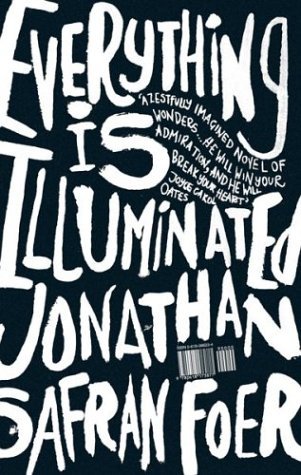
“Everything is Illuminated” by Jonathan Safran Foer


Year of first publication: 2002
Genre: fiction, magical realism
Country: USA (the book is set in Ukraine, though)

Included in The New Yorker’s list of 20 North American writers under the age of 40, Jonathan Safran Foer is considered one of the new stars of American fiction. He started to write Everything is Illuminated as an undergraduate student, expanding it and finally publishing it at the age of 24. The book had a tremendous success and more or less the same happened with Safran Foer’s other works: Extremely Loud and Incredibly Close, his second novel, and Eating Animals, a non-fiction book on reasons for being or not being a vegetarian. His third novel, Tree of Codes, has just come out.
The Times has stated that Everything is Illuminated is ‘a new kind of novel [and] that after it things will never be the same again’. As most writers who have achieved this kind of success so early in their career (see Zadie Smith), Jonathan Safran Foer has attracted fierce critiques (by The New York Times, for instance) and an incredible amount of jealousy and gossiping. Those who criticize Safran Foer for the faults of his writing, nonetheless, do have a point. Safran Foer’s use of modernist devices such as time shifts, mock history and fragments of various written materials are sometimes tedious. In spite of this, Everything is Illuminated is a good book, albeit not a striking work of genius, like The Times has written.
It is the story of Alex, a Ukrainian young man who speaks an awkward and hilarious kind of English. He writes retrospective letters to Jonathan Safran Foer, who in the novel is a wannabe author who visited Ukraine in order to find the small shtetl where his grandfather grew up and from where he escaped when the Nazis came to destroy it. Alex has a grandfather who says he’s blind but drives a car and he owns a dog called Sammy Davis Jr Jr. Another strand of the novel is the history of the sthetl from the end of the eighteenth century to the Second World War. It is therefore the story of the ancestors of the fictional version of Jonathan Safran Foer and a triple attempt to write a novel. One novel, in fact, is written by Alex in his broken English, another is written by fictional Jonathan Safran Foer about his trip to Ukraine and a third is a historical novel written by the author about the shtetl of Trachimbrod. This last strand is imbibed with magical realism, Rushdie-style, that is now a little worn, but still charming. The book is a curious mix of tragedy and humour: ‘Tragedy primes one for humor’, Foer said in an interview. ‘And humor primes one for tragedy. They amplify each other’. The book is very fun to read and it will keep you hooked. If you appreciate Jewish humour do read it. Jonathan Safran Foer is a talented writer – very energetic, as critics have written – but I think he can do better. Go Jonathan, go (he’s also kinda cute, nerd kind of cute, you know)!

Tuesday, December 28, 2010

"Fault Lines: A Memoir" by Meena Alexander

Year of first publication: 1993
Genre: memoir
Country: India/USA


A few days ago, while I was speaking with a colleague, I claimed that a "memoir" is different from an "autobiography", but when asked for a clarification I stumbled on my own words. Now I've looked it up on google and I found out that a distinction does exist, but it's quite nuanced. Instead of lecturing you, I'll quote Gore Vidal, who said 'a memoir is how one remembers one's own life, while an autobiography is history, requiring research, dates, facts double-checked'. A memoir can leave out some facts, even important ones, and focus on a particular aspect of the author's life, even lingering on considerations and reflections regarding one's life.
Meena Alexander is one of the most important contemporary South Asian American poets. She has published several collections of poems and two novels. This book is part of a series called the Cross-Cultural Memoir, published by the Feminist Press at CUNY, the university where Meena Alexander teaches creative writing. It centres on the author's exploration of identity through different migrations. Meena Alexander's family is from Kerala, but she spent her childhood and adolescent years in the Sudan, where her father was working as a metereologist. She spent her summers in the ancestral home of her family in Kerala, but then returned to the Sudan, giving life to a tangle of languages (Malayalam, English, Arabic, French, Hindi...) and affiliations. In addition, she worked on her PhD in England and married an American, making of Manhattan her home since the 1980s. The book is also an exploration of what it means to be a poet and a woman, to write in English when your first language is another, to be Indian in America and, ultimately, what it means to be an (Asian) American poet. 
Alexander's poetic background is so evident in the book that it hardly feels like a memoir, even allowing "strands of poetry" to fit in the book. It raises many important issues from motherhood to postcolonialism without sounding banal: ‘Sometimes I think I could lift these scraps of space and much as an indigent dressmaker, cut them into shape. Stitch my days into a patchwork garment fit to wear’ (p.30).
There are many elements in the memoir that acquire almost a metaphorical aura that yet remains ineffable and that melt into the words of her poems: the stone-eating girl, the barbed wires, the alphabets of flesh, the well-jumped women and so on. In the more recent part of the story, when Meena lives in Manahattan, there are echoes of the many poets who wrote about New York City. Walt Whitman is of course the first who comes to mind. Ngugi wa Thiong’o, in the preface to the expanded edition of "Fault Lines", writes : ‘Among the numerous global allusions that litter the pages of “Fault Lines” is Walt Whitman. Like him, she is a poet who contains multitudes and, not surprisingly, the word multitude is among the most potent of those that frequent these pages'. However, what comes to MY mind is also Garcia Lorca's 'Poeta en Nueva York', where he addressed the problem of racial minorities in America. I wonder if that was also an influence.
When we speak of Indian writing in English we hardly name any poets, as if they were minor figures, hardly comparable to best-selling authors like Salman Rushdie or Arundhati Roy. Have you recently seen any book by a contemporary poet on the shelves of a book shop?

Friday, August 6, 2010

"Casa Howard" di E.M. Forster e "Della Bellezza" di Zadie Smith

La mia recensione di “Casa Howard” (Howards End) di E.M. Forster si trova a questo link. Visto che in coda all’articolo avevo menzionato il lavoro di semi-adattamento fatto da Zadie Smith con il suo libro “Della Bellezza” (“On Beauty”) in questa sede mi piacerebbe parlarvi di quel romanzo.
Il mondo degli adattamenti e degli “up-date letterari” è sterminato. C’è chi ha ricreato un capolavoro del cinema come “Psycho” ricalcando ogni minima inquadratura, come ha fatto Gus Van Sant nel 1998, e c’è chi ha creato dei cosiddetti spin-off, delle divagazione sul tema per così dire. Un esempio di quest’ultimo tipo di adattamenti in letteratura che mi salta alla mente è “Il Grande Mare dei Sargassi” (“Wide Sargasso Sea”, 1966) della scrittrice dominicana Jean Rhys che, partendo dal personaggio di Bertha Mason, la moglie pazza di Mr Rochester in “Jane Eyre”, ha scritto un romanzo che ne spiega la storia e le ragioni della pazzia. C’è chi ovviamente ha riscritto un classico adattandolo ai tempi moderni (numerosissimi gli adattamenti, cinematografici e letterari, di Shakespeare) e chi ha creato un ibrido.
Creare un ibrido è proprio quello che ha fatto Zadie Smith con “Della Bellezza” (“On Beauty”, 2005), che è un adattamento-non adattamento di “Casa Howard” (“Howards End”, 1910) di E.M. Forster. L’intento è evidente fin dalla prima frase, che ricalca quel famosissimo “One may as well begin with Helen’s letters to her sister” (solo che nel caso del romanzo di Zadie Smith si tratta di e-mail e non di lettere). Il romanzo parte dalla struttura di fondo di “Casa Howard” – due famiglie estremamente diverse tra loro, dagli ideali quasi opposti, eppure attratte l’una dall’altra, che dibattono su questioni legate alla bellezza, all’arte, alle classi sociali e alla cultura – per poi divagare, modificare gli avvenimenti, inserire temi non presenti nel romanzo di partenza e mescolarne i personaggi. Quel che ne risulta è un romanzo di una complessità non indifferente in termini di psicologia dei personaggi, che è stato recepito con pareri discordanti, anche perché gioca molto sugli stereotipi culturali e razziali.
L’autrice stessa ammette di non aver nemmeno riletto il libro prima di mettersi alla stesura di questo suo terzo romanzo e che i due libri si incontrano solo in due o tre punti (cruciali però aggiungerei io, per esempio la scena in cui Leonard-Carl dimentica un ombrello, che diventa un walkman nella versione di Zadie). “Howards End”, per Zadie Smith, è stato semplicemente “a little hook to hang a novel on”, un piccolo gancio a cui appendere il romanzo.
I protagonisti di “On Beauty” sono due famiglie, i Kipps e i Bentley, che vivono in America, in un quartiere residenziale di una cittadina universitaria della East Coast. L’etnicità delle due famiglie è molto importante per lo svolgersi della vicenda: Howard Bentley è inglese e bianco, mentre la moglie è nera e viene dalla Florida. I figli di conseguenza sono “mixed-race” e alla ricerca della loro identità. Ma attenzione, ci avverte l’autrice, non sono alla ricerca di un’identità perché di razza mista (ma quanto suona male in italiano?), quanto perché appartengono alla modernità che ha creato quest’idea di dover cercare la propria identità, cosa che fa impazzire tutti, mixed-race or not. La famiglia Kipps, di origine caraibica, è quella conservatrice, con la figlia mangiauomini che dovrebbe equivalere allo sciupafemmine che all’inizio di “Howards End” seduce Helen e poi parte per l’Africa defilandosi dal romanzo. Eppure Monty Kipps, il capofamiglia, non equivale a Henry Wilcox, perché alcune sue caratteristiche si riscontrano in Howard, per esempio una certa ottusità nei confronti dell’arte, quella di Rembrandt in particolare. Sarebbe interessantissimo studiare – e sono certa che è già stato fatto in qualche saggio o tesi di laurea - quello che fa Zadie con “Howards End”: dove i due romanzi si incontrano e dove differiscono. La casa, Howards End appunto, diventa per esempio un quadro di un artista haitiano, forse simbolo della ricerca di una certa identità (africana, nera, della migrazione, di quel cavolo che vi pare). Forse quello che Zadie ci vuole trasmettere attraverso questo romanzo – godibilissimo anche se non conoscete la versione di Forster – è che nel ventesimo secolo (e ancora di più nel ventunesimo) le identità, così come la divisione in classi sociali, sono complesse, sovrapponibili, quasi insondabili, ovviamente malleabili e difficilmente gestibili se ci ostiniamo a piazzarle in compartimenti stagni. Non è un caso che Levi, il più giovane tra i figli di Howard, vada in cerca di un’identità “street” tra gli immigrati haitiani, modificandola però, intellettualizzandola e adattandola a sé stesso.
Il romanzo di Zadie Smith è intitolato come un saggio ma in realtà è esattamente l’opposto, cioè un romanzo molto aperto, che non si sa dove porti, ma che parla espressamente di bellezza, in una miriade di forme diverse una dall’altra. C’è la bellezza dei quadri di Rembrandt che Howard non riesce a riconoscere, la bellezza fisica prorompente di Carl e Vee, quella intellettuale di Zora, quella materna di Kiki e poi naturalmente quella della bellezza della scrittura di questa giovane scrittrice inglese che ci regala sempre emozioni e cose su cui riflettere.

A proposito… Zadie Smith a settembre sarà al Festivaletteratura di Mantova, non perdetevela!
Scrissi di lei anche qui, in occasione di un'intervista fatta (non da me!) durante il periodo che ha passato a Roma, nel quartiere Monti, dove ha vissuto con il marito. Ne uscirono riflessioni interessanti sul dibattito letterario (inesistente secondo le Zadie) in Italia.

Wednesday, May 26, 2010

6. “Burnt Shadows” by Kamila Shamsie


Year of first publication: 2009
Genre: novel
Country: the author is Pakistani, but the novel is set in many countries (Japan, India, Pakistan, USA and Afghanistan)

In italiano il libro è stato tradotto con il titolo Ombre Bruciate ed è edito da Ponte delle Grazie.La mia recensione è uscita, in italiano, sulla rivista culturale Paper Street ed è disponibile a questo link. Come al solito, vi offro ulteriori riflessioni sul libro, in lingua inglese.

Hiroko is a young woman from Nagasaki whose dreams for the future are swept away when the atomic bomb is dropped in her town. She loses virtually everything: her relatives, her fiancé and her home country. What she gets in exchange for that is a burning on her back shaped like the three-crane pattern of her kimono. She asks for shelter in Delhi, where the English relatives of her departed German fiancé live. Here she meets Elizabeth Burton née Weiss with whom she’ll become life-long friends and Sajjad Ashraf, a Muslim employee of the Burtons whom she will later marry, defying all conventions. Partition catches them while they’re on honeymoon abroad and, unable to go back to Delhi, they set off for Karachi, then the capital of the newly-born state of Pakistan. The story goes on with the children of the two families. Raza, Hiroko’s son, finds out that he’s a stranger in the town where he grew up. His peculiar features (he’s half Japanese and half Indian) and gift for learning languages allow him to pass for a Hazara and cross the border to Afghanistan, where the mujahideen are fighting their endless war. The novel starts with a detonation, that of the atomic bomb in Nagasaki, and towards the end comes to another detonation, that of 9/11. Harry is Elizabeth’s son, who grew up first in Delhi and then in New York. He still has strong links to that part of the world and in fact he goes back there several times a year, without letting his mother know that he is in a war area. In the meantime, his own country, has become a place where Muslim people are considered a possible threat.
What I’d like to point out here is that I think that Kamila Shamsie re-elaborates the work of different authors. The episode where Sajjad is accused of having molested Hiroko and is sent away by the Burtons is reminiscent of A Passage to India by E.M. Forster, where Dr. Aziz, also a Muslim acquainted with English people and also quite a charming man, is accused of having molested Miss Quested. That Sajjad and Hiroko end up having a very happy marriage demonstrates that, had Miss Quested overcome her prejudice for Indian men, she could have loved Dr. Aziz (in my opinion she did like him, albeit unconsciously). That Hiroko is a Japanese woman and not an English one, though, hints at the fact that only a woman coming from a completely different background, not Westerner and not Indian, could have done that.
This book is about fluid identities, loss and the feeling of being a stranger in a place that you considered your home. The latter is a theme that many Indian writers have tackled before: the first who comes to mind is Anita Desai. Kamila Shamsie, though, develops her own style and shows her own skills as a tremendous story teller. Burnt Shadows, ambitious and epic in scope, has wonderful characters and beautiful descriptions. A minor flaw could be that there is too much difference between a first part peppered with lyrical writing and insights into the characters and a second part, set on the border between Pakistan and Afghanistan, that suspiciously resembles a lightweight thriller.


About the author: Kamila Shamsie was born in Pakistan in 1973 into a family of writers and journalists. Her first book was In the City by the Sea (1998), followed by Salt and Saffron (2000). Her third novel, Kartography (2002), was published to widespread critical acclaim. Burnt Shadows, her fifth novel to date, was short-listed for the Orange Prize for Fiction. Kamila Shamsie is also a columnist, primarily for The Guardian.

Saturday, January 30, 2010

J.D. Salinger (1919 - 2010)

“If you really want to hear about it, the first thing you'll probably want to know is where I was born, and what my lousy childhood was like, and how my parents were occupied and all before they had me, and all that David Copperfield kind of crap, but I don't feel like going into it, if you want to know the truth. In the first place, that stuff bores me, and in the second place, my parents would have about two hemorrhages apiece if I told anything pretty personal about them.” [from The Catcher in the Rye]

I will never stop thanking my humanities teacher back at high school. He made us read The Catcher in the Rye (renamed Il Giovane Holden in Italian) and it was one of the books that prompted me to read more literature. He invented for us a well-planned “trail” through a few things he probably adored himself: Fabrizio De Andrè who sang many songs adapted from Edgar Lee Masters’s Spoon River’s Anthology, Fernanda Pivano who translated it and who made Italy aware of writers like J.D. Salinger and his novel The Catcher in the Rye. Fernanda Pivano’s teacher at high school was Cesare Pavese, so he made us read some of his poems about adolescence and then one by Turkish poet Nazim Hikmet about the same topic. And so on in a never-ending thread of connections between poets and song-writers, freedom fighters and “rebel authors”.


Ho trovato questa vecchia fotocopia sul Giovane Holden, probabilmente scritto dal mio professore di lettere per invogliarci ed entusiasmarci nella lettura del libro, forse anche per formarci, perché crescessimo con delle idee e uno spirito critico pari a quello del protagonista del libro di Salinger.

“Indicazioni per un viaggio in compagnia del giovane Holden

Un adolescente cerca la propria identità ed autonomia rifiutando i codici di comportamento e il conformismo borghese: i suoi condizionamenti, regole, limiti, convenzioni… condannando e smitizzando tutto e tutti senza appello, togliendo il velo all’ipocrisia e il perbenismo, evidenziando il comico e il grottesco della vita, soprattutto di quella “seria” ed “ufficiale”, irridendo a mode, valori , miti… combattendo il sentimentalismo…

Holden, ecco un motivo in più per leggerlo a 16 anni, esprime continuamente il proprio punto di vista sul mondo, sugli adulti, sulle istituzioni (la famiglia, il college, la scuola, i giornali, l’esercito, l’industria, la religione…), su i coetanei e su sé stesso con distacco e sincerità, a volte anche cruda (“dissi che l’amavo tanto, ma naturalmente non era vero”), irriverente, brutale, (“non mi interessava niente quando uno moriva”), con ironia ed anche autonomia, (è un invito ad imitarlo), con umorismo e sarcasmo.

David Jerome Salinger cerca di esprimere l’animo ribelle ed anticonformista del sedicenne Holden ricorrendo ad una vera e propria rivoluzione formale. La sua scrittura ricostruisce infatti l’orizzonte linguistico adolescenziale fatto di frasi gergali (“Il gergo ha una funzione coesiva con gli amici, ai coetanei ed oppositiva con gli adulti” E. Capriolo), di formule ripetute e di tic verbali (“che so io”, “e compagnia bella”, “eccetera, eccetera”), di figure retoriche (iperboli, ironia, sarcasmo, similitudini, antitesi…), di espressioni tipiche del parlato…Quello di Holden è un monologo continuo e non lineare (= a ruota libera), espresso in prima persona e rivolto ad un pubblico che sembra essergli a fianco e a cui strizza l’occhio, chiedendo partecipazione e complicità. Per quanto riguarda il ritmo della narrazione è veloce ed avvincente, sia per il susseguirsi di una miriade di persone, fatti, incontri, esperienze… sia per l’assenza quasi totale di descrizioni (“nel Giovane Holden mancano gli indugi narrativi” E. Capriolo).”

Monday, January 11, 2010

40. “The Thing Around Your Neck” by Chimamanda Ngozi Adichie


Year of first publication: 2009
Genre: collection of short stories
Country: Nigeria (but some stories are set in the USA and one in South Africa)

What it’s all about: This is a collection of twelve short stories, set in Nigeria and in the USA. The protagonists are all Nigerians, but their backgrounds and lives s are very different, ranging from experiences of war and riots in the author’s home country to the immigrant experience in America. Adichie’s stories often feature young women and their everyday epiphanies, tackling themes such as the brutality of war, colonialism, family relationships, the immigrant experience and the miscomprehensions between husband and wife.

Some thoughts: Those of you who have been reading my blog for a while know that I’m not particularly fond of short stories. There is not much time to develop the characters in a story, consequently only good writers are able to say something really clever in just a few pages. Adichie is one of them: the stories are cleverly constructed, involving and offer a wide range of complex characters. Without any doubts, Chimamanda Ngozi Adichie is one of the most talented young African writers around. However, my favourite works by Adichie remain her two novels, Half of a Yellow Sun especially.
In “A Private Experience” an Igbo girl is sheltering from a riot among her people and Hausa people in a shop. She befriends a Hausa woman, demonstrating the inconsistency of ethnic conflicts at the personal level. The one described in the story is an episode of religious and ethnic friction that seems to be quite common in Nigeria but also scary and dangerous. In “Ghosts” the setting is the beloved university campus of Nsukka where Adichie grew up. The main character is a retired university professor of mathematics enquiring about his pension that never comes in, just like “el coronel” Buendía in García Márquez’s El Coronel No Tiene Quien Le Escriba (No One Writes to the Colonel). Floating in the darkness there is not only the ghosts of people he believed to be dead, but also the ghost of the Biafra war, which features prominently in her novel Half of a Yellow Sun. There are also stories concerning the experiences of Nigerian immigrants in America, such as “The Shivering”, about a young Nigerian woman in an American college and her gay friend Chinedu who is also very religious. As my blogger friend Nana wrote in his blog, homosexuality is sort of a taboo subject in Africa, but Adichie touches on it in two stories (the other one being “Jumping Monkey Hill” about a creative writing workshop in South Africa, but I would also suggest a strain of it in “On Monday of Last Week”). By doing this, she shows her “open-mindedness” and her sensibility on the matter. Other important themes are the relationship of Nigerian wives with their husbands, especially relating to distance and immigration (“The Arrangers of Marriage”), and family relationships (“Tomorrow is Too Far”, “The American Embassy”). The last story, “The Headstrong Historian”, can be considered a follow-up of Chinua Achebe’s Things Fall Apart because it relates the colonisation of a village in three generations’ time. The traditions of the village and their animistic religion are swept awat by Christianity and the white man in a bitter way. This story demonstrates that Adichie can deal with traditional Nigerian lifestyles just as well, but it’s also a sort of reminder that Adichie takes on from Chinua Achebe in order to continue a tradition of excellent story-telling. Some people argued that it was pretentious for Adichie to write such a story, but I don’t think so. Adichie shows her admiration for Achebe without boasting about a comparison between her and the most prestigious of Nigerian writers.

About the author: see this post


Read my reviews of other works by Chimamanda Ngozi Adichie here and here.