Showing posts with label The Caribbean. Show all posts

Saturday, March 12, 2011

"A Writer's People. Ways of Looking and Feeling" by V.S. Naipaul


Year of first publication: 2007
Genre: non-fiction / memoir
Country: Trinidad and Tobago / UK

In this book Naipaul writes about those writers he came into contact with, helping him find his own way of looking and feeling, that is to say his style and his way of observing the world. As a writer who comes from a place without solid traditions and culture, he had to work out his own material. He examines various writers, as different as Derek Walcott and Cicero, Flaubert and Anthony Powell, not to mention his own father Seepersad Naipaul, trying to explain their ways of seeing the world and of translating their feelings and impressions into words. Halfway between memoir and non-fiction, “A Writer’s People” is not scared to express strong opinions (wink to Vladimir Nabokov) such as ‘ I didn’t do English in the sixth form; and when I saw the text books, the “Lyrical Ballads” and so on, I considered myself lucky’ (p.8) or again ‘what a relief it was to feel that I need never read another letter of sweet nothings from Henry James again’ (p.56). Even though these sentences could sound arrogant out of context, I think that Sir Vidia was honest and humble in this work. He never thinks he is (or was) any better than the writers he assesses, though one must be very careful because the distinction is sometimes subtle. Many things he says about writing are undeniably true: ‘There is a kind of writing that undermines its subject. Most good writing , I believe is like that’ (p.40) and he manages to say what he wants with terse, simple language.
In the first chapter, sardonically called ‘The Worm in the Bud’, Naipaul writes about his nemesis Derek Walcott. Naipaul mocks those who, like Walcott, celebrate the culture of the Caribbean, suggesting that things like the steel band or the calypso are not really worth being called ‘culture’. He claims that Walcott tried to fill up the cultural emptiness felt by the inhabitants of the West Indies by borrowing from other cultures (Greek mythology, for instance) and giving people distorted ways to fill this lack, such as racial hatred and rage against the white people who exploited the islands. Walcott’s mind, according to Naipaul, remained anchored to his small little island, refusing to see the greater picture. For his pessimism, Naipaul has been dubbed by Walcott (a Nobel Prize apiece they are!) V.S. Nightfall and a mocking poem has even been written on the topic. The problem is that by the end of this chapter (and this book) I still haven’t grasped what really is his particular way of seeing and feeling. Apart from feeling disconnected from most writers on the face of the earth, the author does not say it.
In the second chapter ‘The English Way of Looking’, the author writes at length about his friend and fellow-writer Anthony Powell, an influential English writer in the 1950s. He laments that Powell wrote about English society in great detail, but without undermining the subject from within. Probably true. The reason is, according to Naipaul, that every aspect of English society, and especially of English country life, has already been written. However, he also criticized English travel writers (Graham Greene, Evelyn Waugh, Somerset Maugham) for assuming that people knew about the socio-political entanglements of the countries they were writing about. He thinks that ‘it seemed, in strange way, that at the end, when the dust had settled, the people who wrote as though they were at the centre of things might be revealed as the provincials’ (p.55). He did not convince me. Naipaul seems to ignore the fact that society is always changing and so is history: a novel written about the English society in 2011 will not be the same as a novel written about that same society in, say, 2007. The recession has happened and the Arab world is in revolt, for instance. Relationships, reactions and lifestyles continually change and are affected by a multitude of factors, so there will always be new material to write on.
The last three chapters follow a circular pattern: the author starts writing about what he believes is an Indian way of seeing and then passes on to some Latin authors, only to shed light on his ideas about Indian contemporary culture, which he essentially condemns as materialistic and culturally dependent on the West. Naipaul details the life of Gandhi, whom he portrays essentially as a provincial man whose view of the world was rather dim, but who had some great intuitions. Strangely enough, the ‘half-view’ of classical authors resembles the Indian way of seeing and feeling, that the author calls ‘looking and not seeing’. Naipaul laments that Indians claim they know Gandhi, without acknowledging the various elements that created his philosophy (his experience in London studying law, his imprisonment in South Africa, the observation of his mother’s faults and essentially the conflict between his admiration and his disgust for the colonizers). Indians, according to Naipaul, are confused. ‘India has no autonomous intellectual life’ he writes at the end of the book, blaming expatriate writers for writing overtly autobiographical novels moulded on creative writing courses that ultimately look all the same.
I don’t know what to make of this book. Did I like it? Did I not like it? I am uncomfortable with some of the conclusions, but I was spellbound while I was reading it. Written in spare prose, with anecdotes that are affectionate and cruel at the same time, Naipaul knows how to use his words and understands what it means to be a writer, the challenges and frustrations of the job. I had never imagined, for instance, that a writer like V.S. Naipaul never got over his shyness in seeing his name in print!

About the author:
V.S. Naipaul was born in 1932 in Trinidad. He belongs to a family which descends from the indented workers brought from India to replace the African slaves who refused to work on the sugar plantations. His father Seepersad was a pioneer writer in the small intellectual community in Trinidad. Naipaul left his island for England with a scholarship and studied in Oxford. After his studies he began to write and has pursued no other profession. Among his first novels are “The Mystic Masseur” (1957), “A House for Mr Biswas” (1961) and “In A Free State” (1971). The latter has won the Booker Prize. He has also travelled the world and written about it: his acclaimed Indian Trilogy (“An Area of Darkness”, “India: A Wounded Civilization” and “India: A Million Mutinees Now”) and “Among the Believers: An Islamic Journey” are some examples of his travel writing. Naipaul has been awarded the Nobel Prize in Literature in 2001 ‘for having united perceptive narrative and incorruptible scrutiny in works that compel us to see the presence of suppressed histories’. His work has raised a lot of controversy, mainly for political reasons and for his unsympathetic portrayal of the developing world, especially in his travel writing.

Wednesday, February 10, 2010

A.A.A. Cercasi Compendio di Letteratura Haitiana for Dummies

Quando, qualche settimana fa, Haiti è stata colpita da un violento terremoto, tutti hanno cominciato ad interessarsi di questo paesino, aprendo gli atlanti, imparando finalmente a non confonderla con Tahiti, a notare il lato dimenticato dell’isola di Hispaniola, che altri non è che l’isola dove sbarcò a suo tempo Cristoforo Colombo. Qualcuno magari è persino stato a Santo Domingo, a rosolarsi al sole o a bere cocktail all’ombra delle palme da cocco, ignorando l’esistenza di un altro mondo nella parte occidentale dell’isola. Io invece non ho avuto bisogno di guardare una cartina per sapere dove fosse questo minuscolo paese.

Haiti
è un paese che mi ha sempre affascinato, questo piccolo pezzo d’Africa dei Caraibi. Haiti, quello che nelle scorse settimane è stato definito più e più volte il paese più povero dell’emisfero settentrionale, fu uno dei primi ad affrancarsi dal dominio coloniale francese, nel lontano 1804, e cosa ben più importante è tutt’ora l’unico paese al mondo ad essere nato in seguito ad una rivolta degli schiavi. Fu quindi il primo paese ad essere governato interamente da discendenti di schiavi e scusate se è poco. Haiti che, a differenza di tutti gli altri paesi dell’America dove sono giunti gli schiavi africani, ha conservato una cultura dalle influenze africane molto marcate. Haiti, dove si parla la lingua creola, indecifrabile per chi non è del posto. Haiti, il paese del vudù naturalmente, della magia nera, degli innumerevoli riti per scacciare il malocchio. Ma anche un paese pieno di artisti a quanto pare, dagli scrittori ai pittori, dai musicisti ai poeti.

Su Haiti fino ad adesso non ho letto quasi niente. Ne parlano un po’ in Della Bellezza di Zadie Smith e anche in The Brief Wondrous Life of Oscar Wao di Junot Diaz. Più di questo non ho letto e per questo mi sono messa di buona lena a scovare qualche bel talento haitiano.Conosco di nome una scrittrice di origine haitiana, Edwidge Danticat, che è emigrata in America all’età di 12 anni e che scrive in inglese. Il suo primo romanzo, Breath, Eyes, Memory (tradotto in italiano come Parla con la mia stessa voce), è stato tra l’altro anche scelto nel Book Club di Oprah. Penso che inizierò da qui, o da qualche altro libro di questa scrittrice, per imparare qualcosa di più su Haiti. Nel frattempo, ecco quello che Edwidge Danticat ha scritto sulla perdita di un cugino durante il terribile terremoto che ha colpito il paese qualche settimana fa e anche uno dei suoi racconti, entrambi pubblicati dal New Yorker.

Grazie ad un numero della rivista Internazionale (n.830), quello con la donna haitiana con la mano sul volto in segno di disperazione per intenderci, e anche grazie ad internet ora conosco qualche altro scrittore haitiano i cui libri sono stati tradotti in italiano. C’è Louis-Philippe Dalembert, che ha scritto un libro dal buffo titolo La matita del buon Dio non ha la gomma (Edizioni Lavoro, 1997), in realtà un vecchio proverbio haitiano. Il narratore ricorda episodi della propria infanzia nella Port-au-Prince degli anni sessanta, per convenienza ribattezzata Salbunda con capitale Porto Fango (e l’ironia non è poca).

Kettly Mars, invece, ha scritto L’Ora Ibrida (Epoché, 2007), che affronta una delle tematiche più scottanti per quanto riguarda i Caraibi: il mercato del sesso. In questo romanzo, infatti, il protagonista è un ragazzo giovane e bello che si vende per scampare alla povertà. Sullo sfondo, il ricordo idealizzato della madre.

Se non avessimo capito che la prestanza dei giovani aitanti haitiani (gioco di parole non voluto) è un tema centrale della letteratura haitiana contemporanea, ci accorre in aiuto Come Fare l’amore con un Negro Senza Fare Fatica di Dany Laferrière, altro titolo a dir poco curioso. I protagonisti, sono due giovani haitiani molto neri, che sono da poco arrivati in una bianchissima Montreal e vivono in un appartamento scalcinato, leggendo Freud e battendo a macchina con l’intenzione di diventare autori famosi. Nell’appartamento c’è ovviamente un via vai continuo di ragazze candide come la neve, attirate dall’aspetto esotico dei due giovani.


Finisco con l’ultimo nome che vi segnalo, Lyonel Trouillot con il suo Bicentenario, ambientato nel 2004, anno in cui Haiti ha celebrato appunto il bicentenario dall’indipendenza. I due fratelli protagonisti appartengono a diverse fazioni della rivolta contro il presidente Jean-Bertrand Aristide. La turbolenta storia contemporanea del paese, che pur essendo così violenta ed intricata risulta oltremodo interessante, è quindi la protagonista indiscussa di quest’ultimo titolo che vi lascio.

Nella speranza di aver assoldato qualche altro addetto alla scoperta della letteratura haitiana, vi lascio questa canzone di Gilberto Gil e Caetano Veloso su Haiti e le opposizioni bianco/nero:


Nell'immagine, un dipinto di Jean-Michel Basquiat (1960-1988), pittore americano di origine haitiano-portoricana, pupillo di Andy Wahrol e il primo pittore afro-americano a diventare una star internazionale.

Thursday, July 9, 2009

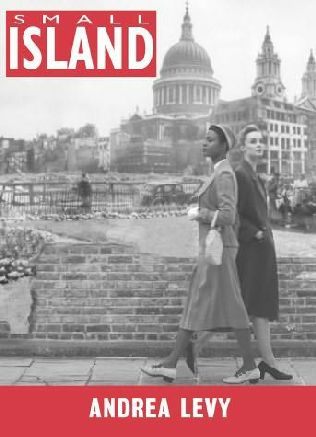
18. "Small Island" by Andrea Levy


Year of first publication: 2004
Genre: novel
Country: United Kingdom / Jamaica

About the author: Andrea Levy was born in London to Jamaican parents. Her novels explore the problems faced by black British-born children of Jamaican emigrants. Her first novel, the semi-autobiographical Every Light in the House Burnin' (1994), is the story of a Jamaican family living in London in the 1960s. The book opens, not with the expected transatlantic journey from the West Indies, but with a family trip from London to Pontin's Holiday Camp. Her second work, Never Far from Nowhere (1996), is set during the 1970s and tells the story of two very different sisters, Olive and Vivien, living on a London council estate. In this novel she elaborates on the estate-based Black English culture. These issues of local identity and ethnicity emerge as a tension when Olive identifies herself as authentically 'black' and longs to 'return' to Jamaica, while Vivien, who has a lighter complexion than Olive, 'passes' as white. In Fruit of the Lemon (1999), Faith Jackson, a young black Londoner, visits Jamaica after suffering a nervous breakdown and discovers a previously unknown personal history. Levy's most recent novel is Small Island (2004), which won the Orange Prize for Fiction and the Orange of Oranges, that is to say the best novel among those awarded the Orange Prize in the preceding decade.

Plot: Set in 1948, the novel explores the interaction between a black couple, Gilbert, a former RAF recruit, who has returned to Britain on the SS Windrush, and his Jamaican wife Hortense, and a white couple: Queenie, their landlady, and her recently demobbed husband, Bernard.

Some thoughts: Last summer I read Every Light in the House Burnin', Levy’s first novel, but I was a bit disappointed. Despite the interesting setting, London in the 1960s from the point of view of a young girl of Jamaican origins, there was something missing. The remarks on the racial relations between the Jacobs and a predominantly white society were not explored enough and sometimes I found the story a bit dull. However, I decided to read Small Island, Levy’s most recent novel to date, because it is supposed to be her best (it won the Orange Prize for Fiction, the Whitbread Prize and the Orange of Oranges) and I must say that this time I was not disappointed.
The novel is told in four voices: Gilbert’s and his wife Hortense’s, who travel from Jamaica to England just after the Second World War, and then from the point of view of an English couple, Queenie and Bernard. Andrea Levy said: "None of my books is just about race, they're about people and history". As a matter of fact, there is a lot of history in the book: for example the involvement of Jamaican people in the Second World War and in the Royal Air Force and their relations with American soldiers, their racism and their reactios to black British soldiers (America still had the so-called Jim Crow laws). There is also much about people in the novel: Levy writes about the displacement of English soldiers in remote areas of Asia and the experiences and impressions of the first Jamaican immigrants just after the war, together with the climate of austerity and poorness that England was experiencing at the time.
There is some irony and funny moments in Small Island, a thing that reminds me of Zadie Smith’s White Teeth (2000), one of my favourite novels. There is a profile of Andrea Levy in the book section of The Guardian (here) and one of the questions that arises is why Andrea Levy didn’t have the same success as Zadie Smith with her novels about black people in London, at least until Small Island came. I think that the answer is the humour: Andrea Levy can use some humour (Hortense’s nickname, “Miss mucky foot”, or Gilbert’s failed “bee business” are some fine examples), a thing that is always appreciated.
One thing that shocked me in the novel are the differences between the Jamaican couple and the Londoners. There is no doubt that Jamaica was settled at the time: Hortense truly believes that she is British and wants to be considered as such. She is and educated young lady and her skin is light, something that she thought English people would immediately notice. She is shocked by the fact that English people can be poor, ugly and dark-skinned as well. She expected to live in a fine house with a back garden, instead she finds a city almost completely destroyed by bombs, a country impoverished by the war, where she must adapt to live in a cold, badly-furnished room with just a small sink and a toilet at the bottom of the stairs.

More on Small Island here

Saturday, June 27, 2009

Jean Rhys and the "alienation of smells"

We don't have A-levels in Italy, so I can't really say this was part of the English A-level exam, but in this way you understand what I'm taliking about (for my Italian readers, this is "la seconda prova del liceo linguistico"). It's a wonderful passage about a woman coming to England from the West Indies and talking about her first impressions on the country.

It was as if a curtain had fallen, hiding everything I had ever known. It was almost like being born again. The colours were different, the smells different, the feelings things gave you deep down in yourself was different. Not just the difference between heat, cold; light, darkness; purple, grey. But a difference in the way I was frightened and the way I was happy. I didn’t like England at first. I couldn’t get used to the cold. Sometimes I would shut my eyes and pretend that the heat of the fire, or the bed-clothes drawn up round me, was sun-heat; or I would pretend I was standing outside the house at home, looking down Market Street to the Bay. When there was a breeze the sea was millions of spangles; and on still days it was purple as Tyre and Sidon. Market Street smelt of the wind, but the narrow street smelt of niggers and wood-smoke and salt fish-cakes fried in lard. (When the black women sell fishcakes in the savannah they carry them in trays on their heads. They call out, “Salt fishcakes, all sweet an’ charmin’, all sweet an’ charmin’.) It was funny, but that was what I thought about more than anything else – the smell of the street and the smell of the frangipani and lime juice and cinnamon and cloves, and sweets made of ginger and syrup, and incense after funerals or Corpus Christi processions, and the patient standing outside the surgery next door, and the smell of the sea-breeze and the different smell of land-breeze.
Sometimes it was as if I were back there and as if England were a dream. At other times England was the real thing and out there was the dream, but I could never fit them together.
After a while I got used to England and I liked it all right; I got used to everything except the cold and that the towns we went to always looked so exactly alike. You were perpetually moving to another place which was perpetually the same. There was always a little grey street leading to the stage-door of the theatre and another little grey street where your lodging were, and rows of little houses with chimneys like the funnels of dummy steamers and smoke the same colour as the sky; and a grey stone promenade running hard, naked and straight by the side of the grey-brown or grey-green sea; or a Corporation Street or High Street or Duke Street or Lord Street where you walked about and looked at the shops.
Southsea, this place was.


From Voyage in the Dark, by Jean Rhys

Some thoughts: Despite the fact that this book was written in the 1930s it is still very relevant. I had the same impression of "being born again" when I went to the United Kingdom for the first time. Everything was different, but it was not the exciting difference that you feel when you are on holidays abroad, because the difference is in your everyday life. The thing you notice the most is that the smells are different and the colours as well. The character of the novel perceives England as grey and cold, something that is very true. I wonder if English people think that their country is grey and if yes, why in the world they aren't doing anything to change it! Coming from Italy, I noticed this change in colours from the bright blue of the sky and the blinding white of the houses to the grey of the sky and the gloomy colours of streets and houses. These differences in the colours, smells and perception of your body have the capacity to make you feel happy or sad. It is difficult to adapt to a different country, where people behave differently, have other interests, other habits and other opinions on many topics. Stereotypically as it may seems, for me England smelled of a room that hasn't been aired, of fried food and curry, whereas Italy smells of freshly-baked bread, coffee and fresh tomatoes (which doesn't mean I hate England, but that I came to "like it all right"). Indeed, sometimes being in England felt like a dream and sometimes Italy seemed like a distant - but yet familiar - dream. Do places in England look alike or is it only in the perception of foreigners? There was always a little grey street and always rows of houses with chimneys and a High Street where you looked at the shops. This could come from my diary. I have the feeling that nothing has changed since the 1930s about the perceptions that foreigners (or immigrants if you prefer) have of England. Of course, the sense of "alienation" is something that cannot change, because when you move to another country you don't have all your friends and family and you don't understand what's happening around you, while people do things in that way, etc. But there is something more in this passage: the same alienation of smells that I felt.

Jean Rhys is also the author of Wide Sargasso Sea, a sort of prequel to Jane Eyre. It is the story of the mad wife of Mr Rochester, who as you might remember is from the West Indies, like the author. The novel begins with the memorable sentence "They say when trouble comes close ranks, and so the white people did. But we were not in their ranks. The Jamaican ladies had never approved of my mother, 'because she pretty like pretty self' Christophine said".

Friday, June 19, 2009

Some more literary news!


* The Guardian, which had completely forgotten about Kamala Das's death (!), has made up for it with an obituary (here). From the article I learn that she wrote an autobiography in which there is much fiction, a book that could be described as a "biomythography". I wish I knew this word or Das's memoirs when I wrote my graduation thesis on Janet Frame's Autobiography! Now I want to read this book, it sounds so interesting (it must be all about freeing herself from domestic and sexual oppression).

* Marilynne Robinson's Home has won the Orange Prize for Fiction. It was quite expected, as everyone who read all the novels shortlisted for the prize agreed (here the reviews of a blogger friend, Lizzy). When I chose from the plots which books I'd like to read (here and here) I didn't consider Home, but other titles (for example Blonde Roots by Bernardine Evaristo, which won the Orange Prize for Fiction youth panel's award, anyway). Well, I don't know, I might give Home a try after all!

* Here's an interesting interview with Helen Oyeyemi, the young author of a novel called White is for Witching. The novel involves ghost stories, gothic literature (Edgar Allan Poe, Dracula, Wuthering Heights etc.) and Caribbean and Nigerian supernatural traditions. Very, very interesting. Oyeyemi is a British writer of Nigerian origin, but she is also interested in the Caribbean region (her second novel The Opposite House is about the Cuban Santeria religion!). Here's the link.