Showing posts with label Russia. Show all posts

Friday, October 7, 2011

"War and Peace" by Lev Tolstoj (vol.2)


In the second volume of this almost never-ending and sometimes dragged on novel (come on, don't be shocked, Tolstoj really lacks in concision), you will find a lot of war and not as much peace. A great deal of pages are devoted to an important field battle and to the fire in Moscow, when the Russian army inexplicably left their capital city in the hands of Napoleon. In spite of this, there is still time to witness Count Pierre Bezukhov's life-changing experience as a war prisoner and his humanitarian experiments. This was my favourite strand of the novel: I could not help but feel sympathy for Pierre, in spite of his foolishness (at a certain point he starts believing that he is destined to kill Napoleon because of an obscure cabbalah-related calculation he has made). Natasha also changes a lot in this second volume and by the end of the book she is finally a woman. Prince Andrej, instead, ends up being almost the hero and his story line is harrowing but also uplifting. You could argue that “War and Peace” is, among many other things, a buildungsroman. I know that most scholars speak of it as the historical novel par excellence and I am not saying it is not that as well. Only, it is difficult to ignore that every character matures somewhere between page 1 and page 1425 and in order to do that each of them has to live through a war and several tribulations.

The primary intent of the book becomes clearer than ever by the end of the book. The last thirty pages of “War and Peace” are actually an essay, pure non-fiction inserted in a novel. This of course makes you think. More than a family saga, “War and Peace” is the medium employed by Lev Tolstoj to write about history. Tolstoj believed in fatalism and thought that revolutions and wars did not happen because of the ambition and desire for power of single leaders. In Tolstoj's world, great men – Napoleon first of all, but also Kutuzov or Murat – are only one of the many factors that make what we like to call “history”. A part of me would like to say that Tolstoj's attempt in these last thirty pages to explain how history works was a failure: instead of showing us what history is and how it works through the characters in the book, Tolstoj ends his novel with an essay, departing from the narrative texture never to return to it. Nonetheless, it is quite possible that this was perfectly acceptable in the 19th century when Tolstoj wrote the book and I must confess that his opinions (and his metaphors to explain how he thinks history functions) are alluring to say the least. However, I found the philosophical parts slightly redundant. 

"War and Peace" is an old-fashioned novel, this I can say without feeling guilty. It has become a classic, not only of Russian literature, but of world literature. It is vast and contains many things. It can provoke frustration ("is this book ever going to finish?") or admiration ("how can Tolstoj describe the world so well?"), but surely you cannot dismiss it very easily. It makes you keep thinking about what you have read. In other words, you feel its weight even after you've finished it.

Friday, September 2, 2011

"War and Peace" by Lev Tolstoj (volume one)


In one of his most famous essays, Friedrich Schiller distinguished between naïve poets and sentimental poets, the former writing spontaneously without planning anything and the second being very self-aware of their writing and the problems raised by their work.

Having read the first volume of “War and Peace”, I could not help but think that Tolstoj must be necessarily included in the naïve category, only to realise that this cannot be possible, that a writer like Tolstoj would have known where his story would go. While reading the first volume of Tolstoj’s grandiose effort, I constantly had the impression that the author was consciously writing about the pursuit of one’s happiness in life, but that he did not always have a clear-cut idea of where and how Pierre, Prince Andréj, Nikolaj Rostòv or Nataša could find it. I might be terribly wrong, because Tolstoj kept revising and rewriting episodes of the book for a very long time, so he must have had some idea of where he was going.

At the centre of the story there is history of course: the Napoleonic wars that saw Russia fighting alongside Austria against the French play a big role in the 'war parts', but it is the ultimate meaning of history that is at stake in this book. What is history and can common people ever be a part of it? “War and Peace” is also a huge canvas of Russian aristocracy, of its falseness and affectation above all. Ironically enough, while princes and counts converse in good French, Russia is at war with Napoleon, who is regarded as a charlatan of an emperor and cannot compete with his Russian counterpart, Alexander I. At the centre of the question, there are ideas about Russian identity and the influence of Europe. The characters in the story seem to be more spontaneous when they speak Russian or when they try to live a genuine, simple life that does not involve discussing politics or philosophy. It is not by chance that every major character is looking for happiness, whether through masonry, marriage or war achievements.

War and Peace” has many, maybe too many characters. For at least 300 pages you need to write them down on a piece of paper and constantly look at it. In spite of this, some of them really stand out: Pierre, the clumsy, illegitimate son of a wealthy count, who is lost and confused to the point of entering masonry was created with tenderness and affection by Tolstoj, who clearly saw much of himself in him. Then there is Prince Andréj Bolkonskij, a young officer with a pregnant wife and an eccentric father, and two siblings, Nikolaj and Nataša. He is a somehow idealistic young man who is in love with his orphan cousin Sonja to the despair of his impoverished parents, while Nataša, still a child at the beginning of the book, grows into a very beautiful young woman who is at a loss regarding her marriage. There are also some purely depraved characters like Hélène Kuraghina and her brother Anatole, libertines who clearly represent the moral corruption of the society of the time (Tojstoj wrote the novel in the 1860s, but set it in the earlier decades, which he probably found more interesting because of the historical events).

This is a complex novel which blends history with a family saga literally throbbing with life. It contains elements of philosophy, social sciences, politics and god knows what more. So far it has been an enriching experience to read it, but it has been rather demanding. Sometimes it feels like you are reading a very long director's cut, where episodes do not apparently lead to anything important or where you simply miss the point the author is trying to make, but I think it is just because Lev Tolstoj sometimes is in over my head.     

Sunday, December 19, 2010

"Invitation to a Beheading" by Vladimir Nabokov


Year of first publication:
1935-36
Genre: novel, dystopic novel
Country: Russia

Cincinnatus C. is the citizen of a fictitious country. He is spending his last days in prison prior to his execution. His charge is something called "gnostical torpitude", a crime no one is willing to talk about. Cincinnatus feels that he is different from everyone else and that people don't feel at ease in his presence. He is, quoting Nabokov, "impervious to the rays of others, and therefore produced when off his guard a bizarre impression, as of a lone dark obstacle in this world of souls transparent to one another". The novel is set in a fictional world which is frightfully similar to the real world we live in and this is the real horror of the story.
Cincinnatus is not allowed to learn the day of his execution and this causes him sorrow, because it does not let him think properly or lay out his written thouhgts with a clear intent. Nonetheless, when he learns the hour of his execution he is equally frought with anxiety.
Nabokov wrote this novel in Russian while he was in exile in Berlin. It was first published in a magazine for Russian expatriates and translated into English by his son Dmitri in the 1950s. I think you can feel that the book was written in an era of totalitarisms (Stalinism in Russia, fascism in Italy and, of course, the rise of Adolf Hitler's party in Germany), despite the fact that Nabokov considers his works as completely detached from any moral or social message. The book has been defined "kafkaesque" by many, but Nabokov said more than once that at the time he didn't speak German and was completely ignorant of Kafka's work. There is to be sure an affinity between "Invitation to a Beheading" and, let's say, "The Trial". You really do not know what Cincinnatus has done and you start doubting if he has ever committed a crime or whether he is just being executed for the way he is.
Somehow I couldn't relate to this book as much as I did with Nabokov's masterpiece, "Lolita". I was absent-minded while I read it which is never a good sign. Picking up the book on the train or after a tiring day at my computer, I had the impression that I wasn't quite understading half of what Nabokov intended to say. Certainly "Invitation to a Beheading" is very different from "Lolita": a lot less "aesthetic blessings", a lot less making fun of other people (psychiatrists, bourgeoisie etc) and a lot less making readers' eyebrows raise. In other words, a lot less Nabokov. Ok, so I'll give "Russian Nabokov" another chance to enthrall me with "The Gift", ok?


A last random thought: I have the impression that Nabokov is so not read in Italy, am I wrong?

I also wrote something on Nabokov here and here (in Italian).

Friday, October 29, 2010

"Lolita" di Vladimir Nabokov


Anno di prima pubblicazione: 1955
Genere: romanzo
Paese: USA

La mia recensione di "Lolita" è uscita nella rivista culturale Paper Street ed è disponibile a questo link (ora si può anche votare e commentare sul sito!). Nel frattempo vi lascio qualche parola sull'autore, con curiosità:

Vladimir Vladimirovic Nabokov, idolatrato da uno stuolo di scrittori cool di madrelingua inglese, tra cui Zadie Smith, John Updike e Martin Amis, nacque a San Pietroburgo, in Russia, da una famiglia della piccola nobiltà. Raccontava di aver imparato l’inglese ancora prima del russo grazie alla sua bambinaia inglese, un po’ come Jorge Luis Borges. Con la sua famiglia fuggì dalla Russia alla vigilia della rivoluzione bolscevica, pensando di rimanere solo per qualche mese lontano dalla Prospettiva Nevskij e invece se ne andò per sempre. Girò per parecchi paesi europei per poi attraversare l’oceano e finire negli Stati Uniti d’America. Scrisse i suoi primi romanzi in russo (“La Difesa di Luzin”, “Invito a una decapitazione) e poi passò all’inglese, lingua nella quale scrisse il suo capolavoro, “Lolita”. Lui, la devota moglie Vera e l’unica figlio Dmitri soffrivano tutti di sinestesia, un disturbo per il quale si mescolano le esperienze sensoriali. Questo lo portò ad associare determinate lettere dell’alfabeto a determinati colori o sensazioni.
Nabokov scriveva i suoi romanzi a matita su delle “index cards”, le tessere per fare gli schedari.Vi scriveva pezzetti di prosa e dialoghi, poi mescolava le carte e gli usciva il romanzo. Era un appassionato scacchista (come Kubrick) e creava problemi di scacchi da pubblicarsi sulle riviste, amava giocare a tennis (se avete letto “Lolita” farete un cenno di assenso) e collezionava farfalle, molte delle quali consegnava al museo di storia naturale. Era noto per le sue “opinioni forti” (per esempio odiava Freud, perché troppo “fallico”) e di sé stesso disse “I think like a genius, I write like a distinguished author and I speak like a child”, ovvero “Penso come un genio, scrivo come un illustre autore e parlo come un bambino”. Altri suoi romanzi importanti sono “Pnin” e “Ada”.

Monday, September 6, 2010

"Il Maestro e Margherita" di Michail Bulgakov


Anno di prima pubblicazione:
1966
Genere: romanzo, romanzo satirico, realismo magico
Paese: Russia

La mia recensione de "Il Maestro e Margherita" è uscita su Paper Street ed è disponibile a questo link. L'opera ha ispirato numerosi artisti, nonchè sceneggiatori teatrali, cinematografici e televisivi. Io scelgo quest'immagine un po' art nouveau.

Sunday, June 6, 2010

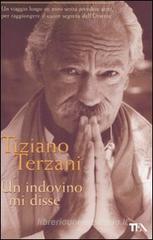
7. “Un indovino mi disse” by Tiziano Terzani


Anno di prima pubblicazione: 1995
Genere: reportage di viaggio
Paese: il reporter è italiano, ma i reportage riguardano Laos, Birmania, Tailandia, Malesia, Singapore, Indonesia, Cambogia, Vietnam, Cina, Mongolia e Russia.

In English: “A Fortune-Teller Told Me: Earthbound Travels in the Far East” by Tiziano Terzani

Nel 1976 Tiziano Terzani si trovava ad Hong Kong, dove un indovino gli disse che nel 1993 avrebbe corso un grosso pericolo e non doveva assolutamente volare. Gli anni passarono in fretta e quando arrivò il fatidico 1993 Terzani decise di continuare il suo lavoro di reporter viaggiando per l’Asia usando tutti i mezzi di trasporto tranne l’aereo. In ogni paese che visita cerca un indovino, in una specie di rito scaramantico a cui per altro non crede per niente. Qualche mese dopo precipita un elicottero delle Nazioni Unite pieno di giornalisti diretti in Cambogia, elicottero che se non avesse ascoltato la profezia dell’indovino di Hong Kong avrebbe preso di certo. Coincidenza o preveggenza? Inizia così un viaggio per tutta l’Asia interrogandosi sul paranormale, sull’arte della divinazione e su quella commistione tra pragmaticità e soprannaturale che caratterizza gran parte delle società asiatiche. E’ un libro da leggere mentre si scorre con il dito il percorso intrapreso, con l’atlante aperto alla pagina Asia. Mentre si legge il libro una domanda sorge spontanea: la magia in Asia è cialtroneria oppure quel che rimane di un’antica sapienza orientale che sta venendo via via soppiantata dalla scienza empirica occidentale?
Scrivendo con il piglio di Kapuscinski, a cui recentemente è stato attribuito anche un pregio narrativo oltre che giornalistico, Terzani ci accompagna attraverso molti paesi asiatici. Parte dal Laos, interrogandosi sul significato di “modernità”, in altre parole se questa possa arrivare solo come l’intendiamo noi occidentali. Il fiume Mekong, infatti, divide il Laos dalla modernissima Tailandia ma non c’è, almeno quando lo visita Terzani, un fiume che colleghi il paese, senza sbocco sul mare, con la Tailandia e quindi con il porto di Bangkok. I fiumi di turismo che hanno rovinato ed occidentalizzato la Tailandia, non arrivano a scalfire paesi “chiusi” all’occidente come il Laos e la Birmania. Ed è proprio in Birmania che Terzani si introduce di soppiatto (è interdetto dal paese perché considerato un giornalista scomodo), raccontandoci delle varie etnie e dei loro conflitti, dei regnanti che dominavano la Birmania prima dell’arrivo degli inglesi e della scaramanzia dei governanti di oggi, in particolare di Ne Win, che per scongiurare le predizioni di un indovino cercava sempre degli stratagemmi per non farle avverare. Dalla Tailandia “corrotta” dal turismo alla Malesia che ha fatto dell’Islam una bandiera in contrapposizione all’immigrazione cinese degli ultimi cent’anni, Terzani incontra uno o una veggente in ogni paese, facendosi ammaliare da alcuni di loro ed etichettando altri come cialtroni. Incontra quegli stessi cinesi della diaspora anche in Malesia e nell’iper-moderna Singapore o in Indonesia. Quello che li accomuna è il desiderio di arricchirsi e un sentimento d’identità legato alla madrepatria ancora molto forte.
L’Asia è un continente di contrasti e dopo il materialismo e lo sfarzo di Singapore Terzani raggiunge paesi messi in ginocchio dalle guerre, come la Cambogia che i Khmer rossi hanno praticamente ridotto ad un ossario o il Vietnam dove, aprendo il finestrino per fotografare la regione natale di Ho Chi Min, Terzani riceve in regalo un getto di fango e di sterco dagli abitanti del luogo, delusi dalla rivoluzione. Poi prende un treno che lentamente lo riporterà in Europa, attraversando, tra gli altri paesi, la Mongolia, paese un tempo satellite dell’Unione Sovietica. La modernità ha reso i mongoli, discendenti di Gengis Khan, pallidi fantasmi di sé stessi. Sono infatti ridotti a fare sì lo stesso percorso dei loro antenati conquistatori, ma solo per vendere merce a buon mercato. D’altronde l’Asia, secondo l’autore, è un continente dalla “bramosia autodistruttrice”, dove il desiderio di modernizzarsi e arricchirsi porta inevitabilmente alla perdita di quelle conoscenze che avevano reso l’Asia magica ai nostri occhi occidentali.