Showing posts with label Black British writing. Show all posts

Tuesday, March 29, 2011

Jackie Kay, 'Things Fall Apart'

Não tenho ambiçôes nem desejos 
Ser poeta não é uma ambição minha 
É a minha maneira de estar sozinho.
Fernando Pessoa ('O guardador de Rebanhos' in "Poemas Completos de Alberto Caeiro")

I don't have ambitions or desires
Being a poet isn't my ambition,
It's my way of being alone.
Fernando Pessoa ('The Keeper of Flock' in "Alberto Caeiro: The Complete Poems")

I never speak about poetry in my blog and I don't know why. I don't know if poetry works on the internet, where people come into a blog like this and read quickly a post in multitasking mode, hardly reaching the end of it. I'll try anyway.

I'll start with a poet some of you may not know. My intention is not to post Wordworth's "Daffodils"; for that you can go everywhere on the net. I want to post something that I find interesting, slightly different from the poems we are used to read in literature classes, and then write something about it.

The first poet I’d like to talk about is Jackie Kay. She was born in 1961 in Scotland, from a Nigerian father and a Scottish mother. She was adopted by a white couple and raised in Glasgow. She has written poetry ("The Adoption Papers", “Off Colour”, “Life Mask”), novels for both adults (“Trumpet”) and children (“Strawgirl”) and, more recently, a memoir (“Red Dust Road”). Some years ago she went to Nigeria to meet her biological father and had written a piece for the Guardian whose copyright is now expired. To know that story I guess you’ll have to read her memoir (I’m eager to, by the way, as I’ve read her novel “Trumpet” some years ago and loved it). Alternatively, you can read this poem:


Things Fall Apart


My birth father lifted his hands above his head
and put the white mask of God on his handsome face.

A born-again man now, gone were the old tribal ways,
the ancestral village - African chief's nonsense, he says.

I could see his eyes behind the hard alabaster.
A father, no more real, still less real - not Wole Soyinka.

Less flesh than dark earth; less blood than red dust.
Less bone than Kano camels; less like me than Chinua Achebe.

Christianity had scrubbed his black face with a hard brush.
'You are my past sin, let us deliberate on new birth.'

The sun slips and slides and finally drops
into the swimming pool, in Nico hotel, Abuja; lonely pinks.

I knock back my dry spritzer, take in the songs
of African birds. I think he had my hands, my father.


                                                                                (From "Life Mask", 2005)


I have chosen this poem, over several others by Jackie Kay, because it is highly resonant with names and tropes of postcolonial literatures: two great Nigerian writers are named, not to mention that the title immediately takes us back to the atmospheres of Achebe’s most important novel, “Things Fall Apart”. The discordance between expectations and real events is the main focus of this short poem. The old tribal ways swept away by the religion and the customs of the colonizers, as it happens in Achebe’s novel, are paired to her disappointment at a father she has long imagined and now that he is in front of her, in flesh and blood, looks like dark earth and red dust to her. Unable to reconcile her father with the figure of the Nigerian intellectuals she knows, she is finally left alone in the hotel and thinks of his father’s hands, so similar and dissimilar from hers, those same hands that were lifted above his head to take God's white mask and to put it on his handsome face (Frantz Fanon’s “Black Skin, White Masks” is the obvious reference here).

I like this poem for its simplicity, its refusal of the idea that poems use difficult words and complex figures of speech. It blends the narrative intent and the lyric moment, lending words in a most crystalline way to an emotion that we have all felt: disappointment and disenchantment.

Thursday, July 9, 2009

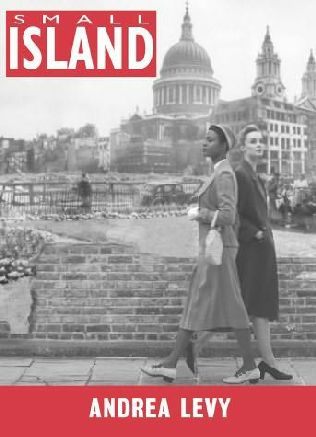
18. "Small Island" by Andrea Levy


Year of first publication: 2004
Genre: novel
Country: United Kingdom / Jamaica

About the author: Andrea Levy was born in London to Jamaican parents. Her novels explore the problems faced by black British-born children of Jamaican emigrants. Her first novel, the semi-autobiographical Every Light in the House Burnin' (1994), is the story of a Jamaican family living in London in the 1960s. The book opens, not with the expected transatlantic journey from the West Indies, but with a family trip from London to Pontin's Holiday Camp. Her second work, Never Far from Nowhere (1996), is set during the 1970s and tells the story of two very different sisters, Olive and Vivien, living on a London council estate. In this novel she elaborates on the estate-based Black English culture. These issues of local identity and ethnicity emerge as a tension when Olive identifies herself as authentically 'black' and longs to 'return' to Jamaica, while Vivien, who has a lighter complexion than Olive, 'passes' as white. In Fruit of the Lemon (1999), Faith Jackson, a young black Londoner, visits Jamaica after suffering a nervous breakdown and discovers a previously unknown personal history. Levy's most recent novel is Small Island (2004), which won the Orange Prize for Fiction and the Orange of Oranges, that is to say the best novel among those awarded the Orange Prize in the preceding decade.

Plot: Set in 1948, the novel explores the interaction between a black couple, Gilbert, a former RAF recruit, who has returned to Britain on the SS Windrush, and his Jamaican wife Hortense, and a white couple: Queenie, their landlady, and her recently demobbed husband, Bernard.

Some thoughts: Last summer I read Every Light in the House Burnin', Levy’s first novel, but I was a bit disappointed. Despite the interesting setting, London in the 1960s from the point of view of a young girl of Jamaican origins, there was something missing. The remarks on the racial relations between the Jacobs and a predominantly white society were not explored enough and sometimes I found the story a bit dull. However, I decided to read Small Island, Levy’s most recent novel to date, because it is supposed to be her best (it won the Orange Prize for Fiction, the Whitbread Prize and the Orange of Oranges) and I must say that this time I was not disappointed.
The novel is told in four voices: Gilbert’s and his wife Hortense’s, who travel from Jamaica to England just after the Second World War, and then from the point of view of an English couple, Queenie and Bernard. Andrea Levy said: "None of my books is just about race, they're about people and history". As a matter of fact, there is a lot of history in the book: for example the involvement of Jamaican people in the Second World War and in the Royal Air Force and their relations with American soldiers, their racism and their reactios to black British soldiers (America still had the so-called Jim Crow laws). There is also much about people in the novel: Levy writes about the displacement of English soldiers in remote areas of Asia and the experiences and impressions of the first Jamaican immigrants just after the war, together with the climate of austerity and poorness that England was experiencing at the time.
There is some irony and funny moments in Small Island, a thing that reminds me of Zadie Smith’s White Teeth (2000), one of my favourite novels. There is a profile of Andrea Levy in the book section of The Guardian (here) and one of the questions that arises is why Andrea Levy didn’t have the same success as Zadie Smith with her novels about black people in London, at least until Small Island came. I think that the answer is the humour: Andrea Levy can use some humour (Hortense’s nickname, “Miss mucky foot”, or Gilbert’s failed “bee business” are some fine examples), a thing that is always appreciated.
One thing that shocked me in the novel are the differences between the Jamaican couple and the Londoners. There is no doubt that Jamaica was settled at the time: Hortense truly believes that she is British and wants to be considered as such. She is and educated young lady and her skin is light, something that she thought English people would immediately notice. She is shocked by the fact that English people can be poor, ugly and dark-skinned as well. She expected to live in a fine house with a back garden, instead she finds a city almost completely destroyed by bombs, a country impoverished by the war, where she must adapt to live in a cold, badly-furnished room with just a small sink and a toilet at the bottom of the stairs.

More on Small Island here

Sunday, February 8, 2009

5. "The Nature of Blood" di Caryl Phillips

Anno di prima pubblicazione: 1997
Genere: Romanzo
Paese: autore nato nell’isola caraibica di St.Kitts e cresciuto in Inghilterra, ma romanzo ambientato in Germania negli anni '30 e '40 e a Venezia nel sedicesimo secolo.

Sull’autore: vedi questo post

Trama: Due storie diversissime eppure in qualche modo connesse: una giovane donna ebrea cresce nella Germania nazista e vive l’incubo dei campi di concentramento e un generale africano ingaggiato dal Doge per guidare il suo esercito nella Venezia del sedicesimo secolo si chiedono che cosa sia l’identità e si trovano ad affrontare un’Europa ossessionata dai pregiudizi.

Alcuni pensieri: Ho tenuto questo libro sulla mia “reading list” a lungo ed ora finalmente l’ho letto. La cosa che mi attraeva di più era naturalmente la storia di Otello, personaggio shakespeariano che mi ha sempre affascinato. Phillips non modifica più di tanto la storia di Otello così come ce la presenta il bardo: non conosciamo con esattezza le origini di Otello, ma sappiamo che è sicuramente cristiano e che è stato fatto schiavo, prima di diventare un valente soldato e poi il generale dell’esercito della Serenissima.
Caryl Phillips ci descrive che cosa succede prima che si consumi la tragedia, quella gelosia estrema che lo porterà ad uccidere la sua amata Desdemona. Otello è appena giunto a Venezia e tenta di comprendere gli usi e i costumi della gente in città. Appare evidentemente affascinato dalla città lagunare e in particolare da una dama, a sua volta affascinata dai racconti di Otello. Mi è sempre piaciuto il passaggio in cui Shakespeare mette in bocca a Otello le parole “Rude am I in speech” (“Rude sono io nel parlare”), quando invece risulta essere molto più forbito e più affascinante dei nobili veneziani. Phillips sottolinea l’umiltà di Otello e la sua cultura, rendendolo un acuto osservatore della società veneziana (per esempio della sua dissolutezza ed ipocrisia), ma amplifica anche i pregiudizi a cui viene esposto. Mentre in Shakespeare il razzismo dei veneziani è implicito e subdolo (molto in linea con quello odierno inglese a mio parere), quello che ci mostra Phillips è un razzismo palese, evidente persino negli sguardi della gente. In Shakespeare l’unico insulto diretto arriva da Roderigo se non sbaglio, che chiama Otello “thicklips”, “labbra-grosse”, mentre il razzismo di Iago, che riferisce come Otello e Desdemona stiano facendo “la bestia a due gobbe”, implica ma non afferma l’oscenità del matrimonio tra un nero e una nobildonna veneziana, ma anche l’implicita straripante sessualità che emana Otello in quanto nero e africano. Phillips, invece, ci racconta di come Otello si accorga direttamente del pregiudizio nelle azioni dei veneziani, in particolare in quelle del suo accompagnatore personale, che lo disprezza e lo tratta malissimo. Non sono riuscita a capire se questo personaggio senza nome diventi poi Iago, colui che in futuro gli creerà tanti problemi, ma è molto probabile.
Vi propongo qui un passaggio, secondo me molto bello, in cui Otello s’interroga sulla sua identità e sulla rassegnazione a non essere mai pienamente a suo agio tra le braccia di Desdemona, veneziana dalla pelle color alabastro, affascinata dalla sua esoticità:

And so you shadow her every move, attend to her every whim, like the black Uncle Tom that you are. Fighting the white man's war for him / Wide-receiver in the Venetian army / The republic's grinning Satchmo hoisting his sword like a trumpet / You tuck your black skin away beneath their epauletted uniform, appropriate their words (Rude am I in speech), their manners, worry your nappy woollen head with anxiety about learning their ways, yet you conveniently forget your own family, and thrust your wife and son to the back of your noble mind. O strong man, O strong man, O valiant soldier, O weak man. You are lost, a sad black man, first in a long line of so-called achievers who are too weak to yoke their past with their present; too naive to insist on both; too foolish to realize that to supplant one with the other can only lead to catastrophe. Go ahead, peer on her alabaster skin. Go ahead, revel in the delights of her wanton bed, but to whom will you turn when she, too, is lost and a real storm breaks about your handkerchiefed head? My friend, the Yoruba have a saying: the river that does not know its own source will dry up. You will do well to remember this.


E ancora:


My friend, an African river bears no resemblance to a Venetian canal. Only the strongest spirit can hold both together. Only the most powerful heart can endure the pulse of two such disparate life-forces. After a protracted struggle, most men will eventually relinquish one in favour of the other. But you run like Jim Crow and leap into their creamy arms. Did you truly ever think of your wife's soft kiss? Or your son's eyes? Brother, you are weak. A figment of a Venetian imagination. While you still have time, jump from her bed and fly away home. Peel your rusty body from hers and go home. No good can come from your foreign adventure. A wooden ladle lightly dipped will soon scoop you up and dump you down and into the gutter. Brother, jump from her bed and fly away home.

L’altra storia, quella di Eva, una ragazza ebrea che cresce nella Germania invasa dai nazisti è, in confronto, una storia povera. C’è ovviamente l’orrore dei campi di concentramento e l’impossibilità di riprendere a vivere normalmente dopo una tale esperienza, ma niente di diverso dai racconti in prima persona che hanno fatto tanti altri sopravissuti all’olocausto, con la differenza che Phillips non ha mia vissuto quella terribile esperienza. Mah, forse sarà solo la mia ossessione per le tragedie di Shakespeare a farmi aspettare con ansia le pagine dedicate ad Otello e alla mia amata Venezia. Più interessante la parte in cui si parla degli ebrei di Portobuffolè, una cittadina a pochi chilometri da dove vivo io. Anche se sembrava presa da un libro di storia mi ha affascinato, perché non avevo mai sentito di ebrei che vivessero dalle mie parti, specialmente nel quindicesimo secolo. L’ultima storia, quella di una ragazza ebrea nera, probabilmente una fallascià etiope*, che cerca inutilmente un senso di identità e di appartenenza in Israele è invece molto interessante, ma solo abbozzata.


* Il termine “fallascià” è quello più usato al di fuori della comunità ebrea etiope, ma alle volte è considerato peggiorativo perché in amarico fallascià significa “straniero” o “esiliato”. Il termine corretto sarebbe Beta Israel.

Sunday, December 21, 2008

Parole dette al vento - Dub poetry, creoli e...la francophonie

Attenzione, questo è un Post Polpetta, come lo chiamerebbe Clauds. Se fosse un'applicazione di facebook si chiamerebbe "Stuff I like"... Se fosse un gruppo "Postcolonial Lit rocks!"...

#1)
La sezione letteraria del Guardian ha appena pubblicato un video di una poesia recitata da Linton Kwesi Johnson, poeta giamaicano di dub poetry, cioè poesia a ritmo di reggae. Potete sentirlo parlare in creolo che, secondo me, è una lingua bellissima e musicale già di per sé! A me questo tipo di poesia piace molto, spero che piaccia anche a qualcuno di voi. La poesia si chiama “If I woz a top-natch poet”, cioè “Se Fossi un Poeta di Spicco”. Vi riporto il testo, lo so che è in creolo ed è di difficile comprensione, anche per me, ma ribadisco che è poesia da ascoltare, come una canzone, non da leggere. Ho provato a tradurlo, ma mi incarto di continuo e non rende. Just enjoy! Clicca qui per il video con la poesia recitata.

If I woz a tap-natch poet

if I woz a tap-natch poet
like Chris Okigbo
Derek Walcot
ar T.S.Eliot

ah woodah write a poem
soh dam deep
dat it bittah-sweet
like a precious
memory
whe mek yu weep
whe mek yu feel incomplete

like wen yu lovah leave
an dow defeat yu kanseed
still yu beg an yu plead
till yu win a repreve
an yu ready fi rack steady
but di muzik done aready

still
inna di meantime
wid mi riddim
wid mi rime
wid mi ruff base line
wid mi own sense a time

goon poet haffi step in line
caw Bootahlazy mite a gat couple touzan
but Mandela fi im
touzans a touzans a touzans a touzans

if I woz a tap-natch poet
like Kamau Brathwaite
Martin Carter
Jayne Cortez ar Amiri Baraka

ah woodah write a poem
soh rude
an rootsy
an subversive
dat it mek di goon poet
tun white wid envy

like a candhumble/ voodoo/ kumina chant
a ole time calypso ar a slave song
dat get ban
but fram granny

rite
dung
to
gran
pickney

each an evry wan
can recite dat-dey wan

still
inna di meantime
wid mi riddim
wid mi rime
wid mi ruff base line
wid mi own sense a time

goon poet haffi step in line
caw Bootahlazy mite a gat couple touzan
but Mandela fi im
touzans a touzans a touzans a touzans

if I woz a tap-natch poet
like Tchikaya U'tamsi
Nicholas Guillen
ar Lorna Goodison

an woodah write a poem
soh beautiful dat it simple
like a plain girl
wid good brains
an nice ways
wid a sexy dispozishan
an plenty compahshan
wid a sweet smile
an a suttle style

still
mi naw goh bow an scrape
an gwan like a ape
peddlin noh puerile parchment af etnicity
wid ongle a vaig fleetin hint af hawtenticity
like a black Lance Percival in reverse
ar even worse
a babblin bafoon whe looze im tongue

no sah
nat atall
mi gat mi riddim
mi gat mi rime
mi gat mi ruff base line
mi gat mi own sense a time

goon poet bettah step in line
caw Bootahlazy mite a gat couple touzan
but Mandela fi im
touzans a touzans a touzans a touzans

Se ti piace questo:
Inglan is a bitch

#2)
Qualche settimana fa stavo scrivendo un post sulla letteratura francofona contemporanea, in particolare sugli ultimi premi assegnati:
Prix Goncourt: Syngué Sabour di Atiq Rahimi, uno scrittore di origine afgana
Prix Renaudot: Le Roi Kahel di Tierno Monénembo, guineano
Prix Interralié : Le Premier Pricipe. Le Second Principe di Serge Bramly, tunisino di nascita.
Ora ho trovato questo articolo di Jean-Luis Gouraud su Jeune Afrique. Che cosa ne pensate? Io lo trovo un po' esagerato: non può essere che i francesi "autoctoni" non sappiano più scrivere, ma piuttosto mi sembra giusto che venga lasciato spazio a tutti coloro che decidano di scrivere in francese, indipendentemente dalla nazionalità. Qui il link per gli eletti che sanno il francese, perché ripeto che non sono brava a tradurre:

"Il francese della carità

L’assegnazione di tre dei principali premi letterari dell’anno a degli scrittori francofoni ma non d'origine francese (il Goncourt ad un afgano, il premio France-Télévision ad un algerino e il Renaudot ad un guineano) mi sembra un segno dei tempi. Non, come ha suggerito un po’ stupidamente la stampa parigina, una specie di “effetto Obama” (leggesi: la moda del meticciato), ma una vera tendenza dell’intellighenzia francese ad avere nei confronti della propria lingua nient’altro che una specie di condiscendenza, di tenera compassione, fino al punto di convincersi che quella vecchia lingua diventata un po’ obsoleta – dopo che, certo, è servita a molto - e minoritaria oggi nel mondo è buona solo da lasciare ai poveri. Come una camicia usata, ma che può ancora essere portata, che si regala ai poveri, il francese viene abbandonato dai suoi primi proprietari ai suoi mendicanti culturali, quei dolci sempliciotti che sono gli scrittori dell’Altro-Esagono. I quali, buoni diavoli, si accontentano di poco e vi si sentono ancora bene, a loro agio, al caldo: ah, che brave persone!

Mi sono convinto che, in fondo, il sogno, il desiderio incosciente, il fantasma degli scrittori francesi di Francia consiste nello scrivere… in inglese: la sola lingua che valga, il solo vero linguaggio universale. Per un paradosso masochista che sarebbe interessante analizzare (psicanalizzare), i francesi provano in verità per la francofonia qualcosa che assomiglia al disprezzo. E’ iniziato sicuramente tutto con delle parole: si è voluto designare in altro modo il piccolo pianeta composito degli scrittori di lingua francese, rimpiazzare l’espressione già desueta di “letteratura francofona” con quella più trendy di “letteratura del mondo”. L’autore di questo concetto piuttosto fosco, per non dire fumoso, lo scrittore e viaggiatore Michel Le Bris, lui stesso autore di un libro recente, La Beauté du Monde (La Bellezza del Mondo, N.d.T.), era candidato a tutti i premi letterari del 2008. Gli sono passati tutti sotto il naso, arraffati dai cittadini di questo mondo di cui pensava di diventare re. Fallimento totale! Ha conosciuto la sorte del dottor Frankenstein, al quale la creatura finisce per scappare. Anche la sorte del visconte di Sanderval, di cui racconta Tierno Monénembo nel suo bel romanzo che gli è valso il premio Renaudot (Le Roi Kahel): partito per l’Africa per provare a ritagliarsi un piccolo regno personale, l’ambizioso ritorna a mani vuote.

Tutte le favole hanno una morale.”

Su Tierno Monénembo (
en français)
Su Atiq Rahimi (in English)

Thursday, June 19, 2008

“A Distant Shore” by Caryl Phillips

Date of publication: 2003
Genre: fiction, drama, travel
Themes: interracial relationships, migration, racism, loneliness, friendship, old age
Setting and time: 20th-century England and a nameless war-torn African country

Commonwealth Writers Prize, 2003

About the author: Caryl Phillips was born in 1958 on the Caribbean island of St. Kitts and brought up in Leeds. He is the author of several novels and non-fiction books, but he has also written for film, television, theatre and radio. Much of his writing focuses on the legacy of the Atlantic slave trade and its consequences for the African Diaspora in both Europe and the Americas. His novel The Finale Passage (1985) broke new ground as the first second-generation Black British novel to return to the experience of the so-called ‘Windrush generation’, that is to say the first post-war West Indians to arrive in England. Phillips is a diasporic writer, whose work rejects investment in national belonging, preferring instead the border spaces of the black Atlantic contact zone at which Africa, America and Europe uneasily encounter one another. Phillips is therefore concerned with ‘the gift of displacement’ and ‘the high anxiety of belonging’. One of his most interesting novels is called The Nature of Blood (1997) and tells the stories of a German Jewish girl during World War II, a young Ethiopian Jewish woman resettled in Israel and an imaginary Othello, portrayed as an African general in late-16th-century Venice. His most popular novel to date (shortlisted for the Booker Prize) is Crossing the River (1993), a series of journeys across the Atlantic and an exploration of the legacy of slavery. Because of his concerns for the narrative structure of migration, Philipps shares many similarities with other key diasporic writers, such as David Dabydeen and Salman Rushdie.

Plot: (*may contain spoilers*) It is the story of two people, an old English lady and an African refugee. Apparently, they don’t have much in common, apart from the fact that they both live in a new housing estate in the north of England. In reality, they are both extremely lonely and desperate to find somebody to talk to. They slowly bond, but are haunted by their past. Dorothy has just walked away from a thirty-year marriage, a couple of love affairs gone wrong and the death of her sister. Solomon has escaped his country because of the war that has killed his family and he hopes that his new country will provide him with a safe haven in which he might enjoy the decent behaviour and graciousness that he believes the English habitually practice. Unfortunately, Solomon’s expectations clash with the prejudice of the people in the small English village he has just moved to.

Some thoughts: The book is most of all an exploration of isolation and consolation, of friendship and loneliness. It is a sad story, even depressing at times. Postcolonial writers have explored prejudice and racism in all their facets, and yet there is much to write about it. Those of you who know the northeast of Italy may understand why the themes of the book are not unknown to me. Nonetheless, I feel that sometimes the whole thing is dealt with in a simplistic way: Solomon’s thoughts and opinions are often omitted or very briefly explained, while the thugs’ motivations for discriminating Solomon are completely left out. However, I liked the part about Solomon's journey to England as an illegal immigrant, because it shows the human tragedies that lie behind this phenomenon. I also appreciated the idea of a male writer using a female protagonist and the unusual connection between the loneliness of an old English lady and the same feeling experienced by an African refugee in a somehow-hostile English village. This relates with the title of the novel: England is ‘a distant shore’ for an African man, both in the geographical and the metaphorical meaning. The aloof manners of English people become a burden for both Solomon and Dorothy, who are unable to understand that they can help each other. And when they do, it is too late. I wonder why Phillips, a West Indian by birth, made Solomon an African man, though. It would have been much easier to use his own heritage and let Solomon have deeper thoughts on the differences between his country and England. In terms of style, the language is simple but the structure is a bit problematic. The story is not told in chronological order and the narration constantly shifts from one character to another, with the risk of confusing the reader. I’ve read that a complex narrative structure but a relatively simple language is a characteristic of Phillips's writing, so I take it as a stylistic choice, rather than as a fault of the novel. This novel was on a reading list for a university course on Black British writing alongside Small Island by Andrea Levy and The Lonely Londoners by Samuel Selvon. Giving that, I feel that other novels by the same author might have been more enlightening on the subject. I really liked the idea behind the novel though, especially the unexpected and unexpressed link between the two main characters. I am very curious about The Nature of Blood, which also features some interesting connections between the characters. I have always been fascinated by Othello and how he came to live in Venice, so I'll put it in my want-to-read list.