Showing posts with label France. Show all posts

Sunday, February 28, 2010

46. “Il Nipote di Rameau” di Denis Diderot


Anno di prima pubblicazione: scritto tra il 1761 e il 1777, non venne pubblicato in Francia fino al 1823, ma ne uscì una traduzione in tedesco di Goethe nel 1805.
Genere: satira, romanzo filosofico, farsa
Paese: Francia

In English: Rameau’s Nephew by Denis Diderot
En français: Le Neveu de Rameau de Denis Diderot

Un dialogo di finzione tra un “IO” e un “LUI”, tra l’autore, Denis Diderot, e Jean-François Rameau, nipote del famoso musicista Jean-Philippe Rameau. Durante la conversazione emerge la duplice coscienza del nipote di Rameau: si tratta di un genio, seppur bizzarro e spregiudicato, oppure di un parassita, un impostore che con il suo cinismo e la sua scaltrezza riesce a sovvertire tutti i valori etici e morali dell’autore? Riferimenti ai personaggi che popolavano la Parigi di un tempo e ai pensieri filosofici allora in voga rendono questa “satira” alquanto vivace. Non si tratta infatti di un trattato filosofico né tanto meno di un romanzo, ma di una satira, nel senso latino di “mélange irregolare di temi e registri narrativi” (così dice l’introduzione a cura di Lanfranco Binni). Quello che ne emerge è un ritratto dell’immoralità e della corruzione della società francese alla metà del diciottesimo secolo. Un ritratto “immoralmente morale”, come lo definì Goethe, che tradusse il manoscritto, ancora inedito in Francia, nel 1805. Il nipote di Rameau, per farvi capire il personaggio, dava lezioni di pianoforte senza saperlo veramente suonare o mostrava ogni giorno una moneta d’oro al figlioletto, la levava in aria come fosse un’ostia e poi la baciava, cercando d’insegnargli che cosa ci fosse da venerare nella vita. Vien da sé che Diderot fu considerato uno spirito ribelle e che di conseguenza i suoi scritti più scabrosi, come questo, furono pubblicati molti anni dopo la sua morte.
Tuttavia, con tutto quello che di pregevole contiene quest’opera, Il Nipote di Rameau mi sembra soltanto una “versione annacquata” di quello che è capace di fare Diderot. Prendete Jacques Le Fataliste, considerato credo uno dei suoi capolavori: quel libro non può lasciar nessuno indifferente. E’ stato scritto 250 anni fa eppure sovverte i canoni del romanzo - e della narrazione, più in generale – come fanno solo i romanzi modernisti, se non quelli post-moderni. Dobbiamo quindi (leggi devo) rivangare le vecchie glorie della letteratura francese, ne leggevo tanta un tempo. Ho su di uno scaffale polveroso Il Conte di Montecristo di Alexandre Dumas (mai letto!) e sarebbe anche ora che lo togliessi da lì per cominciare a leggerlo (anche alla luce del nuovo film L’Autre Dumas*).


Sull’autore:
Denis Diderot è stato un filosofo, un critico d’arte e uno scrittore francese dell’epoca dell’illuminismo. Nacque a Langres, in Francia, nel 1713. Era un pensatore originale e scrisse molte opere filosofiche, per esempio le Pensées Philosophiques o la Lettera sui Ciechi. Quest’ultima gli causò tre mesi di prigione nelle carceri di Vincennes, dove riceveva visite giornalieri da Rousseau, il suo principale alleato. Promise di non scrivere più nulla contro la Chiesa ed infatti i suoi scritti più scabrosi vennero pubblicati solo dopo la morte. Dopo essere stato scarcerato si dedicò al progetto della Encyclopédie insieme a Jean le Rond d’Alambert. Il primo volume, ricco di idee rivoluzionarie per l’epoca, uscì nel 1751. L’opera venne però messa sotto processo ed infine vietata. Molti contributori dell’opera smisero di scrivere articoli per i volumi successivi, lasciando Diderot a scrivere da solo quella che sarebbe diventata la sua opera più famosa. A parte l’Enciclopedia, una delle sue opere più famose è Jacques Il Fatalista e il Suo Padrone, romanzo che sovverte le convenzioni del genere e sperimenta con il tema del libero arbitrio. Per tale spirito innovativo è stato più volte paragonato a Tristam Shandy di Laurence Sterne.

Sunday, November 23, 2008

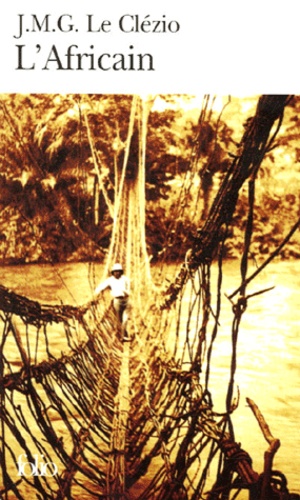
"L'Africain" by J.M.G. Le Clézio


Year of publication: 2004
Genre: biography, memoir
Setting and Time: Nigeria, Cameroon, France and Guyana, before and after the Second World War
Themes: Africa, family relationships, vocational jobs, colonialism

Nobel Prize in Literature 2008

About the author: read this post

What it’s all about: In this short book Le Clézio remembers his father, who was a “jungle doctor” first in Guyana and then in Cameroon and Nigeria. Here you can find his thoughts about his African childhood and about life in remote places.

Some thoughts: Can you start to understand why Le Clézio won a Nobel Prize by reading this nice little book? Not really. I mean, this is simply the account of the life of Le Clézio’s father as a doctor in various parts of the world, not a full-length novel. Of course, you can learn about his background and understand why he wrote about so many different parts of the world (sort of like Bruce Chatwin I would say).
The childhood of the Le Clézios in Africa is the antithesis of colonial life: they don’t have a big house with many servants (even though they have a “houseboy”) and they are the only white people in their village, so they are not enjoying the kind of life that Doris Lessing or Muriel Spark might recount about their African experience. There were a few fascinating things that he remembers about Africa, for example some of its animals and the life style of the people over there. The most interesting thing is how Le Clézio’s father is changed and shaped by his hard life in remote places of the world: when he goes back to France he is a real African man. There is nothing exotic in Le Clézio’s tale: his father led a lonely life in very isolated places and sometimes he had little human contact. Moreover, he lived with the frustration of not having the right medicines to cure the most common diseases of the villagers.
I’d like to read more about this author, as I’m not really in a position to say if he deserved the Nobel Prize or not. For the moment, I’m happy that I managed to read this small book in its original language and I can say that I quite enjoyed it.

Just click on the tag called Nobel Prize in Literature 2008 for some "musings" on this year's Nobel Prize Award.


Thursday, October 9, 2008

JMG Le Clézio wins Nobel Prize in Literature

The Swedish Academy announced that French novelist Jean-Marie Gustave Le Clézio has won the Nobel prize for literature.

Vive la France!

I must admit that I scratched my head and said ‘Huh?’. I expected Amoz Oz, Philip Roth or maybe Vargas Llosa to win the prize. In the UK most of his works are out of print and in Italy he is published by small editors. “Only 12 of his 40 novels have been translated into English”, The New York Times writes. Can you see something into that? I guess so, if you have read Mr. Engdahl's opinions on American literature. Nonetheless, Le Clézio has been living in New Mexico, USA, in near seclusion, for nearly twenty years. I can see a contradiction there: why despise American literature for its isolation and then award someone who’s been living there for such a long time? The mystery will remain buried in Sweden, I guess…

Le Clézio is European (even if he boasts a strong connection with Mauritius) and comes from a nation that has a very old tradition of literature. This confirms that the Academy considers European literature somehow superior to other literatures. All the judges of the Nobel Prize are Swedish and they held their chair for life: they are intellectuals, but known only in their country. If all the judges were Chinese, we would have more Asian Nobel Prizes, don’t you think? [I'm not saying that Le Clézio doesn't deserve the prize, because I haven't read any of his novels, I'm only reflecting on the decision of the jury.]

Anyway, the motivation given for this award is: “author of new departures, poetic adventure and sensual ecstasy, explorer of a humanity beyond and below the reigning civilisation".

J.M.G. Le Clézio was born in Nice in 1940. His family originates from Brittany (north-western France) but has strong links with Mauritius, where his ancestors had migrated in the 18th century. His family had experienced English colonization in Mauritius, and this is why he grew up bilingual (and even had considered becoming a writer in English before deciding it was too "colonial" a language). When he was 8, he moved to Nigeria with his father who was a doctor in the British army. He studied in England and France and traveled extensively throughout his life: Thailand, Mexico, Panama, USA and South Korea.
He published his first novel Le Proces-Verbal (The Interrogation) in 1963, when he was only 23. Le Clézio became popular in France in the 1970s and 80s with novels set across the world. His big breakthrough came in 1980 with Désert, an award-winning novel of French colonialism seen through the eyes of a Tuareg woman in the Sahara. The book contrasts the ugliness and ignorance of Europe, as experienced by immigrants, with the simple nobility of a lost Tuareg civilisation in the Sahara, destroyed by French colonialism. Major books include Vers les Icebergs, the first ever translation into an occidental language of the Indian mythology book The Prophecies of the Chilam Balam; Onitsha, in which a small child moves to Africa in search of his father, a doctor; Étoile Errante, about Jewish emigration to the Promised Land; Pawana, Diego et Frida, a fictional tale of Diego Rivera and Frida Kahlo and La Quarantine, a narration of the past adventures of his maternal grandfather.
Le Clézio is regarded by many people as the greatest living French writer. He has established a worldwide reputation as a student of almost every culture on the planet and a passionate advocate for the superior wisdom of "non-rational", non-Western ways of understanding human existence.
“There are few modern writers more cosmopolitan than Le Clézio. He was born in France. His father was a Mauritian-born British doctor. He spent part of his childhood with his father in Africa and several years in the 1970s living with an Indian tribe in Panama. He now lives and teaches for most of the year in Albuquerque, New Mexico. He once said: "The French language is my only country, the only place that I call home”. (The Independent)

So, you could say that the Nobel Prize wasn’t awarded to a Frenchman but to a citizen of the world!

Every year there is a debate on the subject of the Nobel Prizes: The Guardian called the controversy “the storm in an imperialist teacup” and Italian critic Pietro Citati says that Le Clézio is just "an average writer".

A couple of blogger friends suggested that I should read his autobiographical novel L'Africain as a possible Nobel-Prize-related read. I hope I can find a French bookshop somewhere in London, because the bloody English don't translate enough, also because they dislike the Frenchies! =D

Is the Nobel commiteed biased against America? See controversies for the other fields and read this article.

What do you think about the Nobel Prize in Peace awarded to former Finnish former president Martti Ahtisaari? Personally, I think that the Academy chickened out over the nominations of Hu Jia and Ingrid Betancourt, but I'm not an expert on the subject.

Thursday, September 18, 2008

"The Elegance of the Hedgehog" (L'eleganza del riccio) by Muriel Barbery


Year of publication: 2006
Genre: novel,
Setting and time: Paris, present time
Themes: culture, classism, philosophy, friendship, social conventions, hypocrisy

About the author: Muriel Barbery was born in 1969 in Bayeux, France. She teaches philosophy at IUFM in Saint-Lô. The Elegance of the Hedgehog is her second novel. In France and Italy it was a best seller. It has just been published in the UK.

Plot: Renée, an 54-year-old plump concierge in a Parisian block of luxury apartments, and Paloma, a precocious girl who plans to commit suicide on the day of her 13th birthday, are the main character of this French novel. Renée must maintain her lowly position in the pecking order so that she can keep her job: she is an autodidact who adores Tolstoy, is a devotee of Japanese cinema and listens to Mahler. The inhabitants of 7 Rue de Grenelle would, apparently, be scandalised if they found out that their lonely, dowdy concierge was getting up to all these intellectual high jinks.

Some thoughts: There is a nice article about this novel on The Guardian (read it here). It explains that fiction in translation doesn’t sell in the UK and that very little is translated into English. The same complaint has been made about translations from Spanish in the US (see this post). In Italy, it is quite the opposite: novels in translation do sell a huge lot. The Guardian says that The Elegance of the Hedgehog is too introspective and subtle to appeal to British readers, adding that British and American readers “want plot”. This novel is certainly cerebral and a bit too philosophical, but I don’t think that British readers dislike novels with nothing but witty thoughts. Maybe they’re not as familiar with philosophy as French readers must be.
However, it surprised me that this novel was a huge bestseller in Italy, because it’s not the usual romance (Moccia) or mystery book (Dan Brown): you need to be familiar with philosophy, art cinema and Russian literature in order to really enjoy some parts of the book. As for myself, I have read Anna Karenina but I haven’t seen Ozu’s Sisters Munekata or studied much philosophy. The book constantly ‘winks’ at the reader, mentioning this painter or that French thinker, which is nice at the beginning but it becomes a bit tiring in the end. Despite mentioning so much culture, the book only treads the line between literary and commercial fiction, without becoming too ‘difficult’. It is an enjoyable read all in all, but nothing special.
The ending kind of disappointed me: the author just seems to kill off the characters – quite literally – because she didn’t know what to do with them. The two main characters had great potential and I was fond of Renée by the end of the book, but I think that some of the minor characters were a bit stereotyped (either very dull and stupid or over-intellectual and snob).
In conclusion, this is an average novel, certainly overestimated in France and probably under read in Britain.

Thursday, August 7, 2008

"Le Racisme Expliqué à Ma Fille" (Racism Explained to my Daughter) by Tahar Ben Jelloun

Year of publication : 1998
Genre: non-fiction for children and young adults

About the author: Tahar Ben Jelloun was born in Fez, Morocco, in 1944. After having attended bilingual schools in Morocco, he studied philosophy and psychology in Paris and has been living in France since 1971. He became famous with the novel L’enfant de Sable (The Sand Child, 1985). His novel La Nuit Sacrée (The Sacred Night, 1987) won the Prix Goncourt, the most prestigious literary prize in France. Racism Explained to my Daughter was a best seller in France, Italy and Germany.

What it’s all about: This book was conceived during a demonstration against an immigration law in Paris and answers his daughter’s questions about the reasons for racism. It is aimed primarily at children and teenagers and it was widely read in schools in France.

Some thoughts: I don’t usually read non-fiction books, but I’ve always desired to have this book on my shelf. I know many people (in the sad sad place where I come from) who should read this. Unfortunately, as the author says many times, adults’ preconceptions are difficult to eradicate, which means we should work with children. I would strongly advice every Italian school to have this read in class, but as for Treviso, there is a long way to go.
I also learned a few things from the book, apart from some racial slurs in French that I’ll never use. For example, I learned that 5 out of 6 French people are of ‘foreign descent’ and a bit of history of the Jewish population of Morocco.

Now I’d like to share a short anecdote with you. It’s from a letter addressed to the author included in the annexes (pardon me if I'm too lazy to translate or find the English version):

Lorsque ma fille avait quatre ans, lors d’une promenade dans notre petite ville où nous ne rencontrions à l’époque presque jamais de personnes d’ascendance africaine, nous voyons venir en notre direction un bel homme de très haute stature, aux traits africains, à la peau presque d’ébène. Lorsqu’il nous a croisés et qu’il est à quelques pas derrière à nous, ma fille me demande si je pense qu’il est hollandais. Je suis surprise de sa question; je n’ai vu que des traits africains, une peau de couleur très foncée. « Pourquoi penses-tu qu’il est hollandais ? » lui demandai-je. « Eh bien, me dit-elle, c’est parce qu’il porte des sabots. » Je me retourne et , en effet, le jeune homme portait des sabots. Cela m'a fait chaud au cœur.