Showing posts with label English Literature (1900 - 1940). Show all posts

Tuesday, July 5, 2011

"La Linea d'Ombra" di Joseph Conrad

La mia recensione di questo libro è uscita su Paperstreet ed è disponibile a questo link. In più, vorrei suggerirvi di leggere l'introduzione al libro scritta da Roberto Saviano, scritta per l'edizione  della Biblioteca di Repubblica. Tra le varie cose che dice su questa novella (o romanzo breve?), c'è questo passaggio che vorrei riportare, non perché sia una cosa che non è stata mai detta su "La Linea d'Ombra", ma perché riassume in poche righe qual è il succo di questo testo:

Alcune narrazioni sembrano dei romanzi per l'anima. Ti spiegano come affrontare delle situazioni esistenziali, come smontare e rimontare le idee che ti sei fatto a proposito. "La Linea d'Ombra" è uno di questi: un capolavoro della letteratura che può divenire strumento pratico di consapevolezza del proprio essere e agire nel mondo. Perché racconta di un'esperienza universale, la gioventù e il passaggio all'età adulta, dalla quale però - come spiega Conrad nel libro - "ci si attende una sensazione particolare e personale: un po' di se stessi".

Friday, August 6, 2010

"Casa Howard" di E.M. Forster e "Della Bellezza" di Zadie Smith

La mia recensione di “Casa Howard” (Howards End) di E.M. Forster si trova a questo link. Visto che in coda all’articolo avevo menzionato il lavoro di semi-adattamento fatto da Zadie Smith con il suo libro “Della Bellezza” (“On Beauty”) in questa sede mi piacerebbe parlarvi di quel romanzo.
Il mondo degli adattamenti e degli “up-date letterari” è sterminato. C’è chi ha ricreato un capolavoro del cinema come “Psycho” ricalcando ogni minima inquadratura, come ha fatto Gus Van Sant nel 1998, e c’è chi ha creato dei cosiddetti spin-off, delle divagazione sul tema per così dire. Un esempio di quest’ultimo tipo di adattamenti in letteratura che mi salta alla mente è “Il Grande Mare dei Sargassi” (“Wide Sargasso Sea”, 1966) della scrittrice dominicana Jean Rhys che, partendo dal personaggio di Bertha Mason, la moglie pazza di Mr Rochester in “Jane Eyre”, ha scritto un romanzo che ne spiega la storia e le ragioni della pazzia. C’è chi ovviamente ha riscritto un classico adattandolo ai tempi moderni (numerosissimi gli adattamenti, cinematografici e letterari, di Shakespeare) e chi ha creato un ibrido.
Creare un ibrido è proprio quello che ha fatto Zadie Smith con “Della Bellezza” (“On Beauty”, 2005), che è un adattamento-non adattamento di “Casa Howard” (“Howards End”, 1910) di E.M. Forster. L’intento è evidente fin dalla prima frase, che ricalca quel famosissimo “One may as well begin with Helen’s letters to her sister” (solo che nel caso del romanzo di Zadie Smith si tratta di e-mail e non di lettere). Il romanzo parte dalla struttura di fondo di “Casa Howard” – due famiglie estremamente diverse tra loro, dagli ideali quasi opposti, eppure attratte l’una dall’altra, che dibattono su questioni legate alla bellezza, all’arte, alle classi sociali e alla cultura – per poi divagare, modificare gli avvenimenti, inserire temi non presenti nel romanzo di partenza e mescolarne i personaggi. Quel che ne risulta è un romanzo di una complessità non indifferente in termini di psicologia dei personaggi, che è stato recepito con pareri discordanti, anche perché gioca molto sugli stereotipi culturali e razziali.
L’autrice stessa ammette di non aver nemmeno riletto il libro prima di mettersi alla stesura di questo suo terzo romanzo e che i due libri si incontrano solo in due o tre punti (cruciali però aggiungerei io, per esempio la scena in cui Leonard-Carl dimentica un ombrello, che diventa un walkman nella versione di Zadie). “Howards End”, per Zadie Smith, è stato semplicemente “a little hook to hang a novel on”, un piccolo gancio a cui appendere il romanzo.
I protagonisti di “On Beauty” sono due famiglie, i Kipps e i Bentley, che vivono in America, in un quartiere residenziale di una cittadina universitaria della East Coast. L’etnicità delle due famiglie è molto importante per lo svolgersi della vicenda: Howard Bentley è inglese e bianco, mentre la moglie è nera e viene dalla Florida. I figli di conseguenza sono “mixed-race” e alla ricerca della loro identità. Ma attenzione, ci avverte l’autrice, non sono alla ricerca di un’identità perché di razza mista (ma quanto suona male in italiano?), quanto perché appartengono alla modernità che ha creato quest’idea di dover cercare la propria identità, cosa che fa impazzire tutti, mixed-race or not. La famiglia Kipps, di origine caraibica, è quella conservatrice, con la figlia mangiauomini che dovrebbe equivalere allo sciupafemmine che all’inizio di “Howards End” seduce Helen e poi parte per l’Africa defilandosi dal romanzo. Eppure Monty Kipps, il capofamiglia, non equivale a Henry Wilcox, perché alcune sue caratteristiche si riscontrano in Howard, per esempio una certa ottusità nei confronti dell’arte, quella di Rembrandt in particolare. Sarebbe interessantissimo studiare – e sono certa che è già stato fatto in qualche saggio o tesi di laurea - quello che fa Zadie con “Howards End”: dove i due romanzi si incontrano e dove differiscono. La casa, Howards End appunto, diventa per esempio un quadro di un artista haitiano, forse simbolo della ricerca di una certa identità (africana, nera, della migrazione, di quel cavolo che vi pare). Forse quello che Zadie ci vuole trasmettere attraverso questo romanzo – godibilissimo anche se non conoscete la versione di Forster – è che nel ventesimo secolo (e ancora di più nel ventunesimo) le identità, così come la divisione in classi sociali, sono complesse, sovrapponibili, quasi insondabili, ovviamente malleabili e difficilmente gestibili se ci ostiniamo a piazzarle in compartimenti stagni. Non è un caso che Levi, il più giovane tra i figli di Howard, vada in cerca di un’identità “street” tra gli immigrati haitiani, modificandola però, intellettualizzandola e adattandola a sé stesso.
Il romanzo di Zadie Smith è intitolato come un saggio ma in realtà è esattamente l’opposto, cioè un romanzo molto aperto, che non si sa dove porti, ma che parla espressamente di bellezza, in una miriade di forme diverse una dall’altra. C’è la bellezza dei quadri di Rembrandt che Howard non riesce a riconoscere, la bellezza fisica prorompente di Carl e Vee, quella intellettuale di Zora, quella materna di Kiki e poi naturalmente quella della bellezza della scrittura di questa giovane scrittrice inglese che ci regala sempre emozioni e cose su cui riflettere.

A proposito… Zadie Smith a settembre sarà al Festivaletteratura di Mantova, non perdetevela!
Scrissi di lei anche qui, in occasione di un'intervista fatta (non da me!) durante il periodo che ha passato a Roma, nel quartiere Monti, dove ha vissuto con il marito. Ne uscirono riflessioni interessanti sul dibattito letterario (inesistente secondo le Zadie) in Italia.

Monday, August 24, 2009

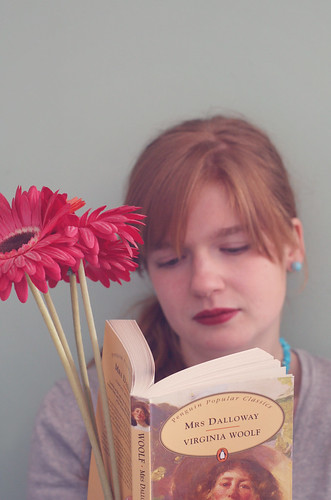
22. “Mrs. Dalloway” by Virginia Woolf

Year of first publication: 1925
Genre: modernist novel
Country: England

About the author: Virginia Woolf (1882 – 1941) was an experimental novelist, critic, short story writer and essayist of the twentieth century, best remembered for the classics, To the Lighthouse (1927) and Mrs Dalloway (1925). She was born in London in 1882, daughter of Sir Leslie Stephen, a literary critic. She was born in an upper-middle class, socially active family. She suffered her first major breakdown on the death of her father in 1904. In spite of the fact that in Victorian England women were not encouraged to attend university or participate in the literary debate, she began writing essays and reviews. Later she moved with her family to Bloomsbury where they gathered around them a set of writers and artists, including Leonard Woolf, who married Virginia in 1912. Together they set up the Hogarth Press which published Sigmund Freud, Katherine Mansfield and T.S. Eliot. Leonard also encouraged Virginia to write in her calm periods. Her first two novels are fairly conventional, but her later works are highly innovative: she used the interior monologue, or “stream of consciousness”, and poetic symbolism, with the emphasis on character as opposed to plot. Apart from the aforementioned classics, other works by Virginia Woolf include Orlando (1928), The Waves (1931) and A Room of One’s Own (1929), a feminist text. Continual mental depression led Virginia to drown herself in 1941.

Plot: In London, at the end of the First World War, Clarissa Dalloway is preparing for one of her famous parties. Unexpectedly, her first lover Peter Walsh comes back from India and brings old memories with him. Clarissa remembers her childhood dreams and the events leading to her uneventful marriage with Richard Dalloway, who gave her a comfortable life in an affluent neighbourhood of London. Around Clarissa, a set of different characters: Septimus Warren Smith, for example, who’s going mad with shell-shock and her daughter Elizabeth, who’s now almost a woman. As Septimus decides to commit suicide because he’s not able to deal with life anymore, Clarissa reflects on death and on the differences between people’s personalities.

Some thoughts: I absolutely love Virginia Woolf: I’ve already read To The Lighthouse, Orlando and most of A Room of One’s Own (I used it a lot when I was writing my graduation thesis on Janet Frame, as both authors felt the necessity to have a quiet place and enough “piece of mind” to write without too many worries). I love her “stream of consciousness” and how she portrays the inner life of different people, especially women, in their everyday actions. When I was in London I went in front of her house in Bloomsbury and took a picture, then sat in the nice park in the square just in front of it and ate my sandwich, wondering how many “deep thoughts” that place had heard from Virginia and her friends of the Bloomsbury group.
In Cunningham’s The Hours (and in the movie of the same name) there is a fictionalised version of Virginia Woolf in the period when she was writing Mrs Dalloway (and also in the period of her suicide, such a sad thing when it happens to an artist, don’t you think?). I think that the use of famous people, either dead or alive, as characters in novels (it’s becoming more and more common) reveals that the interior world of that particular person is something we still have an interest in. In this book, we don’t read about Virginia Woolf’s interior world, of course, but we learn about Mrs Dalloway’s thoughts and musings, which is quite satisfying anyway.
Given that it is quite impossible to say something on Mrs Dalloway that hasn’t already been said a hundred times, I just want to point out something that struck me. A recurring sentence in the book, which is actually a verse from Shakespeare’s Cymbeline, says: “Fear no more the heat o’ the sun / Nor the furious winter’s rages”. Both Septimus Warren Smith and Mrs Dalloway utter this sentence over and over again. Moreover, it is used in Janet Frame’s Autobiography: when the author is in the mental hospital, she keeps on scribbling this sentence (I can recall the scene in the movie very well, because she writes the sentence on the walls of her room / cell). The three of them (Septimus Warren Smith, Janet Frame and Virginia Woolf) suffered from some sort of mental illness and my interpretation, at the time when I was reading Janet Frame’s book, was completely wrong. I thought that this verse was quite hopeful, a sort of encouragement to ignore the storms in your inner world and try to live your life happily, but I found out that it is quite the opposite. The line is actually from a funeral song that celebrates death as a comfort after a difficult life. Septimus’s life has become unbearable: he has lived the horrors of the war and lost many friends, thus ordinary life in post-war London is worthless to him. Clarissa reflects on the death of her friend and feels responsible for it. Was it the same feeling experienced by Virginia Woolf moments before she drowned herself, during the Second World War, when London was being bombed? Through Shakespeare’s words, nonetheless, Clarissa can finally accept death, something that had been troubling her for the whole day. There is therefore an optimistic side to this novel that is otherwise rather sad.
I acknowledge that with this novel Virginia Woolf found her voice: she describes everyday actions like buying flowers or eating dinner, showing that no action is too ordinary for the attention of a writer. Given that Virginia Woolf was writing the novel in the period when Sigmund Freud was publishing his theories on the subconscious and there was much interest in psychology, I can understand how fascinating the mind of a human being must have been for her. The author shows that our inner lives are always very rich, but they are separated from each other’s. Despite the fact that Clarissa throws parties in order to draw people together, they remain distant and struggle to communicate with each other. It is perfectly clear that people like Clarissa or Septimus are emotional and sensitive, they like to think a lot and to reflect about life, whereas other people like Richard or Lady Bruton are more materialistic. If you pay attention, for example, flowers are a recurring theme and certainly they are a symbol of emotions and a rich inner life. In the book people treat flowers differently: Clarissa is comfortable with flowers and in the first section she is buying flowers for the party, whereas Richard handles the conventional bouquet of roses awkwardly and gives them to Lady Bruton, who lays them stiffly by the plate.
There is so much more to this novel and I’m sure it needed more attention and at least a reread (sometimes it was difficult for me to deal with the shifts of point of view, but I guess that’s the inconvenience of the stream of consciousness).

Tuesday, June 30, 2009

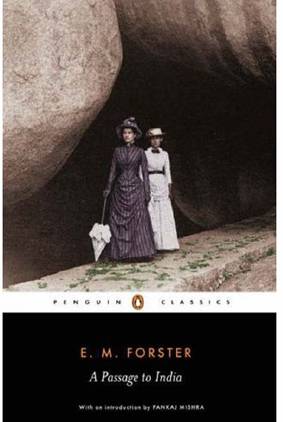
17. "A Passage to India" by E.M. Forster


Year of first publication: 1924
Genre: novel
Country: England / India

About the author: Edward Morgan Forster was born in London in 1879. His father died short afterwards and he was brought up by his mother and his great-aunt. At the university in Cambridge he was under the influence of the philosopher G.E. Moore, who inspired his faith in the importance of human relationships and in the cult of art and beauty as the only way to find harmony in this world. He lived for some time in Italy, the background of his first and third novels, Where Angels Fear to Tread (1905) and A Room with a View (1908). In both works he explored the differences between the strictness of English conventions and upper-middle-class codes of social behaviour and the more spontaneous and relaxed way of life of the Italians. Between this two books he published The Longest Journey (1907), a novel about English life. Then followed Howards End (1910), often considered his masterpiece. In 1912 he went to India for the first time and began writing an Indian novel in 1914. A Passage to India was published in 1924; it portrays post-Kipling India at a time of transition. He died in 1970 and the following year Maurice appeared, the novel he had written as early as 1914 to release and overcome the sense of guilt linked to his homosexuality, at that time still regarded as criminal offence. Forster’s books have been made into successful movies.

Plot: When Adela and her elderly companion Mrs Moore arrive in the Indian town of Chandrapore, they quickly feel trapped by its insular and prejudiced British community. Determined to explore the ‘real India’, they seek the guidance of the charming and mercurial Dr Aziz, a cultivated Indian Muslim. But a mysterious incident occurs while they are exploring the Marabar caves with Aziz, and the well-respected doctor soon finds himself at the centre of a scandal that rouses violent passions among both the British and their Indian subjects.

Some thoughts: One more classic in my bag! I’ve read somewhere that E.M. Forster is one of Zadie Smith’s favourite authors (and in fact her third novel On Beauty is an “adaptation” of Howards End) and now I understand why (so far I had only read a few passages from A Room with a View). E.M. Forster is a wonderful writer!
Forster’s main concerns are the difficulties men face in trying to understand each other, especially if there are differences of culture, race and national temperament. Forster portrays a post-Kipling India, where a transformation is taking place. A national consciousness is being formed in the country, despite the fact that the Anglo-Indians try to ignore it. Upon their arrival in Chandrapore, Adela and Mrs Moor claim that they want to see “the real India” and are bored with English people, because they behave as if they were still in England. In other words, they want a taste of the exotic. They think that they are unprejudiced and they can get along with Indian people without encounter difficulties. Mrs Moore is idealized, especially by Dr Aziz: she represents purity and harmony, a successful encounter between the east and the west. Adela, on the other hand, is a more realistic character. She is secretly attracted to Dr Aziz (it is spelled out that he is a fascinating young man), but she doesn’t want to admit it. After having entered the caves, she becomes convinced that Aziz sexually harassed her or even assaulted her. She is terrified by the thought that Dr Aziz, an Indian, might have an interest in her (which he has not, actually, but she unconsciously likes to think that he does). For an Englishwoman it is perfectly all right to have a sexual interest on an Indian (even if it would be shameful to admit it), but it is not acceptable for her that he might have a sexual desire for her. This is emphasized when, during the trial, somebody reflects on the fact that darker races find people with fair skin attractive but not the opposite (which is not true, of course).
Forster, in his Notes on the English Character wrote that the product of the public schools are Englishmen “with well-developed bodies, fairly developed minds and undeveloped hearts”. Ahah, how hilarious: he really was a witty writer after all.
In this novel, full of symbols that I don’t want to analyse here (all right, the caves are supposed to be the womb of the universe and thus the subconscious, whereas the echo represents nature’s benevolence, the harmony of creation), what strikes me the most are the hidden things. For example, there are hidden hints at homosexuality in the friendship between Dr Aziz and Mr Fielding (the scenes in the bedroom being the most obvious example) and the ending is a metaphor of the “suspicious friendship” that links England with India at a time when he British Empire is starting to decline. In other words, Kipling got it right: "Oh, East is East, and West is West, and never the twain shall meet, / Till Earth and Sky stand presently at God’s great Judgment Seat; / But there is neither East nor West, Border, nor Breed, nor Birth, / When two strong men stand face to face, tho’ they come from the ends of the earth!" (from The Ballad of East and West)
In conclusion, a truly wonderful novel and one that I would like to reread one day.