Sunday, May 22, 2011

“The Beautyful Ones Are Not Yet Born” by Ayi Kwei Armah

Year of first publication: 1968
Genre: novel
Country: Ghana

In the first charter of “The Beautyful Ones Are Not Yet Born” the author describes the wooden banister of the staircase leading to the office where the unnamed main character of the book works. The wood is very old, with deep cracks, and for as much polish as you can use, it is not in good shape. In the ageing process of the banister rot and decay will always win: 


The wood underneath would win and win till the end of time. Of that there was no doubt possible, only the pain of hope perennially doomed to disappointment. It was so clear. Of course it was in the nature of the wood to rot with age. The polish, it was supposed, would catch the rot. But of course in the end it was the rot which imprisoned everything in its effortless embrace. (p.12)

Ayi Kwei Armah uses the word “rot” and it is not by chance that “corruption” is a synonym of “rot”. The thick, one-page-and-a-half-long description of the banister, also filthy from the contact with hands dirty with excrement and leftovers of food, is also a metaphor for the society described by the author, already ruined and doomed to the worst, essentially unable to heal after a colonial past that has left corruption and political patronage as the only signpost of the country. “The Beautyful Ones Are Not Yet Born”, which is the first novel of the most important Ghanaian writer, Ayi Kwei Armah, describes a society where in order to obtain something in life – a fancy car, a beautiful house, the best brands of imported spirits – one needs to accept bribes, to worship the occasional politician to get a position of prestige or to break the law and get, together with power, the money necessary to have the trust of one’s friends and family.
Ayi Kwei Armah
The protagonist of the novel is a man who has a thoroughly normal life: a boring but steady job in the railway service, a family of his own and a modest house. Because of his upright conduct – he cannot stand corruption and does not break the law in any way – he is despised by his colleagues and family, starting from his wife Oyo and his mother-in-law, who thinks he hasn’t got the means to support his own children. The daily routine is upset by the encounter with Koomson, a former classmate of him who has inexplicably become a Minister. Koomson wants to go into business with him, so he is invited to dinner with his wife Estelle. Oyo does everything possible to honour the guest: she wants the best food, uses the best plates and glasses in the house and, lacking the wig so fashionable among rich Ghanaians,  straightens her hair quite painfully. At this point Armah introduces some humour “to leaven the grimmer aspects” (as the Yorkshire Post writes in a blurb in the back cover): Koomson’s spoilt wife, for instance, used to imported spirits, says that beer does not get along with her constitution. The host, with a mixture of cheekiness and cynicism, asks her what kind of a constitution is it that she has. The deal reveals to be nothing really profitable, but it shows the backbone of the ruling class of the country. Grinning and bearing, politicians apparently support socialism, committing themselves to unrestrained capitalism on the sly. This is one of the many critiques that Armah makes of Ghanaian society, barely out of the colonial experience when the novel was written. 
The protagonist of the story, however, is a symbol for the future redeemers of the country: he represents the common African man (or Ghanaian man), honest and hard-working, so much that he lacks a name. Because this book is packed with symbols and metaphors, I would like to draw attention to the chichidodo, a bird to which Oyo compares her husband. The chichidodo bird, “hates excrement with all its soul. But the chichidodo only feeds on maggots, and you know the maggots grow inside the lavatory” (p.45).  The man, like the chichidodo, appreciates Koomson’s money and power, but not how he got it. He hates to get his hands dirty, in other words. This hideous element, the excrements, will pay a crucial role in finding a way out, quite literally, from a situation that has gone out of hand. The tale will end with the image of a single flower, metaphorically growing from dung, and the writing “The Beautyful Ones Are Not Yet Born”, both painted by the driver himself. This image stands for the hope of a few honest people growing out of the horrible situation of the country. The mistake in the spelling of “beautyful” perhaps implies that Africa, or Ghana at least, has rejected European canons (of correctness and beauty, for instance) and is able (or will be able) to create something outside of western philosophy and politics, in a thoroughly original way.
Nigerian writer Chinua Achebe
It is this last image, in my opinion, the key to the interpretation of the book and the main element to dismantle the thesis that considers Ayi Kwei Armah an outright pessimistic author, bound to aesthetic and philosophical canons that are utterly western. Chinua Achebe, for instance,  wrote a caustic essay on this subject, arguing that Armah tried to wrote an existentialist novel à la Camus but made the mistake of setting it in a real place and in real time. In my opinion, while the choice of leaving the protagonist unnamed is questionable, the author could have made a further step towards realism (providing more details on Ghanaian life or on the political situation). I am not particularly fond of novels set in an "unnamed African country", because in my opinion the relevance of a literary work for the postcolonial condition as a whole (or even for the human kind) can be created in less insiduous ways, like metaphors or less insiduous characters (in this novel, "The Teacher", a philosopher of life of a sort, is one of those).
Overall, Ayi Kwei Armah wrote a powerful, well-structured novel which is rightfully rated among the classics of African literature. He couples chapters where the story is gripping with more reflective, almost philosophical chapters, where the story struggles a little, but then the tale recovers, stronger and bursting with life. Less than 200-pages long, Ayi Kwei Armah is not ashamed of telling what is not working in his country. Next to a grim, overwhelming atmosphere ruled by a feeling of defeat, loss and pessimism that could be found in a novel by Naipaul or in “Heart of Darkness (just to make two obvious examples), Armah places an energetic prose style, an out-of-the-common sense of humour and a sprout of hope at the end of the book.


About the author: Ayi Kwei Armah was born in Takoradi, Ghana, in 1939. He was educated in both Ghana and America. He worked as a translator in Algiers and as a scriptwriter for Ghana television, then as an English teacher and as a translator-editor for Jeune Afrique in France. He is concerned with the creation of a Pan-african agency that will embrace the diverse cultures and languages of the continent (in this sense he has encouraged the development of Kiswahili as a continental language). He has written several novel, among them "Two Thousand Seasons" (1973) and "The Healers" (1979).

Tuesday, May 17, 2011

"La Mia Storia" di Kamala Das

Anno di prima pubblicazione: 1973 (in Malayalam), 1988 (in inglese)
Genere: memorie
Paese: India

"La Mia Storia" di Kamala Das, edito da Il Punto d'Incontro, Collana Donne in Corsivo, 2007, €13,90


La poetessa ed attivista americana Muriel Rukeyser una volta disse: “Cosa accadrebbe se una donna dicesse la verità sulla propria vita? Il mondo si spaccherebbe in due”. Quello che Muriel Rukeyser ravvisava era l’inenarrabilità dell’universo femminile nei confronti di una narrazione che per secoli era stata solo maschile. Leggendo quest'autobiografia di Kamala Das, una delle maggiori poetesse indiane, si ha proprio la sensazione che con un semplice atto di sincerità femminile il mondo debba spaccarsi, facendo uscire dalle viscere della terra demoni su demoni. Quando questo libro venne pubblicato, infatti, la società indiana si scandalizzò nel leggere di questa donna senza peli sulla lingua che parlava liberamente delle sue relazioni extraconiugali e delle sue cotte lesbiche di adolescente. A leggerlo oggi, l’effetto prorompente di questo libro è un po’ smorzato dalle orde di donne che in anni recenti hanno fatto del sesso e del vizio il soggetto dei loro libri, persino nell’India bacchettona (vedi Shobhaa De, che io per altro non ho letto ne ho intenzione di leggere, non perché sono bacchettona ma per lo stesso motivo per cui non leggo Sophie Kinsella!). 
Kamala Das non ha mai rivelato se il contenuto della sua autobiografia fosse la pura verità o il risultato del desiderio di avere una vita diversa (un dilemma che mi fa pensare all’autobiografia della scrittrice neozelandese Janet Frame). La prefazione scritta da K. Satchidanandan (io ho un’edizione indiana del libro) dice che “la scrittrice, maliziosamente enigmatica, ha tormentato i lettori disseminando indizi contradditori, prima confessando che si trattava della sacrosanta verità e poi dichiarando che non era altro che una fantasia appagatrice, una vita alternativa che si era creata per se stessa" (p.vii, traduzione mia). Kamala Das ha avuto una vita apparentemente normale: nata a Malabar, in Kerala, fu costretta a trasferirsi continuamente per seguire il marito e la famiglia, prima a Calcutta, poi a Bombay e in altre città indiane. In questo libro denuncia la fobia della comunità Nair (la casta di proprietari terrieri a cui appartiene) verso il sesso e l’intimità (“Non c’è da meravigliarsi se le donne delle migliori famiglie Nair non nominavano mai il sesso. Era la loro principale fobia. Lo associavano a violenza e spargimenti di sangue. Erano cresciute con le storie di Ravana morto a causa del suo desiderio per Sita e di Kichaka, che era stato fatto a pezzi dal marito legittimo di Draupadi solo perché la desiderava”, p.23) e la durezza e stupidità di certi uomini (di un leader studentesco di cui si era innamorata scrive “Provai a mettermi dei fiori tra i capelli. Ma tutto quello che disse fu che senza perdere altro tempo dovevo cominciare a leggere Marx e Engels”, p.61).
Il libro è pieno di  poesia, ma la prosa lineare è spesso migliore delle vere poesie all’inizio di ogni capitolo. L’autore della sopraccitata introduzione riporta un passaggio della prima edizione del libro, scritta in Malayalam: “Mi piace chiamare questa poesia anche se le parole perdono musicalità quando, dopo aver sollevato al mio interno una bella turbolenza liquida, arrivano in superficie nella forma relativamente solida della prosa. Avevo sempre bramato la forza necessaria a scrivere questo libro. Ma la poesia non matura per noi, noi maturiamo abbastanza per la poesia” (p.viii). Quando l’autrice si sofferma sulla propria vita quotidiana, il racconto si fa vago: è la storia semplice di una donna che scrive poesia o racconti nel tempo libero, dopo aver messo a letto i bambini. Non menziona mai, se non una volta di sfuggita, gli altri scrittori importanti che conosceva, perciò il libro non si legge come il racconto della vita scintillante di una scrittrice famosa, ma la storia di una donna irrequieta, che si sentiva molto sola e che bramava un amante che potesse renderla felice e soddisfare i suoi appetiti sessuali ed intellettuali. Siccome il libro è stato pubblicato nel 1973 e poi in un’edizione rivista in inglese nel 1988, non vi si menziona l’elemento forse più controverso della vita di Kamala Das: la sua conversione all’Islam, avvenuta nel 1999, e il successivo pentimento.
Se qualche volta alzavo gli occhi al cielo per la serie infinita di amanti, reali o immaginari, sciorinati nel libro, non vedevo l’ora di leggere le parti dove la poetessa riflette su che cosa significa essere una donna, una madre ed una scrittrice in una società conservatrice. Finisco con una delle considerazioni più impressionanti di Kamala Das: “Dovunque uno scrittore vada, la sua notorietà lo precede. I non-scrittori di norma non si fidano degli scrittori. Questo succede perché sono interamente diversi salvo in apparenza. Essendo la mente un arto invisibile, non è presa in considerazione. Persino gli uccelli hanno le loro altezze particolari. Gli uccelli di terra che non si alzano nel cielo solitario, spesso si chiedono perché le aquile volino in alto, perché girino sempre in tondo come ballerine. L’essenza dello scrittore elude il non-scrittore. Tutto quello che lo scrittore lascia trapelare per questa gente sono le stranezze del vestire e gli eccessi emotivi. Infine, quando i muscoli della mente hanno racimolato abbastanza potere da leggere i pensieri segreti della gente, lo scrittore rifugge l’ostilità invisibile e si avvinghia ai suoi tipi affini, quei sognatori, nati con un frammento di ala ancora attaccato ad una spalla” (p.169-170).

"My Story" by Kamala Das

Year of first publication: 1973 (in Malayalam), 1988 (revised edition in English)
Genre: memoir
Country: India

American poet and activist Muriel Rukeyser once said "What would happen if one woman told the truth about her life? The world would split open". What Rukeyeser recognized was a certain unspeakability of the feminine world, in comparison with a narrative that for centuries had been exclusively male. Reading the autobiography of Kamala Das, one of the foremost poets of the Indian subcontinent, one really has the feeling that with a simple act of sincerity the world would indeed split open, letting out demons and demons. When this book came out, in fact, the prudish Indian society was scandalized at the outspoken woman who could so freely talk about her extramarital affairs and her teenage lesbian crushes. The effect for the reader is now somehow softened by the dozens of women writers who have recently made sex and desire the subject of their books, even in squeamish India (see Shobhaa De, whom I haven't read and whom I will not rush to read, not because I'm prudish, but for the same reason that I don't read Sophie Kinsella!).
Kamala Das never revealed if the content of her autobiography was the honest truth or if it was fruit of her longing for a different life (a dilemma that makes me think of Janet Frame's autobiography). The preface by K. Satchidanandan (I have an Indian edition of the book) says that "the writer, ever mischieviously enigmatic, kept them [the readers] tantalized by dropping contradictory hints, first confessing it was nothing but truth and then declaring it was just a wish-fulfilling fantasy, an alter-life she has created for herself" (p.vii). Kamala Das had an apparently normal life: she was born in Malabar, Kerala, and was forced to move very often, following her husband and family to Calcutta, Bombay and several other cities within the boundaries of India. In this book she denounces the phobia of the Nair community for sex and intimacy ("No wonder the women of the best Nair families never mentioned sex. It was their principal phobia. They associated it with violence and bloodshed. They had been fed on the stories of Ravana who perished due to his desire for Sita and of Kichaka, who was torn to death by Draupadi's legal husband Bhima only because he conveted her", p.23) and the roughness and stupidity of certain men (of a student leader she was in love with, she writes "I tried to wear flowers in my hair. But all he said was that I should without wasting any more time, begin to read Marx and Engels", p.61). 
The book is filled with poetry, the simple prose actually better than the real poems at the beginning of each chapter. The author of the aforementioned introduction quotes a passage from the first version of the book, written in Malayalam: "I like to call this poetry even if my words lose their music when, after raising in my innards a beautiful liquid turbulence, they come to surface in the relatively solid contours of prose. I had always longed for the strength necessary to write this. But poetry does not grow ripe for us, we grow ripe enough for poetry" (p.viii). When the author lingers on her everyday life, the tale remains sketchy: it is the simple story of a woman scribbling poetry or writing stories in her spare time, after the children have gone to bed. She never mentions, except once in passing, other important writers she spent time with, so the book does not read like the tale of the famous writer's glamorous life, but more like the story of a restless woman, who felt very lonely and longed for a lover who could make her happy and satisfy her sensual and intellectual appetite. Because the book was published in 1973 and then revised in English in 1988, it doesn't mention one the most controversial issues of Kamala Das's life: her conversion to Islam in 1999 and her later repentance. 
While I sometimes rolled my eyes at the endless line of imaginary or real lovers in the book, I was hungry for the parts where the poet reflects on what it means to be a woman, a mother and a writer in a conservative society. I'll finish with one of Das's most striking considerations: "Wherever a writer goes, her notoriety precedes her. The non-writers do not normally trust the writers. This is because they are entirely dissimilar except in appearance. The mind being an invisible limb, is not taken into consideration. Even birds have their own particular heights. The land birds who do not rise far into the lonely sky, often wonder why the eagles fly high, why they go round and round like ballerinas. The essence of the writer eludes the non-writer. All that the writer reveals to such people are her oddities of dress and her emotional excesses. Finally, when the muscles of the mind have picked up enough power to read people's secret thoughts, the writer shies away from the invisible hostility and clings to her own type, those dreaming ones, born with a fragment of wing still attached to a shoulder" (p.169-170).   

Tuesday, May 10, 2011

"Con il Sari Rosa" di Sampat Pal

Anno di prima pubblicazione: 2008
Genere: memoir
Paese: India

"Con il Sari Rosa" di Sampat Pal (in collaborazione con Anne Berthod), edito da Edizioni Piemme, 16 €


Ho sentito parlare di Sampat Pal e della sua Gulabi Gang per la prima volta qualche anno fa e la storia mi aveva colpito. Si tratta di un gruppo di donne indiane generalmente appartenenti alle caste più basse che hanno creato una rete di solidarietà femminile che si impegn a difendere i diritti delle donne di fronte ai più svariati soprusi. Come marchio di riconoscimento indossano tutte un sari rosa (gulabi vuol dire appunto rosa) e portano sempre con sé un lathi, il tipico bastone da combattimento usato anche dalla polizia indiana. 
"Con il Sari Rosa" è il memoir della fondatrice dell'associazione, Sampat Pal, scritto con l'aiuto di una ghost writer, Anne Berthod, giornalista francese che ha scritto, tra l'altro, "Slumgirl Dreaming", sulla storia rags to riches della bambina di "Slumdog Millionaire" (libro che mi risparmio volentieri). Sampat Pal Devi è nata da una famiglia poverissima dell'Uttar Pradesh ed appartiene ad una delle caste più basse, i gadaria, letteralmente "mandriani". Infilatasi alla scuola locale di nascosto trascurando il lavoro nei campi che i suoi genitori si aspettavano da lei, Sampat Pal impara a faticosamente a leggere l'hindi, che non è nemmeno la sua lingua materna, dato che in casa sua si parla un dialetto locale. Data in sposa alla tenera età di dodici anni com'è usanza tra la gente umile da cui viene, Sampat dimostra fin da subito di che pasta è fatta. Non vergognandosi di controbattere a nessuno, neanche ai bramini che, approfittando di essere la più rispettata delle caste indù, si prendono gioco degli altri e scroccano ai gadaria utensili che poi non restituiscono mai, Sampat Pal comincia a farsi conoscere in paese come la più sfacciata tra le donne, la più ribelle e ostracizzata, ma anche la più sveglia. Il suo linguaggio sboccato mi ricorda la Phoolan Devi del film "Bandit Queen", personaggio con cui condivide alcuni particolari biografici e senza dubbio la determinazione. Mi avevano colpito, ad esempio, quei "motherfucker" e "sisterfucker" disseminati nel film e Sampat Pal riflette proprio su questa fissazione di usare le donne nelle imprecazioni, arrivando a criticare due fratelli che in modo molto sciocco e ridicolo insultano la loro stessa madre o sorella. 
Nonostante lo scarso livello d'istruzione, Sampat Pal capisce al volo come gira il mondo: la corruzione, i raggiri dei funzionari locali e dei piccoli commercianti, per non parlare del potere spropositato dei mariti sulle loro mogli. Così decide di fondare una scuola per insegnare alle donne a cucire e a leggere, trasmettendo allo stesso tempo le sue idee sull'emancipazione femminile. Non avrà la vita facile: più volte sarà allontanata dal suo villaggio per non essersi piegata ai soprusi dei più potenti e sarà perseguitata dai dada, i sicari a pagamento. Non risparmia parole aspre per nessuno, a partire dal Primo Ministro dell'Uttar Pradesh, Kumari Mayawati, che era stata la prima intoccabile a giungere a quella carica. Colpevole di essersi buttata alle spalle i suoi ideali e di essere venuta a patti con le caste superiori per accaparrarsi più voti, Sampat Pal nomina invece come modelli personaggi come Lakshmibai, la mitica regina di Jhansi che ha combattuto contro gli inglesi, o Chanakya, il consigliere dell'imperatore Chandragupta conosciuto in Occidente come "il Machiavelli indiano". La gulabi gang, ci spiega il libro, è nata solo dopo anni di lotte contro le ingiustizie e non ha niente a che vedere con le assistenti sociali. La fondatrice si aspetta infatti che le persone che vengono aiutate poi partecipino attivamente all'associazione, portando il sari rosa d'ordinanza e impegnandosi in prima persona a migliorare le cose.  
La veste grafica di questo libro non è delle migliori: a vederlo sugli scaffali della libreria si potrebbe pensare che sia uno dei soliti libri creati apposta per saziare la nostra sete di donne abusate e segregate in casa nei paesi del terzo mondo. "Con il Sari Rosa", però, non si sofferma a compatire le donne indiane, ma per esempio discute di come uscire da alcuni circoli viziosi, descrive l'organizzazione della vita sociale nei villaggi e denuncia la pigrizia della maggior parte delle donne che non hanno né la forza né il coraggio di farsi valere. 
Sampat Pal e la sua gulabi gang
Di certo la giornalista francese che ha messo per iscritto le parole di questa attivista indiana non è un Premio Nobel per la letteratura, ma ha avuto il buon senso di lasciar trasparire il linguaggio semplice e schietto della protagonista, elemento che rende questo libro un po' come la versione indiana di "Mi chiamo Rigoberta Menchù". Più azzeccato questo paragone, a mio parere (nonostante le polemiche che girano intorno al Premio Nobel per la Pace guatemalteco), che quello con la più famosa Arundhati Roy, donna diversissima per formazione, metodologia e approccio a Sampat Pal, che alle parole preferisce l'azione sul campo e che i soprusi li ha vissuti in prima persona. E anche perché le parole dure Sampat Pal non le risparmia neppure ai naxaliti, con cui Sampat Pal non vuole avere niente a che fare, sostenendo, in maniera forse un po' sommaria, che sono solo un'organizzazione spietata, che fa largo uso di armamenti, a differenza sua, che come arma ha solo un bastone.     


Friday, May 6, 2011

Filtered

I'll shamelessly copy from other bloggers who have a weekly post on literary news and interesting links. Obviously, I'll never be constant enough to respect the weekly schedule, but seen that I enjoy these posts (very post-modern and salad-bowl-like, to say something "hip"), I'll dish them out to you too:

#1 Did you know that Abbottabad, the town where Osama Bin Laden was killed, has taken its name from an English general of the British Raj era? The awkward thing is that James Abbott has written a poem about this small town, calling it simply "Abbottabad". "The Guardian" has found it and called it "one of the worst poems ever written". If you feel strong enough, read it here.

#2 Take a brief look at vintage, old-fashioned covers of "Lolita" offered by Flavorwire. There is also a video with an interview with old Vlad, where he is showing us his favourite covers of "Lolita". 

#3 Maybe it's a new dawn for Italian contemporary literature. Igiaba Scego, author of "La Mia Casa è Dove Sono" was awareded the Mondello Prize. The news is that she is an Italian writer of Somali origin. Minority writers, in fact, had been so far excluded from the literary prizes.

# 4 Yet another biography of Mahatma Gandhi has been published. This one, nonetheless, written by a certain Joseph Lelyveld  and titled "Great Soul. Gandhi and his Struggle with India", suggests that India's spiritual father had, in his years in South Africa, a homoerotic, if not homosexual, relatioship with a man called Hermann Kallenbach, a German Jewish bodybuilder. Needless to say, the book has caused scandal in India. The New York Times, in his review, promptly ignores the topic.

#5 Another round-up from Flavorwire, this time to revise (or discover) the Bard's bawdy jokes. 

Norman Mailer's house
#6 Ernesto Sabato has died. He was a famous Argentinian novelist and essayist, famous also because he led a commission to investigate the crimes committed during the dictatorship. The New York Times calls him "the conscience of Argentina".

#7 The Huffington Post takes us to see the house of some famous writers. Among the strangest there is Truman Capote's house (how could it have been otherwise?) and Norman Mailer's, which once had a hammock and a trapeze swing to climb it.  

#8 This is not exactly fresh, but have you tried Ron Charles' Totally Hip Video Book Reviews? I love them! Here the famous critic of "a major American newspaper" (the Washington Post) makes a spectacle of himself with a funny and quick review of Jonathan Franzen's "Freedom", which has recently been published in Italy as well.

#9 Do you think the world of literature is a happy Republic of Love? Well, you're wrong: the JRR Tolkien Estate has contested a forthcoming book which features the author of "Lord of the Rings" as one of its characters.

#10 Rudyard Kipling was a reporter in Italy during the First World War, did you know? Hemingway was not the only one to do the nasty job; this is what "La Guerra nelle Montagne. Impressioni dal Fronte" seems to tell us. The book contains Kipling writings of his Italian period.

Thursday, May 5, 2011

Filtrato

Scopiazzo allegramente da altri blogger, che con cadenza settimanale fanno dei post con le 'notizie letterarie' e i vari link interessanti della settimana. Ovviamente non avrò la costanza di rifarlo ogni settimana, però siccome mi diverto a leggere questi post (molto post-moderni, molto salad bowl, per dire qualcosa di 'hip'), li propino anche a voi:

#1 Ma lo sapevate che Abbottabad, la città pakistana dove è stato ucciso Osama Bin Laden, ha preso il nome da un generale inglese in servizio durante il periodo del Raj britannico? La cosa più bizzarra non è questa, ma il fatto che il generale James Abbott abbia scritto una poesia dedicata alla cittadina, intitolata senza troppi giri di parole "Abbottabad". Il Guardian l'ha scovata e l'ha definita "una delle peggiori poesie mai scritte". Se volete farvi del male, la potete leggere qui.

#2 Flavorwire ci offre una carrellata delle cover vintage di Lolita, una più retro dell'altra. C'è anche il video di una vecchia intervista al vecchio Vlad, in cui lui ci mostra le sue copertine di Lolita preferite.

#3 Forse è una nuova alba per la letteratura italiana contemporanea. Igiaba Scego, autrice di "La Mia Casa dove Sono", ha vinto il premio Mondello. La novità è che si tratta di una scrittrice italiana di origine somala. Gli scrittori italiani di origine straniera, infatti, erano stati fino ad adesso snobbati dalle giurie dei premi più importanti.

#4 E' uscita un'ennesima biografia del Mahatma Gandhi. Solo che questa, scritta da tale Joseph Lelyveld ed intitolata "Great Soul. Mahatma Gandhi and his Struggle with India", suggerirebbe che il padre spirituale della nazione aveva, durante i suoi anni sudafricani, una relazione - se non omosessuale, almeno omoerotica - con tale Hermann Kallenbach, un ebreo tedesco che faceva bodybuilding. Inutile dire lo scandalo e la polemica che il libro ha suscitato in India. Il New York Times, nella recensione del libro, ignora prontamente l'argomento.

#5 E' ancora Flavorwire ad offrirci un'altra carrellata, questa volta ci serve per ripassare (o scoprire) i doppi sensi a sfondo sessuale del Bardo.    

La casa di Norman Mailer
#6 E' morto Ernesto Sabato, grande scrittore e saggista argentino, famoso anche per aver presieduto una commissione per investigare i delitti commessi durante le atrocità della dittatura. Il New York Times lo chiama la coscienza dell'Argentina.

#7 L'Huffington Post ci porta a vedere le case di alcuni grandi scrittori. Tra le più pittoresche ci sono quelle di Truman Capote (e come poteva non esserlo) e quella di Norman Mailer, che ai bei tempi aveva anche un trapezio e un'amaca per scalarla e viverla al meglio.

#8 Questa non è proprio fresca, ma avete mai provato Ron Charles' Totally Hip Video Book Reviews? Io le adoro! In questo link, il famoso critico letterario di un 'major American newspaper' (il Washington Post) si rende ridicolo con una recensione divertente e veloce di "Freedom" di Jonathan Franzen, che come forse saprete è da poco uscito anche in Italia.

#9 Pensavate che il mondo della letteratura fosse una felice Republic of Love? Ebbene, vi sbagliate: il JRR Tolkien Estate ha contestato un libro in uscita, con il grande scrittore de "Il Signore degli Anelli" per protagonista.   

# 10 Rudyard Kipling inviato speciale in Italia durante la prima guerra mondiale, lo avreste mai detto? Non solo il caro vecchio Hemingway ha fatto quel lavoraccio, sembra dirci "La Guerra nelle Montagne. Impressioni dal Fronte Italiano", che raccoglie gli scritti di Kipling del periodo italiano. 
 

Sunday, May 1, 2011

"Trumpet" di Jackie Kay + "Scintille" di Gad Lerner

Vi aggiorno su un paio di cose. Sono uscite un paio di mie recensioni sulla rivista Paper Street: lo scorso mese quella di "Trumpet" di Jackie Kay, la poetessa di cui ho parlato anche qui. E' un libro che è stato tradotto in Italia, una volta tanto, e io ve lo consiglio caldamente, anche se per ottenerlo dovrete quasi certamente ordinarlo in libreria.

"Pilgrims" di Bruno Schulz
Questo mese ho scritto invece la recensione di "Scintille. Una storia di anime vagabonde" di Gad Lerner. Su quest'ultimo vorrei spendere due parole su qualcosa che non ci stava nella recensione per gli amici di Paper Street. Lerner si sofferma sulla pittura di Bruno Schulz, che potrebbe avere incrociato suo nonno nelle cittadine della Galizia yiddish dove entrambi  vivevano. Questo scrittore e pittore, che io prima non conoscevo se non di fama, dipingeva/schizzava queste cose sinceramente angoscianti ed inquietanti. I suoi soggetti erano molto spesso vecchiacci malefici con teste sproporz
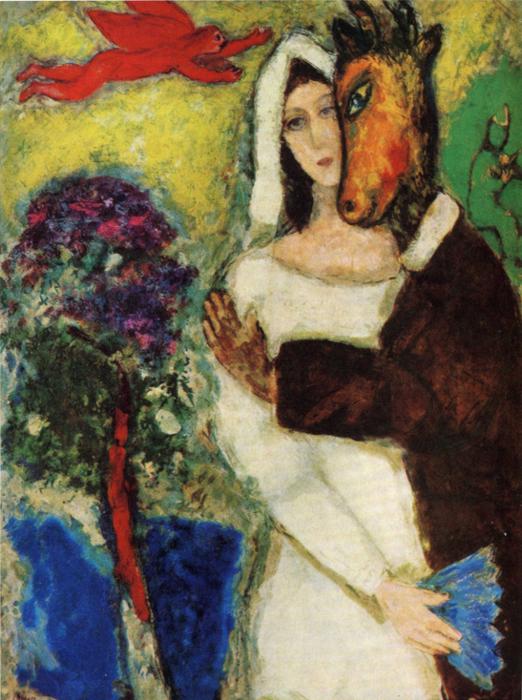
"Midsummer Night's Dream" di Marc Chagall
ionate e calvizie incipiente, al cospetto di donne dalle gambe snelle in pose lascive. Lerner spiega la cosa con il complesso di inferiorità del povero Schulz, non certo bello e del tutto simile a questi uomini che non potevano far altro che fissare le proverbiali bellezze ucraine (che incantano anche Lerner nel libro, eh!?), e naturalmente con la nota 'sgradevolezza ebraica'. Mi soffermo a pensare a questa sgradevolezza, ohibò! Poi giro la testa e vedo una stampa di Marc Chagall che mi hanno regalato, sensibilità completamente diversa ma uguali natali, se non fosse che... Ma come? Tu quoque, Marc, fili mi! Ma poi no, per fortuna mi sono ricordata che il titolo del quadro è "Midsummer Night's Dream"!!! Chagall è ancora il pittore degli abbracci romantici...

Mi riallaccio all'ambientazione mediorientale del libro di Gad Lerner, per dirvi che ho conosciuto un amico blogger, che scrive sulla Turchia dall'affascinante città di Istambul. Io della Turchia, se non ricordo male avevo parlato solo in un post, molto molto tempo fa riguardo un romanzo di Orhan Pamuk.