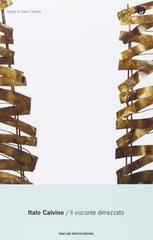
A questo link è disponibile la mia recensione de "Il Visconte Dimezzato" di Italo Calvino. Se vi piace Calvino, potete anche leggere i miei "appunti di lettura" (in inglese) de "Il Barone Rampante", risalenti al lontano giugno 2008, quando il blog era appena nato (non ci credo che siamo nel 2011 e sono ancora qui!) .
A blog about books from all around the world, with an emphasis on everything postcolonial.
Showing posts with label Italo Calvino. Show all posts
Monday, January 31, 2011
Monday, May 25, 2009
Salman Rushdie @ Teatro Malibran, 21 maggio 2009

L’incontro inizia con Salman che legge qualche pagina dal suo ultimo libro, The Enchantress of Florence, L’incantatrice di Firenze.
Il libro si prefigura come una raccolta di storie all’interno di una narrazione più grande alla maniera de Le Mille e una Notte. Nella storia c’è un gigante, c’è l’astuzia di Machiavelli e le teorie di Darwin, solo che siamo nell’India del XVI secolo alla corte del Gran Moghul. L’intervistatore fa notare allo scrittore che tra la bibliografia del libro figurano Le Fiabe Italiane di Calvino e chiede a Rushdie se questo racconto un po’ alla Davide e Golia che è stato appena letto non sia tratto proprio ispirato al lavoro dello scrittore italiano. Rushdie risponde che no, la storia l’ha inventata lui (anche se si sa che gli scrittori postmoderni rimescolano un po’ le carte re-impastando letteratura di tutte le epoche e di tutti i paesi, aggiungerei io).
L’ultimo libro di Rushdie, così come ci viene raccontato dalle parole dello scrittore, ma anche da quelle dei mediatori Marino Sinibaldi, conduttore radiofonico, e Shaul Bassi, professore di letteratura inglese e postcoloniale, è la storia di due grandi viaggi: quello degli occidentali verso l’oriente e quello di una misteriosa principessa indiana dagli occhi neri verso la corte medicea, quest’ultimo completamente inventato da Rushdie. Lo scrittore si era infatti reso conto che sebbene ci siano numerosi resoconti di intellettuali e viaggiatori occidentali che si recarono in Oriente, per questo periodo non c’è traccia di nessun indiano che si sia recato in Occidente. Rushdie afferma quindi che è compito dello scrittore inventare cose che non sono mai successe, perché questo è uno degli scopi della narrativa.
Sinibaldi cita la traduzione di un articolo scritto da Rushdie pubblicata da La Repubblica, il cui titolo dato dai giornalisti era Lo confesso ho sbagliato sulle guerre di religione, che interpreta erroneamente e semplifica le parole dello scrittore indiano (leggilo qui) facendole sembrare pericolosamente vicine a quelle di Samuel Huntington, il teorico dello scontro tra civiltà. In realtà Rushdie ha opinioni molto diverse da quelle di Huntington sulle relazioni tra Occidente ed Oriente: egli afferma infatti che per lui la contaminazione tra le due cose è una cosa naturale, ricordando di essere nato a Bombay, città costruita dagli inglesi dove c’era solo un villaggio di pescatori, che mescola per forza di cose Oriente ed Occidente. “Il vecchio non muore, il nuovo si rifiuta di morire”, ha detto Rushdie citando Gramsci. Rushdie afferma che ci sono due tipi di scrittori: quelli che si muovono all’interno di più cornici, inglobando tutto, e quelli più minimalisti. Egli senza dubbio è tra i primi: uno scrittore “diabetico”, suggerisce Sinibaldi citando Carlo Levi, che divideva l’umanità in “allergici”, che hanno paura di infettarsi a contatto con il mondo, e “diabetici”, portatori e dispensatori di zucchero, ingrediente che mettono ovunque, pur con il rischio di combinare danni. I libri di Rushdie sono per forza impossibili da semplificare, complicati, con moltissime sfaccettature: ancora una volta, il nemico di Rushdie sembra essere proprio la semplificazione. Ne L’Incantatrice di Firenze appaiono Machiavelli, Andrea Doria, Dracula, il Gran Moghul Akbar e chissà quali altri personaggi della storia che si intrecciano ai personaggi di finzione.
Quando Shaul Bassi gli chiede se pensa che l’etichetta di “realismo magico” si adatti alla sua letteratura oppure sia più consona alla scrittura dei sudamericani egli risponde che calza a pennello perché in questi paesi il mondo è proprio così, forse addirittura una “realtà magica” più che un “realismo magico”. E poi parla dei progetti per il futuro: un incontro a New York con il regista incaricato di portare sul grande schermo I Figli della Mezzanotte, il suo libro più bello a detta dei critici, ma persino Rushdie ha dei dubbi sulla fattibilità del progetto. Assicura però che tutti vogliono prendere parte al suo film e che ne è molto lusingato. L’incontro finisce con una battuta un po’ divertente e un po’ provocatoria da parte di Shaul Bassi, veneziano e amante di Venezia, che è geloso del fatto che L’Incantatrice di Firenze, il primo romanzo “italiano” di Rushdie sia ambientato a Firenze e non a Venezia. Visto che la città lagunare è stata protagonista solo di romanzi tristi e lugubri, perché non scrivere un romanzo pieno di vita su Venezia, come saprebbe di certo fare lui? Salman, divertito, dice che è stato scritto troppo di Venezia e che si dice che Le Città Invisibili di Calvino siano tutte in realtà Venezia.
Un’ultima osservazione: Calvino che ritorna più e più volte tra le ispirazioni degli scrittori indiani, anche nel titolo e nella trama del primo romanzo di Kiran Desai, altra ospite di Incroci di Civiltà, tradotto in italiano con il titolo calviniano La mia nuova vita sugli alberi. Forse è perché in fondo anche Calvino scriveva una sorta di realismo magico?
Nella foto, il ritratto di Rushdie (intitolato "Il Moro") alla National Portrait Gallery di Londra.
Labels:
India,
Italo Calvino,
Postcolonial Literature,
Salman Rushdie
Sunday, June 22, 2008
"Il Barone Rampante" (The Baron in the Trees) by Italo Calvino
Date of publication: 1957Genre: fiction, historical novel, fairytale / magical realism
Setting and time: Ombrosa, a fictional small town in the north west of Italy, near Genoa, in the late 18th and early 19th century
Themes: anti-conformism, role of individual and community, family, environment, romance.
About the author: Italo Calvino (1923-1985) is one of the most important contemporary Italian fiction writers of the 20th century. Calvino's first novel, Il Sentiero dei Nidi di Ragno (The Path to the Nest of Spiders, 1947) depicted resistance movement, seen through the eyes of a young boy and in Neorealistic manner. The work became famous for its fable-like twists in the narrative. Il Visconte Dimezzato (The Cloven Viscount, 1951) marked Calvino's break with the common themes connected with the experience of war: it is the story of a man cut in half by a cannonball during the Turkish-Christian war. It is the first volume of a trilogy dedicated to 'the ancestors'. The novels that follow are Il Barone Rampante (The Baron in the Trees) and Il Cavaliere Inesistente (The Nonexistent Knight, 1959). These fantastic tales, hovering between allegory and pure fantasy, brought him international acclaim and reputation. Le Città Invisibili (Invisible Cities, 1972) is a surreal fantasy in which Marco Polo invents dream-cities to amuse Kubla Khan - a city on stilts, a city made of waterpipes, a spiderweb city, a city that cannot be forgotten and so on. Of Se una Notte d’Inverno un Viaggiatore (If on a Winter's Night a Traveller, 1979) Salman Rushdie declared: ‘He is writing down what you have always known except that you've never thought of it before’. The story alternates the opening chapters of 10 different novels, opening with a man discovering that the copy of the novel he has recently purchased is defective, a Polish novel having been bound within its pages. The book includes a discourse on the experience of reading and writing. Calvino died in 1985 in Siena.
Plot: (*may contain spoilers*) Cosimo Piovasco is the son of a baron and leads an aristocratic life in a small Italian town called Rondò. One day he argues with his father and climbs a tree, finding a good shelter from the worries of life. He then decides to live the remainder of his life on the trees, finding a new perspective on the world. He leads a life full of passions, bonding with both his family and the townspeople. His life features a passionate love story, involvement in politics, encounters with famous people and some unlikely adventures.
Some thoughts: It is hard to define The Baron in the Trees in terms of genre or even intent of the author. At times, the story is similar to a fairytale, at times it is more realistic. Calvino’s fiction is sometimes labelled as postmodernism or magical realism. In my opinion, this label would apply for his later fiction, that can be compared to that of Borges and Cortazar, but the ancestors’ trilogy is different from everything else. Maybe only Buzzati would make a decent comparison.
Going back to the novel, I really liked the fact that the whole stories is not told from Cosimo’s point of view, but from his younger brother’s: it is a way of being detached from the story, but not too much. It is in large part Biagio’s re-telling of the stories Cosimo recounts on himself. You can never be sure when Cosimo is exaggerating his adventures and when his tales are real. In other words, you're dealing with an unreliable narrator à la Henry James. It’s funny how Calvino can make Cosimo interact with historical characters such as Diderot or Napoleon. Actually, the interaction between fairytales and historical novels is unusual, if not unheard of. Cosimo’s eccentric life on the trees reminds me of Shakespeare's ‘though this be madness, yet there is method in't’. In fact, Cosimo’s choice of living in the trees is dictated by the understanding that his parents’ priorities are not what he wants from life (his father chases ideals that no longer exist while his mother commemorates long-forgotten battles). It is a book about philosophy and existentialism, about alternative lifestyles and the value of community. How else could Cosimo survive on the trees without the help of his townspeople?
I was wondering if Calvino is appreciated outside Italy. If on a Winter’s Night a Traveller is one of my favourite Italian novels of all times. There’s a recent novel that has a connection to this book: Kiran Desai’s Hullabaloo in the Guava Orchard (1998), about an Indian boy trying to avoid the responsibilities of adult life and thus starting an eccentric life on the trees, like Cosimo. Did Kiran Desai read The Baron in the Trees? I think so. Did she attempt to rewrite Calvino’s book from her point of view? I don’t know. Desai’s novel is as grounded in a small Indian village as much as Calvino’s novel is grounded in the northwest of Italy. Comparative literature is indeed an interesting subject!
Going back to the novel, I really liked the fact that the whole stories is not told from Cosimo’s point of view, but from his younger brother’s: it is a way of being detached from the story, but not too much. It is in large part Biagio’s re-telling of the stories Cosimo recounts on himself. You can never be sure when Cosimo is exaggerating his adventures and when his tales are real. In other words, you're dealing with an unreliable narrator à la Henry James. It’s funny how Calvino can make Cosimo interact with historical characters such as Diderot or Napoleon. Actually, the interaction between fairytales and historical novels is unusual, if not unheard of. Cosimo’s eccentric life on the trees reminds me of Shakespeare's ‘though this be madness, yet there is method in't’. In fact, Cosimo’s choice of living in the trees is dictated by the understanding that his parents’ priorities are not what he wants from life (his father chases ideals that no longer exist while his mother commemorates long-forgotten battles). It is a book about philosophy and existentialism, about alternative lifestyles and the value of community. How else could Cosimo survive on the trees without the help of his townspeople?
I was wondering if Calvino is appreciated outside Italy. If on a Winter’s Night a Traveller is one of my favourite Italian novels of all times. There’s a recent novel that has a connection to this book: Kiran Desai’s Hullabaloo in the Guava Orchard (1998), about an Indian boy trying to avoid the responsibilities of adult life and thus starting an eccentric life on the trees, like Cosimo. Did Kiran Desai read The Baron in the Trees? I think so. Did she attempt to rewrite Calvino’s book from her point of view? I don’t know. Desai’s novel is as grounded in a small Indian village as much as Calvino’s novel is grounded in the northwest of Italy. Comparative literature is indeed an interesting subject!
Subscribe to:
Posts (Atom)