Friday, February 17, 2012

"A Room of One's Own" by Virginia Woolf

Virginia Woolf's groundbreaking essay 'A Room of One's Own' is essential for anyone venturing the field of women's studies. The more I read it, the more I find things to discuss about it. Despite the fact that women's lives have changed a lot since 1928, when Woolf gave the lectures that were later collected in the form of this extended essay, I still find it relevant.

Its core thesis that 'woman must have money and a room of one's own if she is to write fiction' is backed up by other considerations regarding women and literature. Women in Woolf's time were not allowed to walk on the turf at Oxbridge, because they were not admitted as full members of the university (in Cambridge this changed only in 1948). Even if there were a few colleges for women, in fact, they were considered second-class students. Woolf, who creates the fictitious university of Oxbridge which conflates both Oxford and Cambridge, adopts a playful narrative strategy (later criticized by feminists such as Elaine Showalter). The woman in the essay (she is Woolf and at the same time she is not her) wants to look at a manuscript in the library, in order to absorb the same literary environment of her favourite writers and essayists. Unfortunately, if not escorted or without a letter of introduction, women are not allowed in the library. This is proof of how women were left outside of the literary world, they were denied the possibility of becoming Shakespeares or Miltons. Woolf's famous evocation of Shakespeare's sister Judith, equally talented but born in a female body, goes in the same direction. At a certain point in the narrative, the protagonist spots a cat walking on that same grass that was denied to her. She makes an immediate connection between women and animals. Can cats walk on the turf? Can cats ever become members of Oxbridge? Thus the utterance 'Cats do not go to heaven. Women cannot write the plays of Shakespeare'. It may sound outdated, but when Woolf wrote 'A Room of Ones' Own' many male authors still maintained that women were no good at literature, thus the exclusion from the most prestigious universities of the world.

Many expressions used by Woolf in the essay stuck: "Virginia's web", for example, refers to this passage: 'fiction is like a spider's web, attached ever so lightly perhaps, but still attached to life at all four corners'. Other expressions were used by later movements, such as "Chloe likes Olivia", by lesbians. Woolf in fact argued that friendships between women were always narrated in relation to men. If this is a reference to homosexual love is unsure, but I personally do not think so (even though Woolf's family environment was quite liberal in that sense, her sister Vanessa having an open marriage and acknowledging that one of her lovers was in fact homosexual). She also anticipated many concepts of feminist thought (écriture feminine and deconstructive theories of gender), but she also was a woman of her time. There is in fact a passage that has been harshly criticized by black feminists: 'It is one of the great advantages of being a woman that one can pass even a very fine negress without wishing to make an Englishwoman of her'. This sentence makes the dubious assumption that women are alien to colonialism, that this impulse is unmistakeably masculine, also excluding black women from the category of women. Paraphrasing Sojourner Truth (and bell hooks) aren't black women also women?

Apart from this technical considerations (I have been studying the essay and it is important for my research project, even though the connection to Indian women's writing may not seem obvious at first sight), I can only conclude by saying that 'A Room of One's Own' is a wonderful book. Those who have been reading this blog for a while know that I have a strong admiration for Virginia Woolf and that I cherish her works. This extended essay is written with pathos and it is unlike any other work you have read. Almost a century has passed since she wrote it, but many of the things in this essay will be buzzing in your head long after you have read this book. Just another example of Woolf's genius: when the protagonist goes into the British Museum looking for books about women and poverty, she incidentally starts looking for books about men, that is to say about the experience of being male, about masculinity in other words, and finds none. I think this is still true: how many books are written about women, by both male and female authors? Yet, few books (in comparison) are distincly about masculinity, as this is still considered to be the norm, while being female is a mark of diversity and it needs to be studied.


Sunday, February 5, 2012

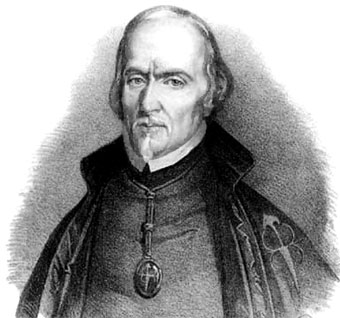
Calderón e García Lorca: un ponte lungo trecento anni?

Stavo leggendo La Vita è Sogno di Calderón de la Barca. Ti ci vuole un bel po' di tempo per capire che per il grande drammaturgo del Siglo de Oro non è che la vita sia proprio un sogno, nel senso di un'illusione o di una cosa che non possiamo controllare, o di un mondo alternativo dove non dobbiamo rendere conto delle nostre azioni. Nell'opera il giovane principe di Polonia, Sigismundo, è rinchiuso in una torre a causa di una previsione astrologica nefasta. Egli, infatti, è destinato a diventare un tiranno. Suo padre, il vecchio re Basilio, gli concede però una possibilità: lo libera per qualche ora per vedere se il suo carattere è davvero malvagio. Sigismundo, ritrovatosi improvvisamente libero e potente, ne approfitta per fare un po' di testa sua e vendicarsi di tutto e di tutti. Il re, quindi, lo rinchiude di nuovo, fancendogli credere di aver sognato di essere principe e libero. Ecco quindi, alla fine del secondo atto, il monologo che segue:

Sueña el rey que es rey, y vive
con este engaño mandando,
disponiendo y gobernando;
y este aplauso, que recibe
prestado, en el viento escribe,              
y en cenizas le convierte
la muerte, ¡desdicha fuerte!
¿Que hay quien intente reinar,
viendo que ha de despertar
en el sueño de la muerte?                

  Sueña el rico en su riqueza,
que más cuidados le ofrece;
sueña el pobre que padece
su miseria y su pobreza;
sueña el que a medrar empieza,               
sueña el que afana y pretende,
sueña el que agravia y ofende,
y en el mundo, en conclusión,
todos sueñan lo que son,
aunque ninguno lo entiende.              

  Yo sueño que estoy aquí
destas prisiones cargado,
y soñé que en otro estado
más lisonjero me vi.
¿Qué es la vida?  Un frenesí.                
¿Qué es la vida?  Una ilusión,
una sombra, una ficción,
y el mayor bien es pequeño:
que toda la vida es sueño,
y los sueños, sueños son.

[Qui la traduzione italiana]

Queste riflessioni di Sigismundo sembrerebbero avvalorare l'assioma di Calderón, cioè che la vita è come un sogno, per la sua fugacità se non altro. Manca però tutto l'atto terzo, in cui le intenzioni di Basilio falliscono, ed il libero arbitrio prende il sopravvento sulla predestinazione. E' uno scontro generazionale, dove il vecchio re si ritroverà ai piedi del figlio, ma non schiacciato da quest'ultimo come aveva temuto. Sarà egli, infatti, a ritrarsi dinanzi al figlio. La predestinazione si rivelerà in un certo senso corretta, perché Basilio, rinchiudendo il figlio e privandolo sostanzialmente di una vita, aveva creato il mostro che tanto temeva. Sarà proprio Sigismundo, tuttavia, forte delle riflessioni sulla sua esperienza da tiranno e appoggiandosi agli esempi delle persone che gli stanno intorno, a mutare e ad imparare a domare i propri istinti animaleschi. L'opera si chiude quindi con un'affermazione dell'importanza del buon governo, delle buone azioni innanzi alla bestialità, alla violenza insita in noi tutti (come non ricordare qui l'incipit del dramma, quell' "hipógrifo violento, / que corriste parejas con el viento"?).

Quest'affermazione ("la vida es sueño") e la sua messa in discussione all'interno del testo (le interpretazioni si sprecano), mi ha fatto venire in mente un verso spesso citato  – "No es sueño la vida. ¡Alerta!" – di una poesia di García Lorca, contenuta nel suo lavoro che più amo, Poeta en Nueva York, scritto durante un viaggio nella città americana che al poeta spagnolo appariva come spaventosa, con i suoi enormi grattacieli e un'imperante frenesia che non faceva chiudere occhio ai suoi abitanti. Si tratta proprio di quella stessa frenesia che cita Calderón trecento anni prima (anche se lì ha l'accezione di eccitazione, delirio), che forse se ci pensiamo bene qui ha la stessa valenza anche se usata in un contesto diverso. La raccolta di poesie di García Lorca, però, è famosa come la sua svolta surrealista e a me il surrealismo fa venire in mente la dimensione onirica, quella enfatizzata da Dalí o da Buñuel per capirci. Quindi, mentre Calderón probabilmente finisce per negare che la vita sia come un sogno, smentendo così Platone, era García Lorca dell'opinione che la vita, per lo meno questa che lui stava sbirciando nella città più moderna della sua epoca, è un incubo? Chissà se Lorca voleva citare proprio il testo di Calderón de la Barca. Io non sono un'ispanista, quindi non ho risposte, però il ponte è suggestivo.

Ciudad Sin Sueño (Nocturno del Brooklyn Bridge)

No duerme nadie por el cielo. Nadie, nadie.
No duerme nadie.
Las criaturas de la luna huelen y rondan sus cabañas.
Vendrán las iguanas vivas a morder a los hombres que no sueñan
y el que huye con el corazón roto encontrará por las esquinas
al increíble cocodrilo quieto bajo la tierna protesta de los astros.
 
No duerme nadie por el mundo. Nadie, nadie.
No duerme nadie.
Hay un muerto en el cementerio más lejano
que se queja tres años
porque tiene un paisaje seco en la rodilla;
y el niño que enterraron esta mañana lloraba tanto
que hubo necesidad de llamar a los perros para que callase.
 
No es sueño la vida. ¡Alerta! ¡Alerta! ¡Alerta!
Nos caemos por las escaleras para comer la tierra húmeda
o subimos al filo de la nieve con el coro de las dalias muertas.
Pero no hay olvido, ni sueño:
carne viva. Los besos atan las bocas
en una maraña de venas recientes
y al que le duele su dolor le dolerá sin descanso
y al que teme la muerte la llevará sobre sus hombros.

Un día
los caballos vivirán en las tabernas
y las hormigas furiosas
atacarán los cielos amarillos que se refugian en los ojos de las vacas.

Otro día
veremos la resurrección de las mariposas disecadas
y aún andando por un paisaje de esponjas grises y barcos mudos
veremos brillar nuestro anillo y manar rosas de nuestra lengua.
¡Alerta! ¡Alerta! ¡Alerta!
A los que guardan todavía huellas de zarpa y aguacero,
a aquel muchacho que llora porque no sabe la invención del puente
o a aquel muerto que ya no tiene más que la cabeza y un zapato,
hay que llevarlos al muro donde iguanas y sierpes esperan,
donde espera la dentadura del oso,
donde espera la mano momificada del niño
y la piel del camello se eriza con un violento escalofrío azul.
 
No duerme nadie por el cielo. Nadie, nadie.
No duerme nadie.
Pero si alguien cierra los ojos,
¡azotadlo, hijos míos, azotadlo!

Haya un panorama de ojos abiertos
y amargas llagas encendidas.
 
No duerme nadie por el mundo. Nadie, nadie.
Ya lo he dicho.
No duerme nadie.
Pero si alguien tiene por la noche exceso de musgo en las sienes,
abrid los escotillones para que vea bajo la luna
las copas falsas, el veneno y la calavera de los teatros.

[Vedi la traduzione italiana qui]


Monday, January 23, 2012

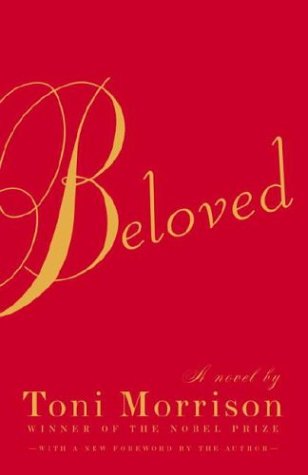
"Beloved" pilloried

Toni Morrison's "Beloved" has been removed from the programme of an advanced English literature class, in a high school in Michigan. The reason is that two parents complained the book was 'simplistic pornography'. Now, I wonder why in this school they let parents who don't know anything about literature take decisions as important as what their children should and should not study. It took a committee to decide that "Beloved", the most important work of a Nobel Prize laureate, should remain in the programme!

One of the parents claimed that "Beloved" contains 'gratuitious language, violence and sex acts that provide no historical context for the reader'. It is evident that Barb Dame, the mother in question, doesn't know the history of her country (or perhaps she is a rather insensitive person), because you clearly cannot say that the violence in the book (rape, whipping, murdering, the hanging of slaves etc) has nothing to do with the history of black people in the USA. The sex acts in the novel have a highly metaphorical meaning: they stand for the difficulties that black people in America experienced regarding normal, healthy love relationships. Starting a family in the wake of the horrors of slavery, when fathers and mothers were bought and sold and children were born only to live a life of suffering, is what lies behind some of the acts in the novel.
Rita Dove
Another thing they complained about was the language in the book. Although the book is usually described as stylistically complex and poetical, Matt and Barb Dame complained that the lexical level of the book is only suitable for a fifth grader (10-11 years old), thus comparing the book to Roald Dhal's "James and the Giant Pea", a popular children's book.

Personally, I think this is racist and it makes me think of a similar piece of news. A couple of months ago a review of an anthology of twentieth-century American poetry written by Helen Vendler caused a stir and a fierce debate on the American canon. The anthology, according to Vendler, includes too many black poets (the editor is in fact Rita Dove, a distinguished African American and a poet). Skimming over her other controversial claims, Helen Vendler observes that the poems chosen by Rita Dove are often 'of rather restricted vocabulary'. As if complicated words made good poems and simple words could not. Now, that black American writers sometimes use a relatively simple vocabulary compared to that of their fellow white writers is a fact. They do this on purpose, of course. It is part of their political agenda. African American theorists like bell hooks and Alice Walker have pointed out that. That Rita Dove has chosen accessible poems (except when the choice was inevitable, as for T.S. Eliot's "The Waste Land") is simply the result of her taste. Every anthology is the result of one's sensibilities regarding literature. 

Harold Bloom
Nobody nowadays takes anthologies as the Gospel truth. The time when Harold Bloom could choose 26 authors - all male but for Austen, Dickinson, Eliot and Woolf - and decide they were the Western canon is gone, thank God. That time, nonetheless, is not that far away ("The Western Canon" came out in 1994). Personally, I think it is ridiculous to annihilate every form of canon, because without some shared authors, what would we talk about? It would be a discussion between deaf people. At the same time, I think one should be free to value some writers and dislike, or even discard, some others. A fine balance is hard to find, I agree, but nothing come easily in literature criticism.     

Read the full review here and Rita Dove's answer here. Also have a look at this long but interesting article appeared on The Australian, where I got the reference to Harold Bloom and his canon, a topic that was buzzing in my mind for a while. I have many more things to say about Vendler's article (what about those infamous statements about Gwendolyn Brooks?), but I'll save that for another time.

Friday, January 20, 2012

African American theatre digest (2)

“Fences” by August Wilson
Denzel Washington in a stage performance of "Fences"

In this realistic play published in 1983, August Wilson has stuffed many of the anxieties of contemporary African American families. The sixth in his ten-part 'Pittsburgh Cycle' where every play is representative of a decade of African American experience, “Fences” tells the story of an ordinary black family of the 1950s: Troy Maxson is a husband and a father, he works as a garbage man and always grumbles when his older son Lyons visits him only to ask for money. He is frustrated because he was an excellent baseball player but was denied entry in the Major League because of his skin colour. For this reason he doesn't want his son Cory to play football. Of course this is a cause of serious argument with his wife Rose. Troy is introverted, he always looks at the past with anger and at the future with resignation. His attempt to get a promotion as a garbage truck driver sounds ridiculous, seen that he doesn't have a driving licence. To give you just another hint, he is building a fence in his yard to keep death away, but also to keep people out. Without realizing that she has stood by him and helped in the household, he cheats on his wife of 18 years. The family, as portrayed by Wilson in this play, is presently precarious, but looking for stability. The play has been awarded the Pulizter Prize for Drama and, although it deals with everyday life and seemingly trivial things there is a lot of symbolism and philosophical insight into the psychological complexities of the characters.


“Ma Rainey's Black Bottom” by August Wilson

Ma Rainey has been one of the first professional blues singers, recording her music at a time, the 1910s and 1920s, when this was perhaps the only way for black people to become rich and famous. She even came before Bessie Smith (a legend telling that Ma Rainey kidnapped Smith and taught her how to sing). Wilson's play deals with Ma Rainey as much as with the musicians in his band and with the white producers. Levee, the youngest member of the band, is bold and ambitious. He has his own innovative ideas about music and tries to impose them on the other musicians, who are however reluctant. He wants to play the songs faster, and with swing. The white producers are interested, but the suspicion that they are only exploiting him is strong. In opposition to Levee there is Toledo. He is the only member of the band who can read and write and has learned a lot of things about African American culture from books, thus he keeps lecturing everyone on the seemingly African influences of their gestures and habits. When Ma Rainey enters the stage, one becomes aware of her stardom: she has her own private car and wants to be served a coca-cola before starting to record the songs. The members of the band, however, keep arguing. Things become even tenser when she stubbornly wants her stuttering nephew Sylvester to deliver a line at the beginning of a song. The tragic epilogue does not leave any hope for the African American experience of the 1920s. It is a grim ending, but one that African American literature has made us accustomed to. Wilson's theatre is humorous at times, but it also has painfully bitter parts. He always constructs complex metaphors of the situation of African American people in a precise moment in time. Hope and defeat go hand in hand in Wilson's work, they are inextricable.    


“Gem of the Ocean” by August Wilson

This the obscurest of the three Wilson's plays I have been reading. It is set in 1904 in Pittsburgh, in the house of a clearly-symbolical 285-years-old matriarch, Aunt Ester, who practices healing with a strange ceremony, the journey to the City of Bones. Citizen Barlow needs to be cleansed because of a crime he has committed, while the city is in turmoil because of an incident at the mill, involving a black man accused of having stolen some nails. The man, faced with the shame of admitting to a crime he has not committed, drowns himself in the river. While Citizen Barlow undergoes the ritual in which he imagines himself on the ship that brought his ancestors to America and visualizes an underwater city of bones, representing the people dead in the voyage and, simultaneously, his ancestors, things get worse in town, until the usual tragic epilogue leaves the audience gasping. What to make of the ritual, with its strong connections to traditional African folklore and animistic religion? How to reconcile it to the dismal fate of black people Wilson insists upon? The hope envisioned at the end of the play, with Citizen Barlow taking up the role of Solly Two Kings, a former guide in the Underground Railroad that led enslaved people to freedom, is highly charged. Finally, after moments of panic and daunting emotions, a small liberation, a cathartic moment that parallels the experience of reconciling oneself with the haunting memory of the Middle Passage.

Sunday, January 8, 2012

"The Old Man and the Sea" by Ernest Hemingway


William Faulkner once tried to insult Ernest Hemingway by saying that he 'has never been known to use a word that might send a reader to the dictionary'. Hemingway, however, did use some words that you would need to look up in the dictionary: a lot of fish names, for instance, and fishing techniques. The problem is that they are not the kind of words you are eager to know the meaning of. The narrative, in fact, goes on smoothly whether you know or not the kind of fish Hemingway is talking about.

“The Old Man and the Sea” is the work that made Ernest Hemingway a celebrity but in spite of that it is a rather simple story: an old fisherman called Santiago struggles to catch a very big merlin, à la Herman Melville, and the fight goes on for three days. Despite having refused company for the day, Santiago wishes a younger friend who usually takes good care of him would be there to help him. He knows that he is just an old man fighting a very stubborn fish, whom he however admires. Santiago shows an excellent knowledge of nature and of the sea. His struggle for survival and his mind fixed towards his goal in spite of several adversities is perhaps a parallel to the way one needs to treat life.

I am aware that there is a plethora of interpretations of this short novel and that Biblical references apparently are of paramount importance. The way I see it, this novella might be partly autobiographical, at least from an allegorical point of view. “The Old Man and the Sea” can be seen as the will of an middle-aged writer (Hemingway was 52 and maybe already suffering of depression when he wrote this) who has recently received some let-downs from his work but is looking for a last win before retiring. All the savvy and wisdom that Santiago shows at sea may simply represent the skills a writer should use to make his story work. All the talk in town about him being the greatest fisherman in the world who has been struck by misfortune and hasn't caught a single fish in the last eighty-four days shows perhaps how big Hemingway's ego was at the end of his astonishing career (after all he would be awarded the Nobel Prize in 1954). Even Manolin, the young man who has learned everything he knows about fishing from him and is ready to take his place, can be interpreted as a younger generation of writers who have learned from Hemingway and are ready to continue his work and enrich American literature even further. “The Old Man and the Sea” is in fact the last work Hemingway would publish and it comes after “Across the River and into the Trees”, an ambitious novel that was critically and commercially a disaster.

I must confess that I have never been a huge Hemingway fan. I had read passages of his work at school and found his writing too “economic”. He does not indulge on describing emotions and one may suffer from the lack of lyrical passages. Hemingway is down to earth and straightforward: his sentences are mostly made of actions and there are relatively few adjectives. However, I liked the relationship of the old fisherman with the natural world that surrounds him, his awareness of the place he occupies within the natural world. I found the tale enriching in from a spiritual, rather than literary, point of view (without revealing too many details, the end of the novel is both a loss and a win). After all, what did Hemingway answer to Faulkner's provocation? He declared, not without wisdom: 'Poor Faulkner. Does he really think that big emotions come from big words?'.

Monday, January 2, 2012

Filtered # 2

Time ago I had tried a new post format, where I would filter some "bookish" news and pass them on to you. Unfortunately, as I had warned you, I wasn't constant, but I still like to look for news and curiosities about authors and books.

PS: now my links open to a new window!

#1 What is more relaxing than reading a book while crunching on some good cookies? Stacy Adimando,  a "food editor" (and if you want to know what that is follow this link), has made a list of classic cookies (mostly American, but I'm sure you can find most of them in Europe too) to go with a book. The names range from Ernest Hemingway to Jhumpa Lahiri.

Lucia Etxebarria, Spanish author
#2 Spanish author Lucia Etxebarria has decided to stop publishing books at all after having learnt that more copies of her books were illegally downloaded than they were sold. Of course, her drastic choice has sparked fierce debate: is writing a call or a profession? Can one give up writing for the lack of economical gain? Mind that Etxebarria earned more than £750,000 in prizes, so she isn't starving. We haven't lost that great a novelist, in my opinion, as you can gather from my review of one of her novels.

#3 It could become the plot of a new Scandinavian movie. For a certain period Norway's national library had acquired manuscripts and documents related to their best-known authors, playwright Henrik Ibsen and Nobel prize winner Knut Hamsun. Antiquarian booksellers joined the party: the material was in fact juicy, ranging from the draft of a letter addressed to Adolf Hitler to unpublished plays. Unfortunately, everybody was duped, as they were all forgeries by a Norwegian scriptwriter and actor who had contacted people interested in the Second World War. Knut Hamsun is in fact a controversial writer, having sympathized with Nazism.

#4 Nigerian author Chimamanda Ngozi Adichie on classic novel "To Kill A Mockingbird". This talented author has a gift for essay writing, as well as for story telling. I am going cold turkey for her books right now!

#5 An app called Freedom, available for Mac users, locks you up from your own computer, leaving time to do everything else, for example write without the distractions of the internet. Reporters found proof that authors like Zadie Smith and Dave Eggers use it. Can we still hope for that Zadie Smith novel that is due for some years now?


Sunday, January 1, 2012

Books read - 2011

This has been an intense year for me, both academically and "bookishly". I'm in the middle of my research project on the interconnections between postcolonialism and feminism in Indian women's writing. For this reason, you will be encounter books on postcolonial theory and postcolonial feminism (1, 2, 3, 31), a lot of India and poetry, not to mention books for my seminars (10, 30, 34, 37-44, 46, 48) . On top of this list, I have read tons of essays on various topics and this is why, even though I am two books short of my record of 51 books achieved last year, I have actually read a lot. My only regret is that the project is draining me of time to read other books I have bought and I am eager to read (Kenaz, Aminatta Forna, V.S. Naipaul, Kiran Nagarkar, some American and English poetry that is piling up on my bedside table...). I hope I can squeeze them in next year, but I know I'll be even busier than now.
In the meantime, a book hug. Happy New Year everyone!


January
1. The Shock of Arrival - Meena Alexander
2. The Empire Writes Back - Bill Ashcroft, Gareth Griffiths & Helen Tiffin
3. Borderlands / La Frontera - Gloria Anzaldua
4. London Fields - Martin Amis
5. Il visconte dimezzato - Italo Calvino

February
6. The English Patient - Michael Ondaatje
7. Rich Like Us - Nayantara Sahgal
8. No New Land - G.V. Vassanji
9. Felicia's Journey - William Trevor

March
10. A Writer's People - V.S. Naipaul
11. Il Dono (The GIft)- Vladimir Nabokov
12. The Skin Between Us - Kym Ragusa
13. Cime tempestose (Wuthering Heights)- Emily Bronte

April
14. Possession - A.S. Byatt
15. Tabaccherie Orientali - Clara Nubile
16. Con il sari rosa - Sampat Pal
17. Scintille - Gad Lerner

May
18. My Story - Kamala Das
19. The Beautyful Ones Are Not Yet Born - Ayi Kwei Armah
20. Raw Silk - Meena Alexander
21. The Country without a Post Office - Agha Shahid Ali
22. Fedeltà (Fidelity) - Grace Paley
23. The Shadow Line - Joseph Conrad

June
24. Jasmine - Bharati Mukherjee
25. Mañana en la Batalla Piensa en mi - Javier Marías
26. Because of India - Suniti Namjoshi

July
27. The Ramayana - R.K. Narayan
28. Italiani, Brava Gente? - Angelo del Boca
29. Shooting Water - Devyani Saltzman

August
30. Guerra e Pace (War and Peace) - Lev Tolstoj

September
31. Woman, Native, Other - Trinh T. Minh-Ah
32. The Finkler Question - Howard Jacobson
33. Come diventare Italiani in 24 ore - Laila Wadia

October
34. The Beggar's Opera - John Gay
35. Feminist Fables - Suniti Namjoshi
36. A Sin of Colour - Sunetra Gupta

November
37. For colored girls who... - Ntozake Shange
38. Topdog/Underdog - Suzan Lori-Parks
39. Funnyhouse of a Negro - Adrienne Kennedy
40. Middlemarch - George Eliot

December
41. Fences - August Wilson
42. Ma Rainey's Black Bottom - August Wilson
43. Gem of the Ocean - August Wilson
44. Le Affinità Elettive - Johann Wolfgang von Goethe
45. Building Babel - Suniti Namjoshi
46. The White Boy Shuffle - Paul Beattile
47. A Bowl of Warm Air - Moniza Alvi
48. Polly - John Gay
49. Il Vecchio e il Mare (The Old Man and the Sea) - Ernest Hemingway